Plants
Hygrophila pinnatifida
Hygrophila pinnatifida
Origin: India: streams at the foot of the Western Ghats (Maharashtra, Goa, Karnataka, Tamil Nadu)
Also known as: Nomaphila pinnatifida
Fact sheet
- Height
- 40 cm
- Lighting
- Medium
- CO₂
- Recommended
- Growth rate
- Medium
- Placement
- Midground, Background, On wood or rock
Photos
Overview
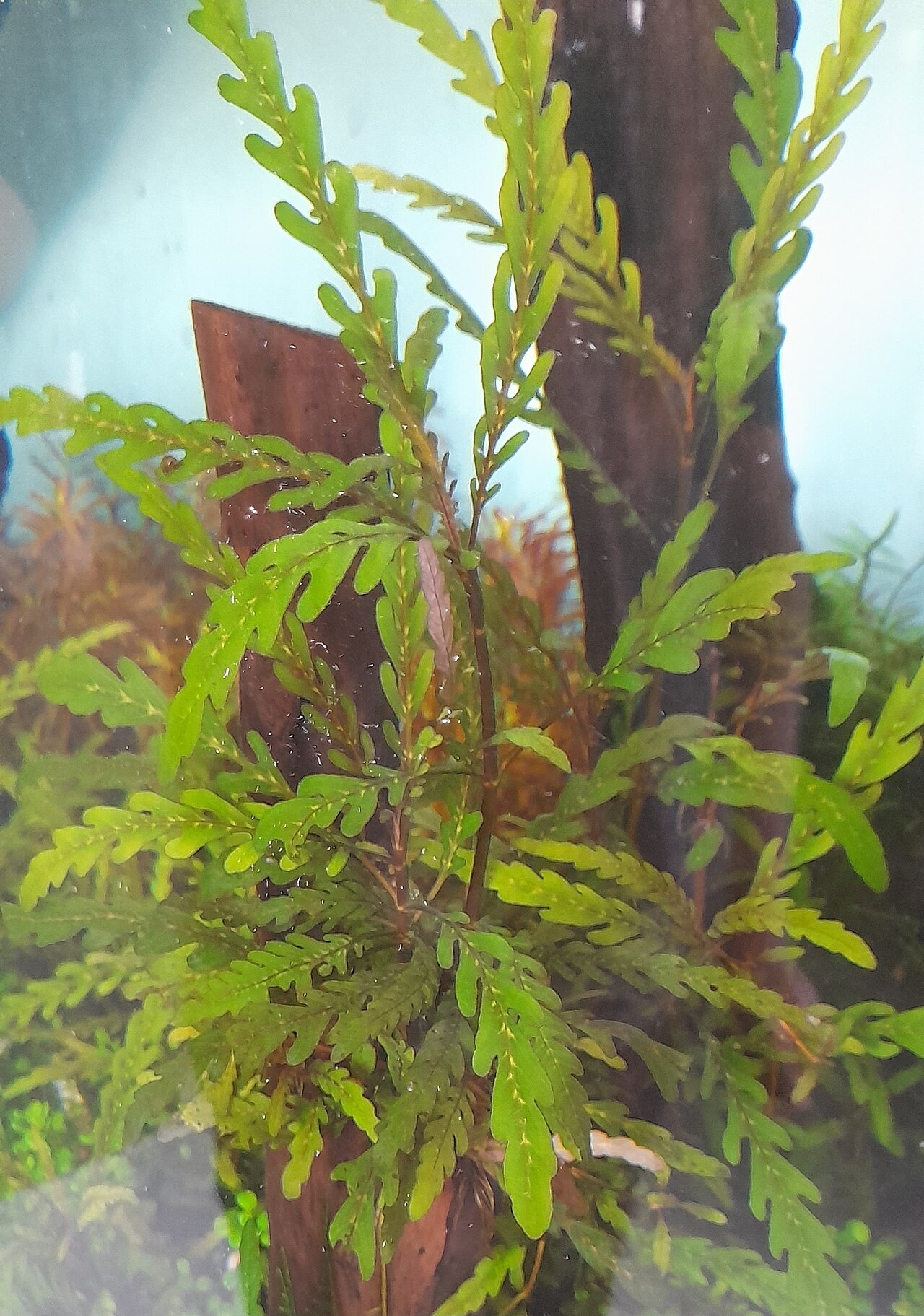
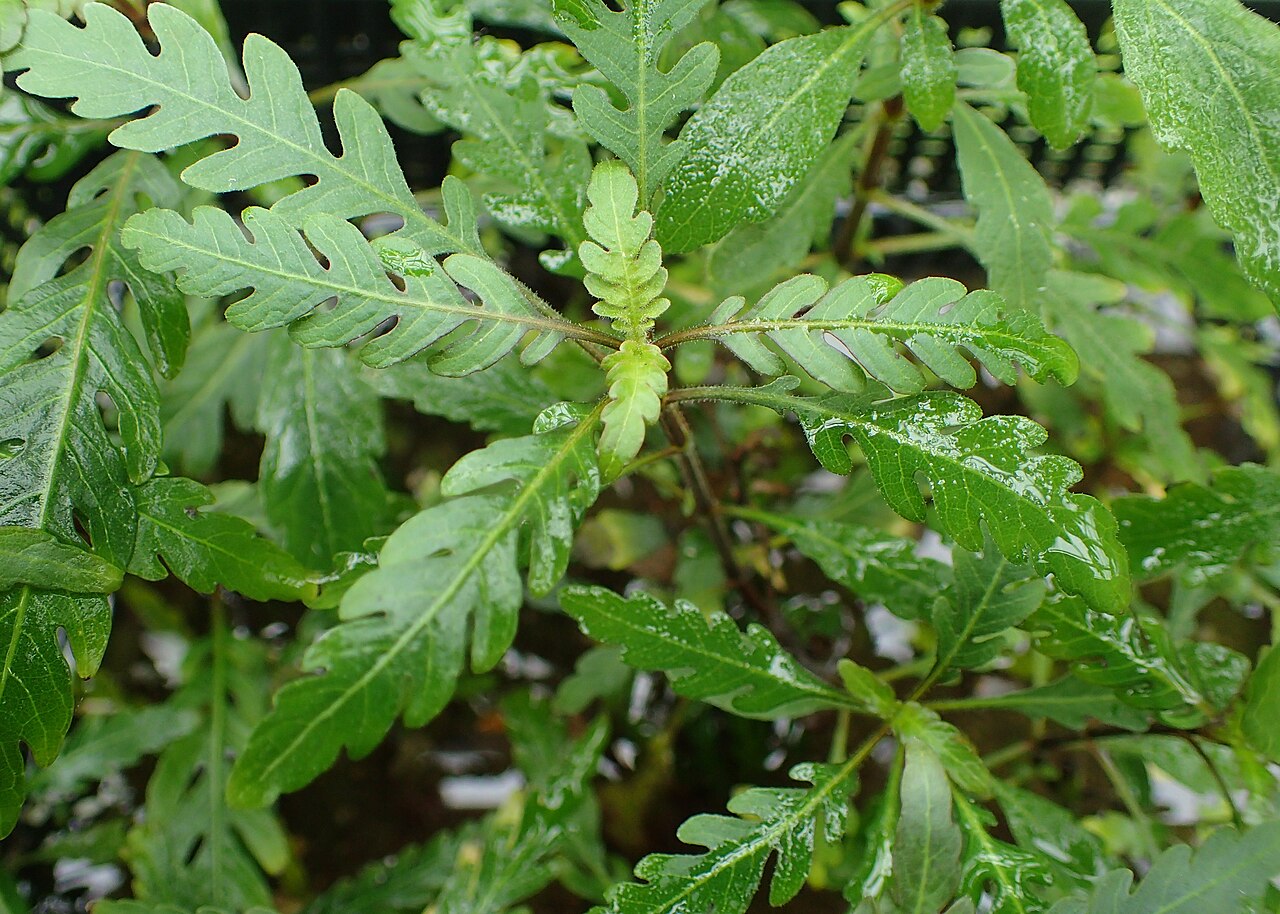
Hygrophila pinnatifida is an aquatic herbaceous plant (hydrophyte) of the acanthus family, Acanthaceae, native to India. Its deeply lobed, fern-like leaves set it apart from other Hygrophila species.
Aquarists value it for its unusual colouring: brown, patchy upper leaf surfaces and a distinctive burgundy underside. Tropica calls it "a guaranteed eye catcher", and because its side shoots readily cling to wood and rock, it can be grown attached to hardscape as well as planted in the substrate.
Appearance
The leaves reach up to 15 cm and are pinnately incised along their whole length, resembling fern fronds. The underside is always burgundy red, while the upper side ranges from olive to reddish brown, often with brown patches.
The stem is thick, very firm and almost woody. The plant creeps: new shoots run along the substrate and root at every node, and upright stems grow from the rooted nodes. According to Tropica, stems reach 15–40 cm in height and 10–20 cm in width; after two months in the tank the plant is typically 15–30+ cm tall.
Intense lighting keeps growth compact, and the colour looks best when the plant is set in small groups against a plain background.
Care
- Placement: midground or background; it can also be grown on rocks and driftwood, as its horizontal side shoots attach easily to wood and stone.
- Light: medium (Tropica defines medium as about 0.5 W/L); strong light gives more compact growth.
- CO2: medium demand (Tropica: 6–14 mg/L).
- Temperature, pH and hardness: not given in the sources used.
- Substrate: it roots into the substrate at every node, but needs no substrate when attached to hardscape.
- Pruning: pinch out the top shoots and trim the stems to keep the plant compact and bushier.
Tropica rates it as medium difficulty.
Fertilizing
The sources give no species-specific fertiliser advice. In Tetra's 54-litre layout, where Hygrophila pinnatifida was one of the main plants, a nutrient base layer (Tetra CompleteSubstrate) was used, Tetra PlantaStart tablets were pushed into the substrate at planting, and liquid fertilisers (Tetra PlantaPro Macro and Micro, Tetra PlantaMin) plus the carbon supplement Tetra CO2 Plus were dosed regularly afterwards.
Breeding
Propagation is vegetative. The plant produces horizontal side shoots that creep over the substrate or hardscape and root at the nodes; new upright stems then grow from the rooted nodes. Trimming the stems and pinching out the tops encourages more side shoots.
Fun facts
- In India local people regard it as a weed because it tolerates a wide range of conditions.
- It was described in the mid-19th century by Nicol Alexander Dalzell in the genus Nomaphila, and only moved to Hygrophila in the second half of the 20th century (Hygrophila pinnatifida (Dalzell) E.Hossain, 1974).
- The leaf underside is always burgundy red, whatever the colour of the upper side.
- Tropica also sells it ready-attached, together with moss, to a piece of mangrove wood.