Plants
Cardinal flower
Lobelia cardinalis
Origin: The Americas: from southeastern Canada through the eastern and southwestern US, Mexico and Central America to northern Colombia
Also known as: Lobelia cardinalis, scarlet lobelia, Lobelia fulgens, Lobelia cordigera, Dortmannia cardinalis
Fact sheet
- Height
- 30 cm
- Lighting
- Low
- CO₂
- Not needed
- Growth rate
- Medium
Photos
Overview
Lobelia cardinalis, the cardinal flower, is a perennial herb of the bellflower family, Campanulaceae. In the wild it grows in wet places such as riverbanks, bogs and swamps, and sometimes grows aquatically, partly or fully submerged, with its flowers rising above the surface.
Aquarists like it because it is undemanding: Tropica rates it Easy, with low light and CO2 requirements. It is widely used in Dutch aquariums for so-called "plant streets", and in open aquariums or garden ponds it can grow above the water and produce striking scarlet flowers.
Appearance
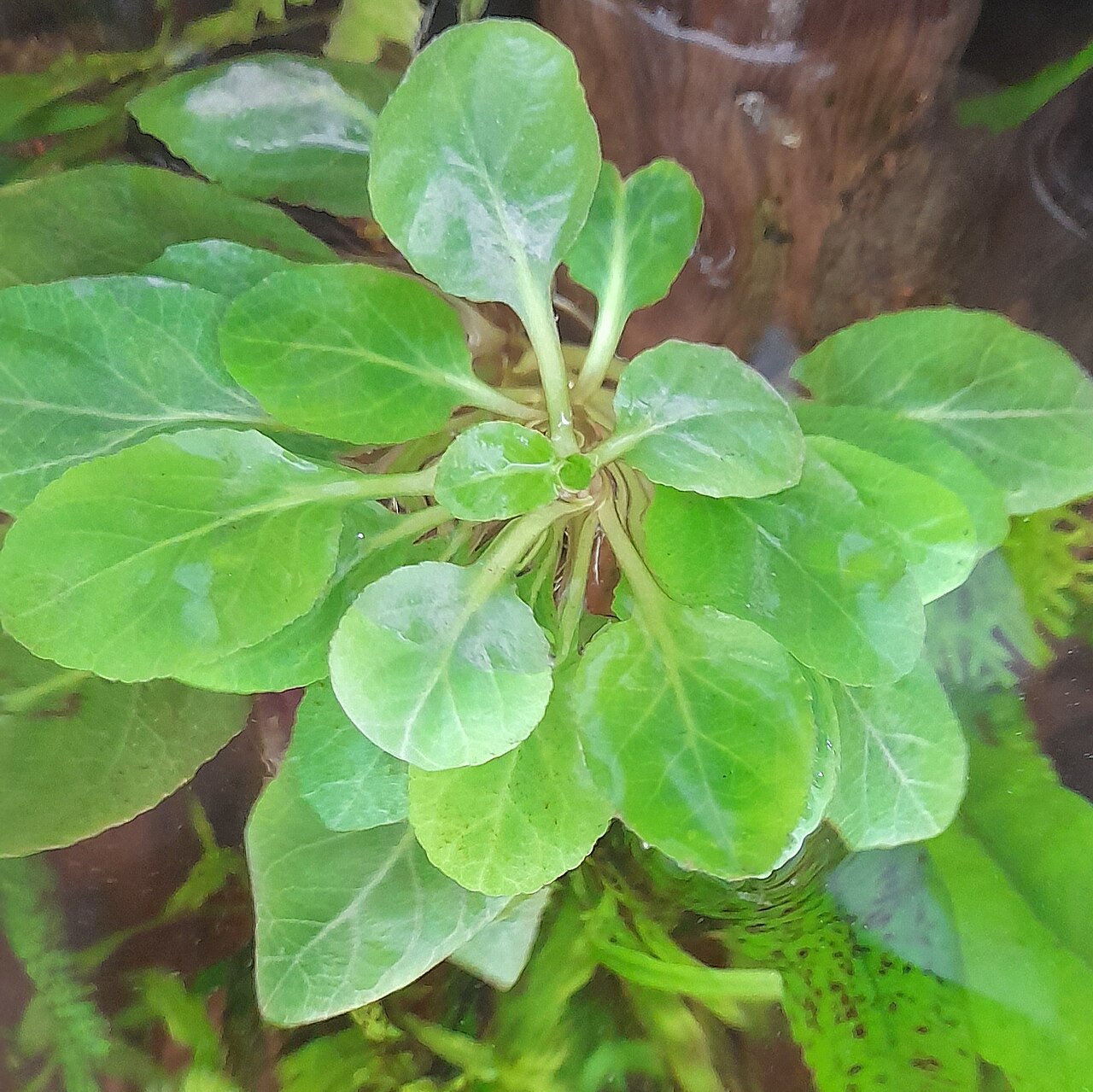
The leaves are lanceolate to oval with a toothed margin, up to 20 cm long and 5 cm wide in the wild. Tropica grows it in marshy conditions, where the leaves are dark green with purple undersides. Under water the leaves turn a beautiful light green, and in the aquarium the stems reach 10–30 cm tall and 5–10 cm wide.
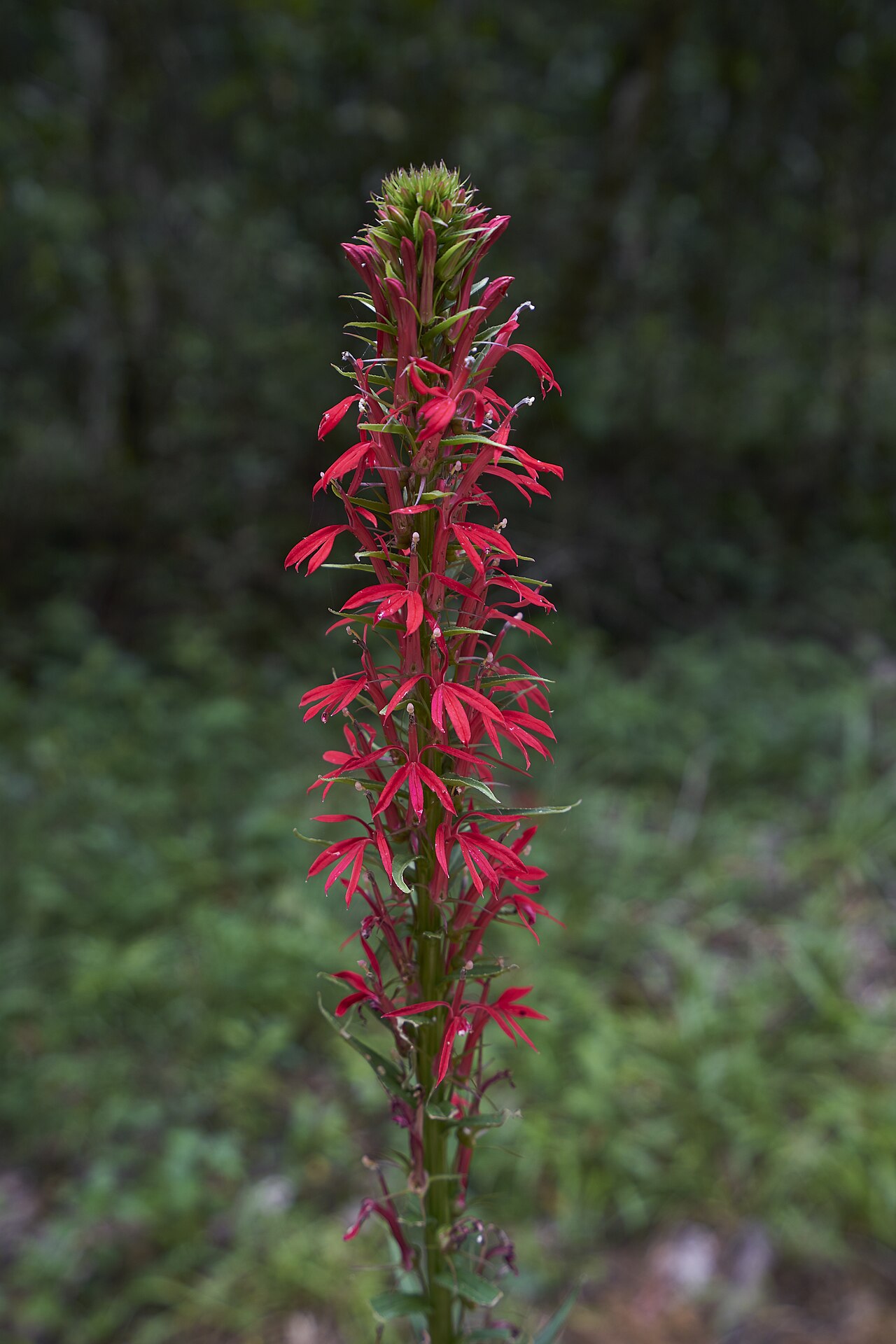
Above water the leaves regain their darker colour and the plant flowers. The flowers are usually vivid red, up to 4 cm across with five deep lobes, borne on an erect raceme up to 70 cm tall. Forms with white (f. alba) and pink (f. rosea) flowers are also known. In the wild the emersed plant grows up to 1.2 m tall.
Care
- Light: low; modest lighting is enough.
- CO2: low demand, added CO2 is not necessary.
- Placement: used in Dutch aquariums for "plant streets"; in open-top tanks it can grow above the surface and flower; also suitable for garden ponds.
- Temperature, pH and hardness: not given in the sources used.
- Substrate: in garden cultivation it needs rich, fairly deep soil that stays moist yet aerated.
- Growth rate: medium.
Tropica rates the cardinal flower as Easy.
Fertilizing
The sources give no specific fertiliser advice for aquarium culture. For garden (emersed) cultivation, Wikipedia notes that it needs rich, fairly deep soil that remains reliably moist.
Breeding
It is easily propagated by seed or by dividing off the young plants that form around older, mature plants each year. Although generally considered a perennial, individual plants may be short-lived and behave more like a "long-term annual".
Fun facts
- The name probably refers to the flower colour resembling the robes of Roman Catholic cardinals; "cardinal flower" was in use by 1629.
- The plant was introduced to Europe in the mid-1620s.
- It is pollinated mainly by the ruby-throated hummingbird (Archilochus colubris), whereas its blue-flowered relative Lobelia siphilitica is pollinated mainly by bees.
- It is toxic: it contains alkaloids including lobeline and lobelanine.
- The Zuni people used it medicinally, and the Penobscot smoked the dried leaves as a tobacco substitute.
- A compact aquarium variety, Lobelia cardinalis 'Mini', has small light-green leaves; according to Tropica it arose as a mutation in ordinary Lobelia cardinalis production; the garden cultivar 'Queen Victoria' holds the RHS Award of Garden Merit.