Plants
Dwarf rotala
Rotala rotundifolia
Origin: South, East and Southeast Asia (India, China, Taiwan, Thailand, Laos, Vietnam); introduced to the USA
Also known as: Rotala rotundifolia, Rotala indica (trade misnomer), Ammannia rotundifolia, Ameletia rotundifolia, Ameletia subspicata, Ammannia subspicata, Mirkooa rotundifolia
Fact sheet
- Height
- 30 cm
- Temperature
- 24–26 °C
- pH
- 6.5–7.5
- Hardness GH
- up to 6 °dH
- Lighting
- Low
- CO₂
- Not needed
- Growth rate
- Medium
- Placement
- Midground, Background
Photos
Overview
Rotala rotundifolia, the dwarf rotala, is a marsh plant of the loosestrife family (Lythraceae). In its native range it is a common weed of rice paddies and wet places, growing in marshes, along rivers and in rice fields from lowlands up to 2,700 m above sea level.
It is one of the most popular stem plants in the hobby. It is undemanding, quickly forms bushy stands and turns reddish under strong light, and aquascapers use it often. For decades it was sold as "Rotala indica", a name that still sticks.
Appearance
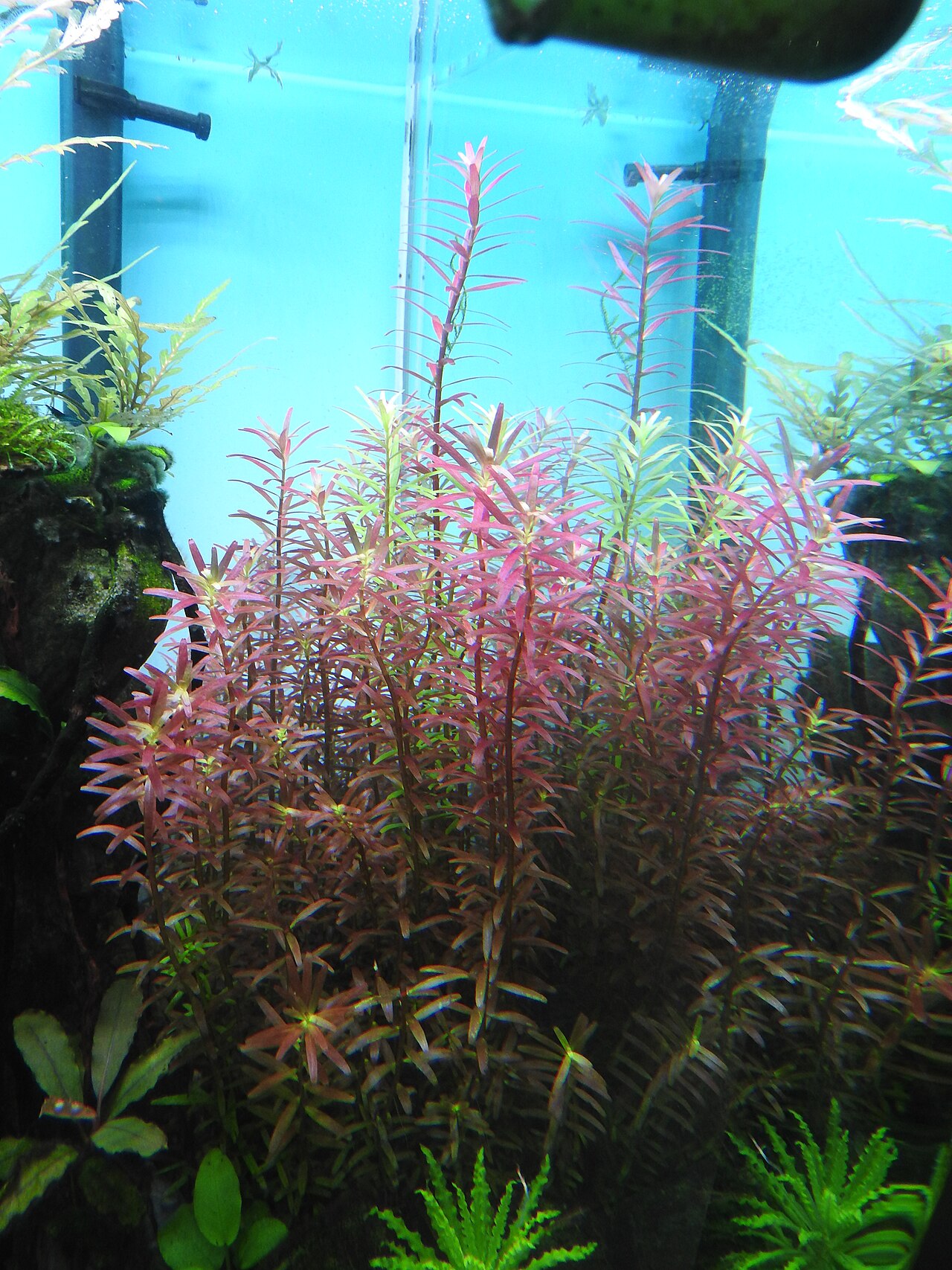
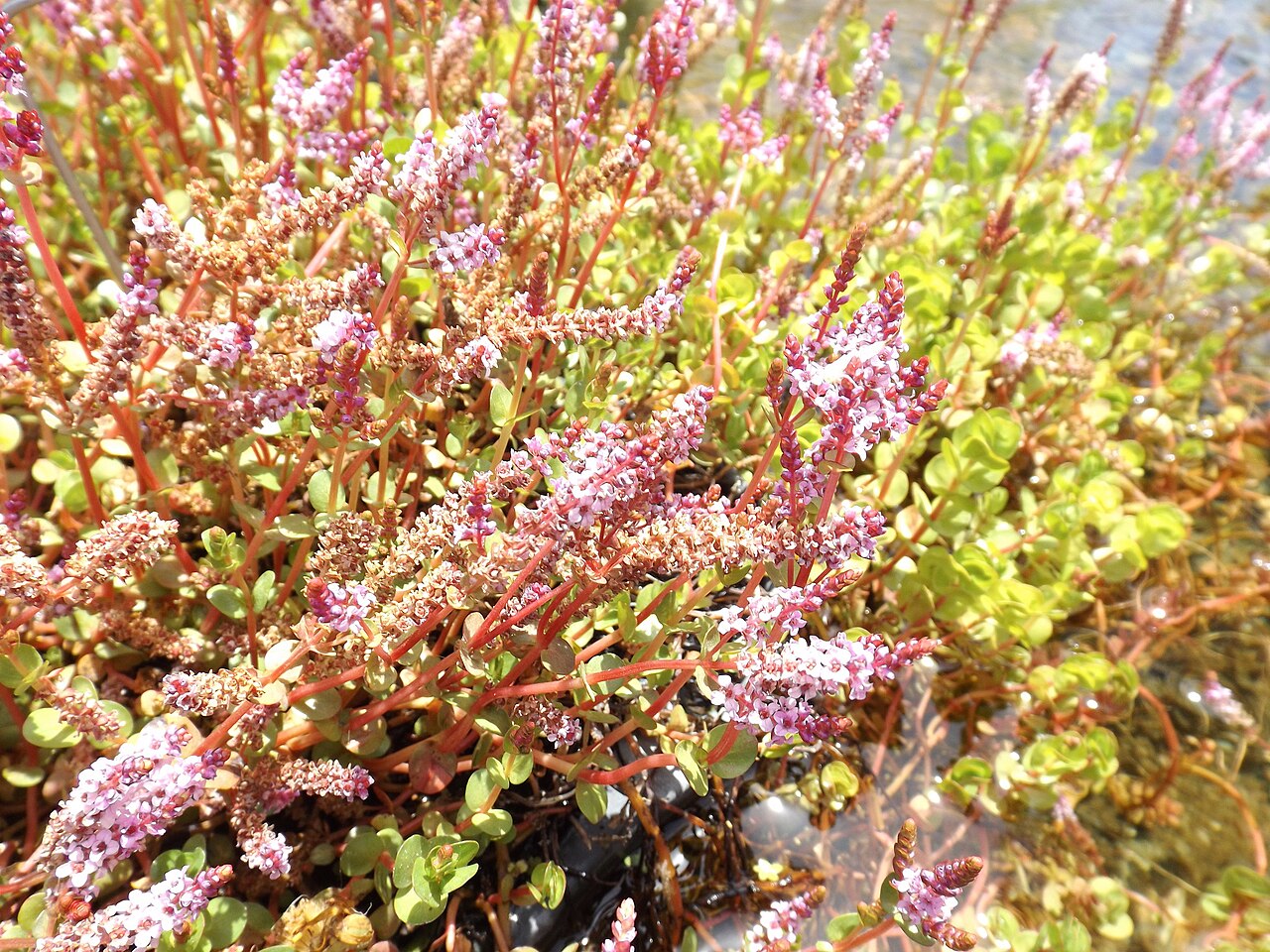
The plant is heterophyllous. Emersed leaves are rounded to obovate, about 1–2 cm long, olive-green above and reddish below, and they give the species its name. Submersed leaves are narrow and lanceolate, up to 2.2 cm long, opposite or in whorls of 3–4.
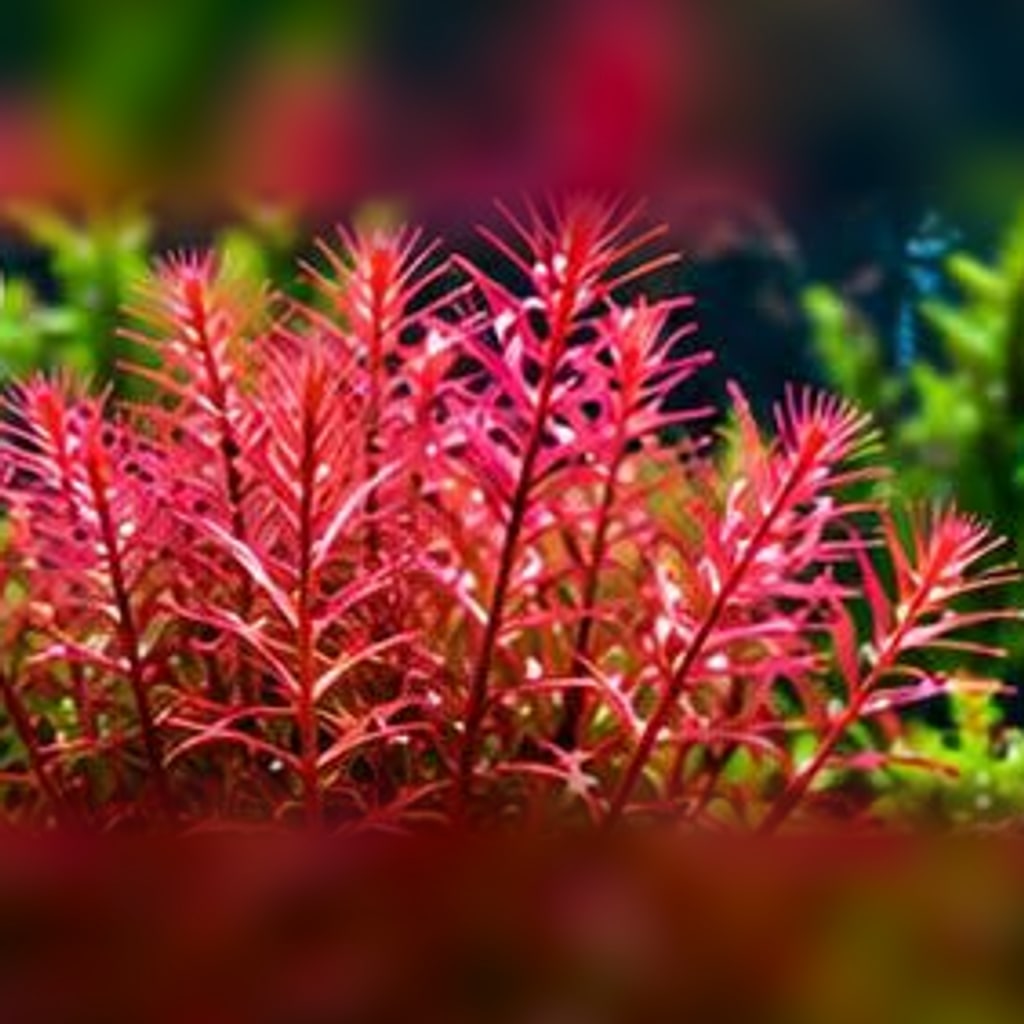
The stems are upright and branch freely, reaching 15–30 cm according to Tropica (Tetra: 20–25 cm). Submersed leaves range from olive-green to reddish on top and from whitish to bright purple below. Under strong light they can become almost wine-red. Upper leaves shade the lower ones, so the base of the stems often goes bare.
Care
- Placement: midground and background, along the side and back glass; plant in dense groups of 10 or more stems, because single stems look sparse.
- Light: Tropica rates its light demand as low, but good, bright light (a photoperiod of about 12 hours) is needed for red leaves and compact growth. In poor light it stretches and loses its lower leaves.
- CO2: low demand according to Tropica, but growth speeds up noticeably with CO2.
- Temperature: 24–26 °C per Tetra; Wikipedia notes it tolerates relatively cool water.
- Water: pH 6.5–7.5; grows best in soft water (GH < 6).
- Substrate: sand or a light substrate; the roots are weak and the stems brittle, so avoid digging fish.
- Flow: good filtration, but don't aim the current directly at the plant.
- Trimming: it branches readily and becomes dense, so prune often or light won't reach the lower leaves.
An easy plant (Tropica: Easy), though it needs some attention to look its best.
Fertilizing
Regular fertilisation is needed. Liquid fertilisers containing iron and potassium, usually the scarcest nutrients in an aquarium, suit it well. In large, densely planted tanks, add a weekly micronutrient fertiliser. A liquid carbon product can be used instead of a pressurised CO2 system.
Breeding
Propagate by cuttings. Pinch off a tip at least 5 cm long and plant the cut end in the substrate, where it roots quickly. Tops removed during regular trimming make ready planting material. Emersed plants in shallow water can flower.
Fun facts
- The epithet rotundifolia means "round-leaved", but only the emersed form has round leaves.
- It entered the hobby around 1960 under the mistaken name Rotala indica; the true R. indica is a different, closely related species.
- The two species differ in their flowers: R. rotundifolia has terminal inflorescences, while R. indica has solitary flowers in the leaf axils. In aquaria neither usually flowers.
- It reached the southern United States with rice seed and became invasive there.
- In regions with mild winters it overwinters successfully in ponds.