Plants
Giant red rotala
Rotala macrandra
Origin: India and Southeast Asia
Also known as: Rotala macrandra, red rotala
Fact sheet
- Height
- 30 cm
- Temperature
- 26–30 °C
- pH
- 6–7
- Hardness GH
- up to 12 °dH
- Lighting
- High
- CO₂
- Required
- Growth rate
- Medium
- Placement
- Midground
Photos
Overview
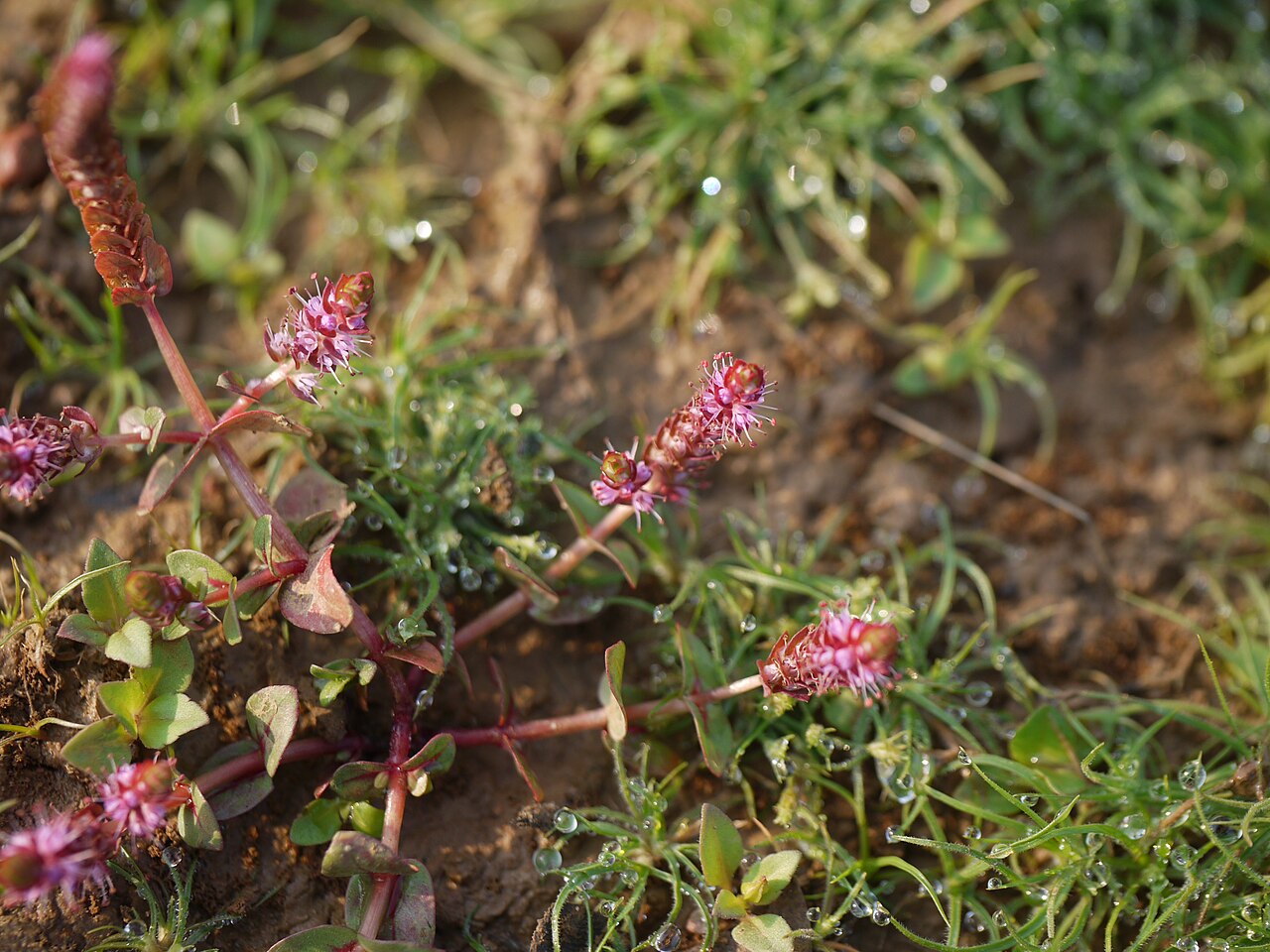
Rotala macrandra is a stem plant of the loosestrife family (Lythraceae). In nature it grows on wet ground along lakes, rivers and marshes, and it tolerates full submersion, for example in the rainy season.
It is one of the few plants that can create a vivid red focal point in an aquarium, which made it popular in Dutch-style tanks. It is also one of the most demanding aquarium plants and is not recommended for beginners.
Appearance
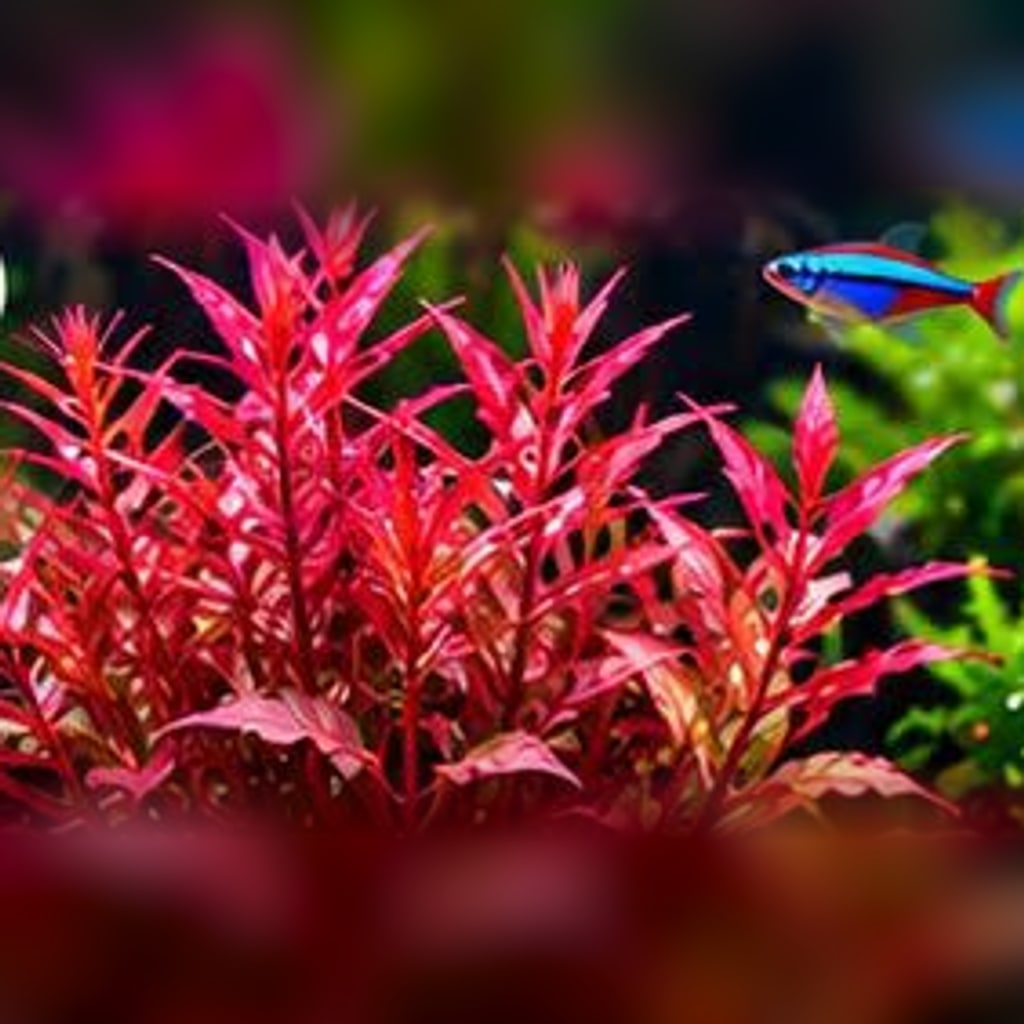
The stem grows to 20–30 cm and branches little. The leaves are large and oval, up to 5 cm long and about 4 cm wide, set in pairs along the stem, with wavy margins. The upper surface is smooth and glossy, as if varnished.
The underside is brownish, and the upper side ranges from green to red depending on conditions. The rich purple-red colour appears only under strong light; in poor conditions the plant stretches and declines. A form with narrow, needle-like leaves also exists.
Care
- Placement: foreground or midground according to Tetra. Plant several stems together; groups stepped at different heights among green plants look especially good.
- Light: high demand (Tropica: High); Tetra suggests at least 80 lm/L and a 12–14-hour photoperiod, keeping algae in mind.
- CO2: high demand (Tropica: High, about 15–25 mg/L); CO2 injection is essential.
- Temperature: 26–30 °C.
- Water: pH 6.0–7.0, hardness no higher than 12; soft water is vital for optimal growth.
- Substrate: sand or a light aquarium plant substrate; unrooted floating stems become stunted and barely grow.
- Flow: good filtration but no strong current, which damages the plant. Avoid herbivorous and digging fish.
- Trimming: thin and trim growing clumps regularly so the lower leaves get light. Cut the longest stems 5–10 cm above the substrate and replant the tops in the group.
A difficult plant (Tropica: Advanced).
Fertilizing
Regular mineral fertilisation, especially with iron, is needed to keep the colour bright. It uses other nutrients only moderately, sometimes less than other plants. The roots are weak and play little part in feeding, so root tabs aren't needed; focus on liquid fertilisers.
Breeding
Propagate mainly by stem cuttings at least 10 cm long. Plant them straight into the substrate or let them float until roots appear. Tropica recommends cutting the longest stems 5–10 cm above the substrate and replanting the tops in the same group.
Fun facts
- The epithet macrandra means "large-stamened"; its Russian name, "large-stamen rotala", reflects this.
- Its popularity is closely linked to the Dutch style of aquascaping.
- It can be grown in paludariums and humid greenhouses if soil and air humidity are kept high.
- Tropica notes that R. macrandra 'Japan' is very demanding, while the variant the nursery sells is a little easier and colours better.