Plants
Creeping primrose-willow
Ludwigia repens
Origin: North and Central America: southern USA, Mexico, Caribbean islands
Also known as: Ludwigia repens, red ludwigia, Ludwigia repens 'Rubin' (cultivar)
Fact sheet
- Height
- 60 cm
- Temperature
- 20–26 °C
- pH
- 6.5–7
- Hardness GH
- 2–15 °dH
- Lighting
- Medium
- CO₂
- Not needed
- Growth rate
- Medium
- Placement
- Midground, Background
Photos
Overview
Ludwigia repens, the creeping primrose-willow, is a perennial stem plant of the evening primrose family (Onagraceae). In the wild it is a marsh plant of wet riverbanks, shallows and slow streams, where it forms dense mats on muddy substrate.
It is one of the most common aquarium plants, valued for being undemanding and for leaves that turn red under good light and contrast nicely with green plants. The name "creeping" makes sense if the plant is left untrimmed: once the stems reach the surface they start to spread across it.
Appearance
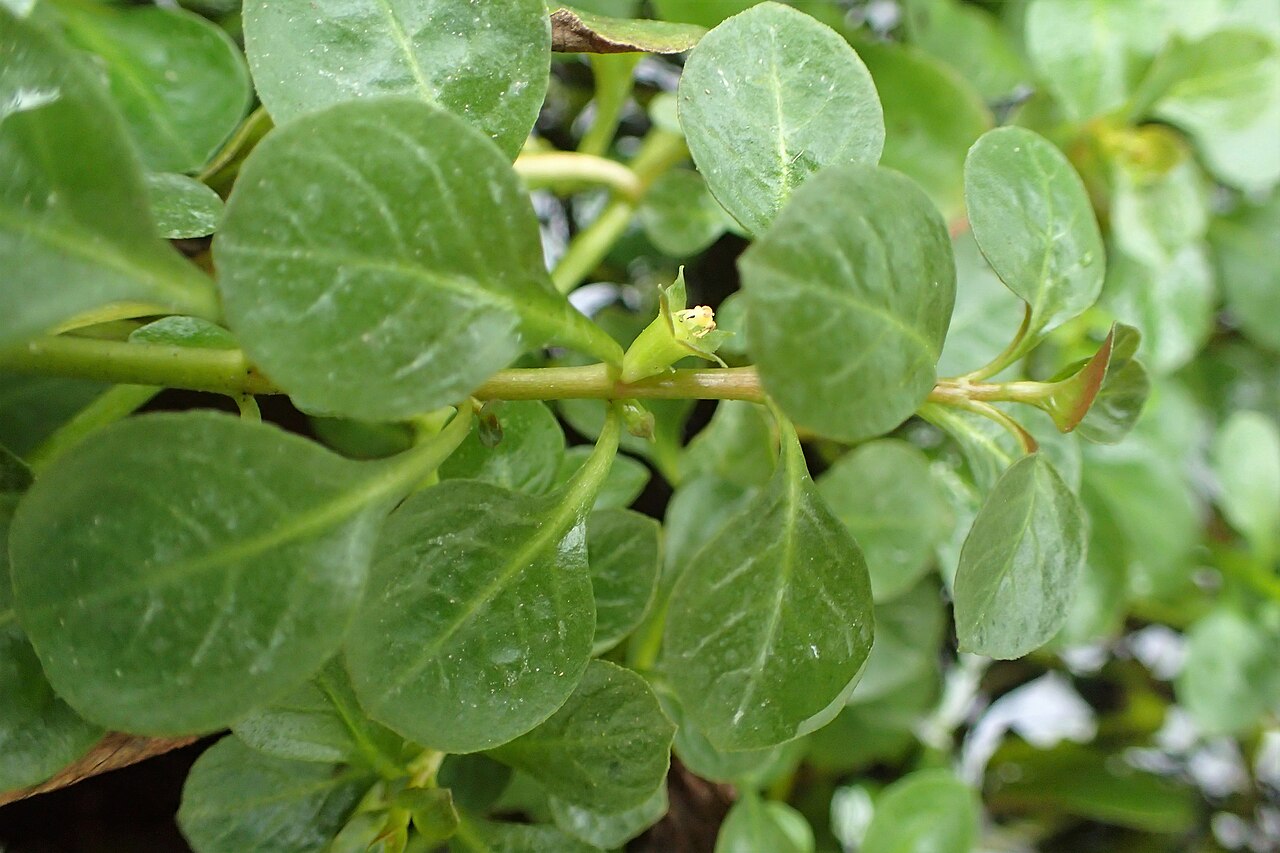
Upright stems that can branch strongly; typical length 30–40 cm, up to 50–60 cm in good conditions. Leaves are opposite, each pair set at right angles to the previous one, round to ovate. Tetra gives a leaf length of 2–3 cm and a width of 0.5–1.5 cm; Wikipedia says leaves reach 4–5 cm. Young leaves at the tip are almost sessile, while lower leaves have well-developed petioles.
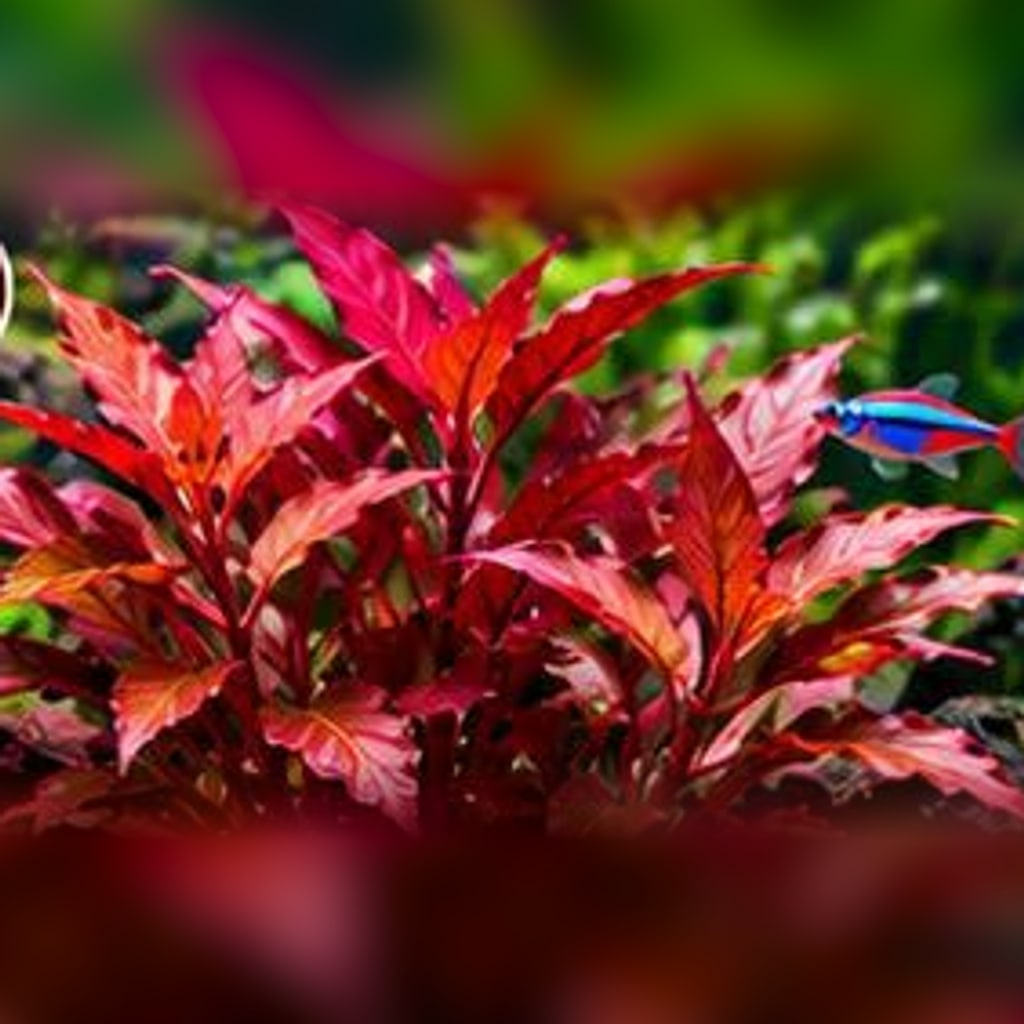
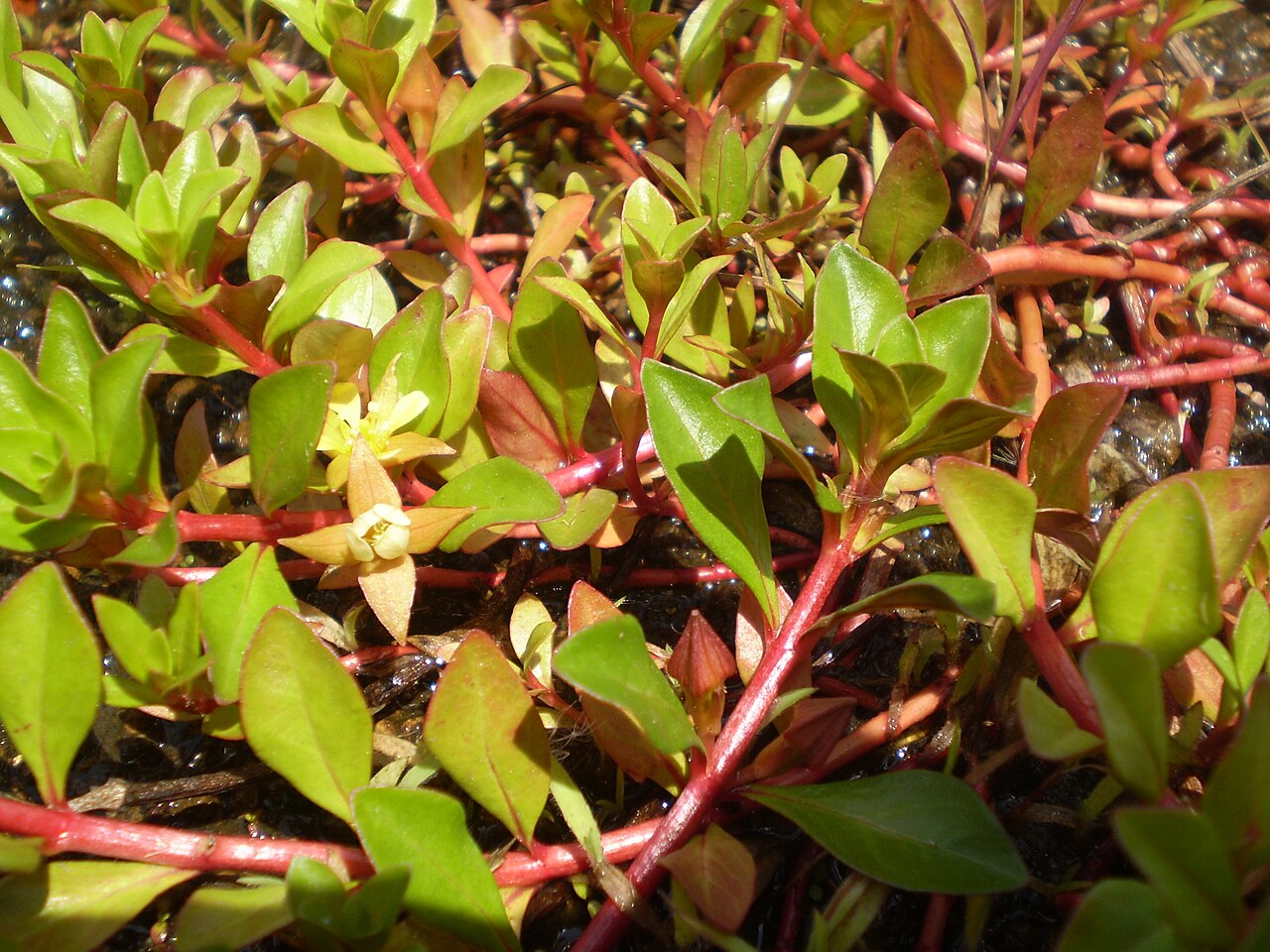
The upper side is dark green to olive, the underside green or reddish-purple. The brighter the light, the stronger the red. The cultivar 'Rubin' has dark red leaves and stems; according to Tropica its stems grow 20–50 cm tall and 4–6 cm wide.
Care
- Placement: midground and background; plant in groups of 5–7 stems
- Light: moderate to bright, at least 12 hours a day; colour gets more intense in strong light, and lower leaves drop if light is insufficient
- CO2: not required (Tropica rates the need as low), but added carbon does no harm
- Temperature: 20–26 °C; do not keep it warmer
- Water: slightly acidic to neutral, pH 6.5–7.0, hardness 2–15 °dH; change about 20% weekly and keep the water free of suspended dirt
- Substrate: fine sand or gravel up to 4 mm, as the roots are weak; a nutrient-rich substrate or base layer is preferred
- Pruning: regular; topping the stems encourages side shoots and a bushier plant
An easy plant, suitable for beginners.
Fertilizing
Ludwigia likes a nutrient-rich substrate, so a nutrient base layer is recommended. It is sensitive to iron deficiency — dose a liquid fertiliser with iron regularly, adding a micronutrient supplement in heavily planted tanks. Because it grows fast, an extra carbon source helps (pressurised CO2 or a liquid carbon product 1–2 times a week). A root fertiliser tablet can be placed under newly planted cuttings.
Breeding
In the aquarium it propagates vegetatively by cuttings. Cut a 10–12 cm top from the mother plant and plant it in the substrate; tops removed during pruning can be replanted too.
Fun facts
- It grows very well in a paludarium: emersed leaves are slightly smaller but firmer and glossier, and such plants can be moved into the aquarium without special preparation
- Its flowers are tiny: four yellow petals no more than 3 mm long on a base of four pointed sepals
- In some regions it is regarded as an aquatic weed, since it spreads easily and naturalises
- A study found that compounds in L. repens act as a potent central nervous system depressant and painkiller in vivo
- In some areas it is used as a fodder, medicinal and food plant