Plants
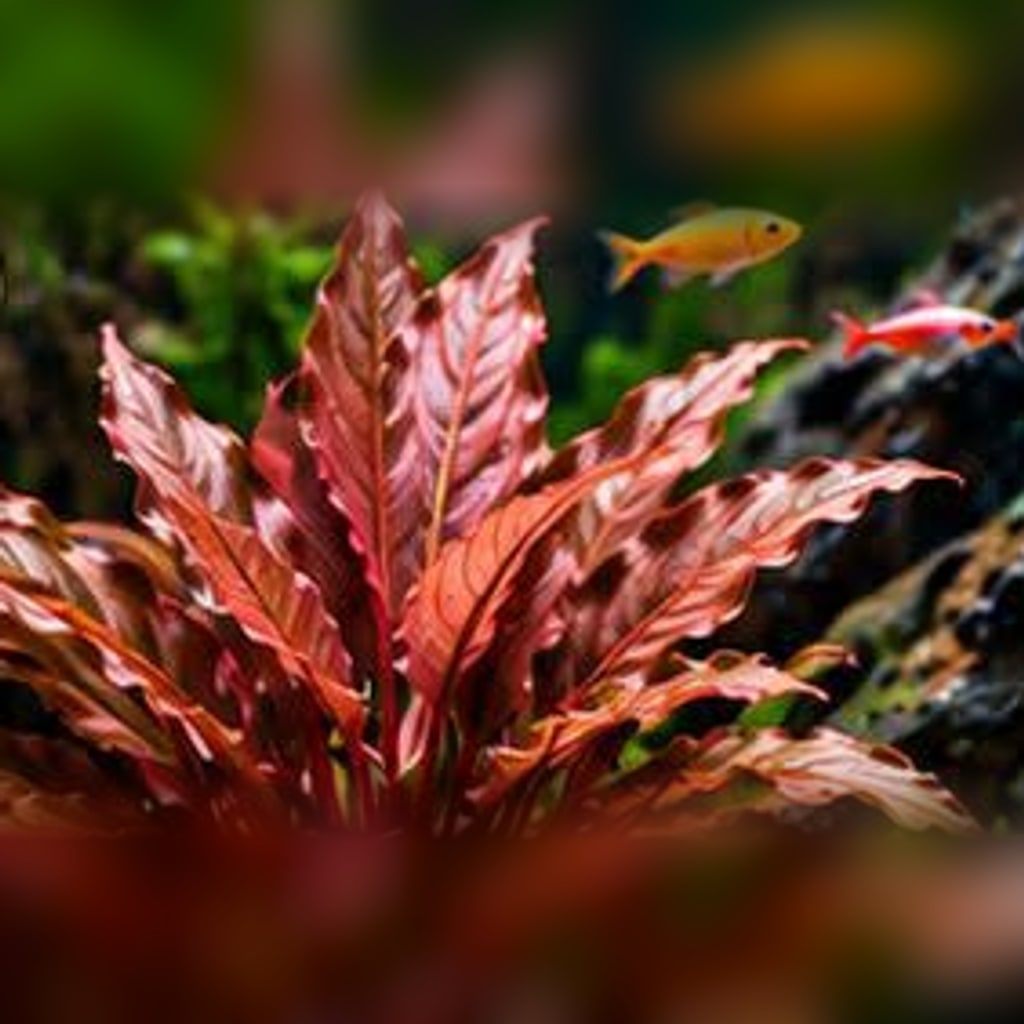
Cryptocoryne 'Flamingo'
Cryptocoryne 'Flamingo'
Origin: Cultivated form, not found in the wild; the genus Cryptocoryne is native to tropical India, Southeast Asia and New Guinea
Also known as: Cryptocoryne sp. 'Flamingo', Flamingo crypt
Fact sheet
- Temperature
- 24–28 °C
Overview
Cryptocoryne 'Flamingo' is an ornamental aquarium form of the genus Cryptocoryne in the arum family (Araceae). Cryptocorynes — "crypts" to hobbyists — are small rhizomatous amphibious plants that form rosettes of 5–15 leaves.
Crypts are valued as some of the least demanding aquarium plants: many of them manage without CO2 injection and in fairly low light. They take much of their nutrition through the roots, so a nutrient-rich substrate and stable conditions matter most.
Appearance
As in other crypts, the leaves grow in a rosette from a creeping rhizome; they are entire, lanceolate to ovate and stalked. Leaf colour in Cryptocoryne varies strongly with growing conditions and light, so the same plant can look different in different tanks.
Care
- Placement: choose the spot in advance — crypts dislike being moved and produce new leaves poorly after frequent replanting
- Light: diffuse, moderate light suits most crypts
- Temperature: 24–28 °C; below 22 °C crypts suffer
- Water: crypts prefer soft water; above all, avoid sudden changes in parameters
- Substrate: muddy, nutrient-rich; a nutrient base layer is essential
- New tanks: crypts are best planted in aquariums that have been running for at least three months
The genus is generally regarded as undemanding, but crypts may temporarily lose their leaves after a change in conditions (see crypt melt).
Fertilizing
Crypts draw most of their nutrients through the roots, so a fertile substrate matters — a nutrient base layer when setting up the tank and root fertiliser later.
Breeding
In the aquarium crypts reproduce vegetatively: young shoots appear on the mother rhizome. Once a daughter plant has 5–6 leaves it can be carefully separated and replanted.
Fun facts
- The name comes from Greek crypto ("hidden") and koryne ("club"), because the spadix is hidden inside the spathe tube
- The English name "water trumpet" refers to the trumpet-like inflorescence
- The genus is known for "crypt melt": after sudden changes the leaves soften and dissolve, but the rhizome survives and regrows
- Cryptocorynes have been kept in aquariums since the late 18th century