Plants
Red water lily
Nymphaea rubra
Origin: Sri Lanka and north-eastern India to western and central Malesia; introduced to south-east China, Cuba, Guyana, Suriname and Hungary
Also known as: Nymphaea rubra Roxb. ex Andrews, red nymphaea
Fact sheet
- Temperature
- 24–28 °C
- pH
- 6–7
- Hardness GH
- up to 14 °dH
- Lighting
- High
- CO₂
- Recommended
Photos
Overview
Nymphaea rubra is a water lily of the family Nymphaeaceae, placed in the subgenus Lotos. In the wild it grows in rivers, lakes and ponds of tropical Asia. Its status is uncertain and it may be of hybrid origin.
It is suitable for cultivation in aquaria. Water lilies are grown for their large ornamental leaves with the typical basal notch and for the chance of flowers.
Appearance
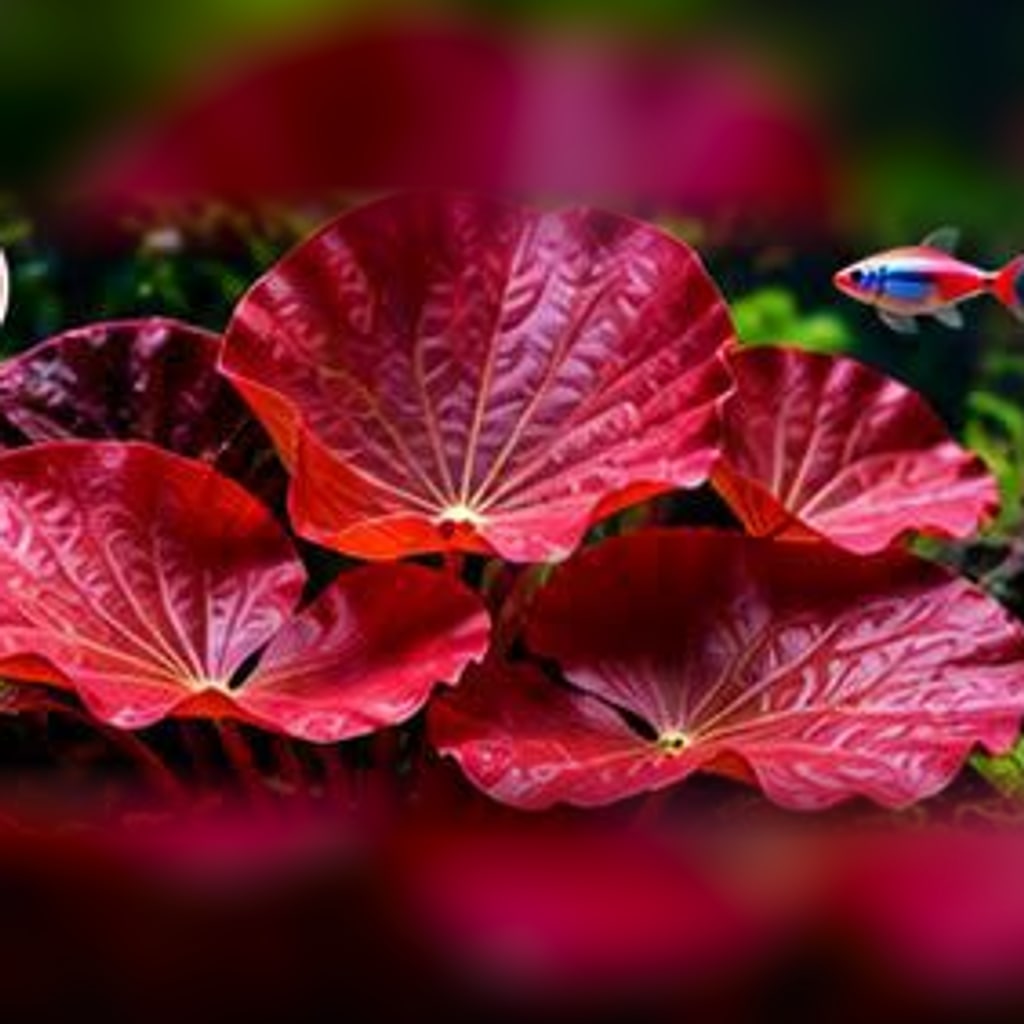
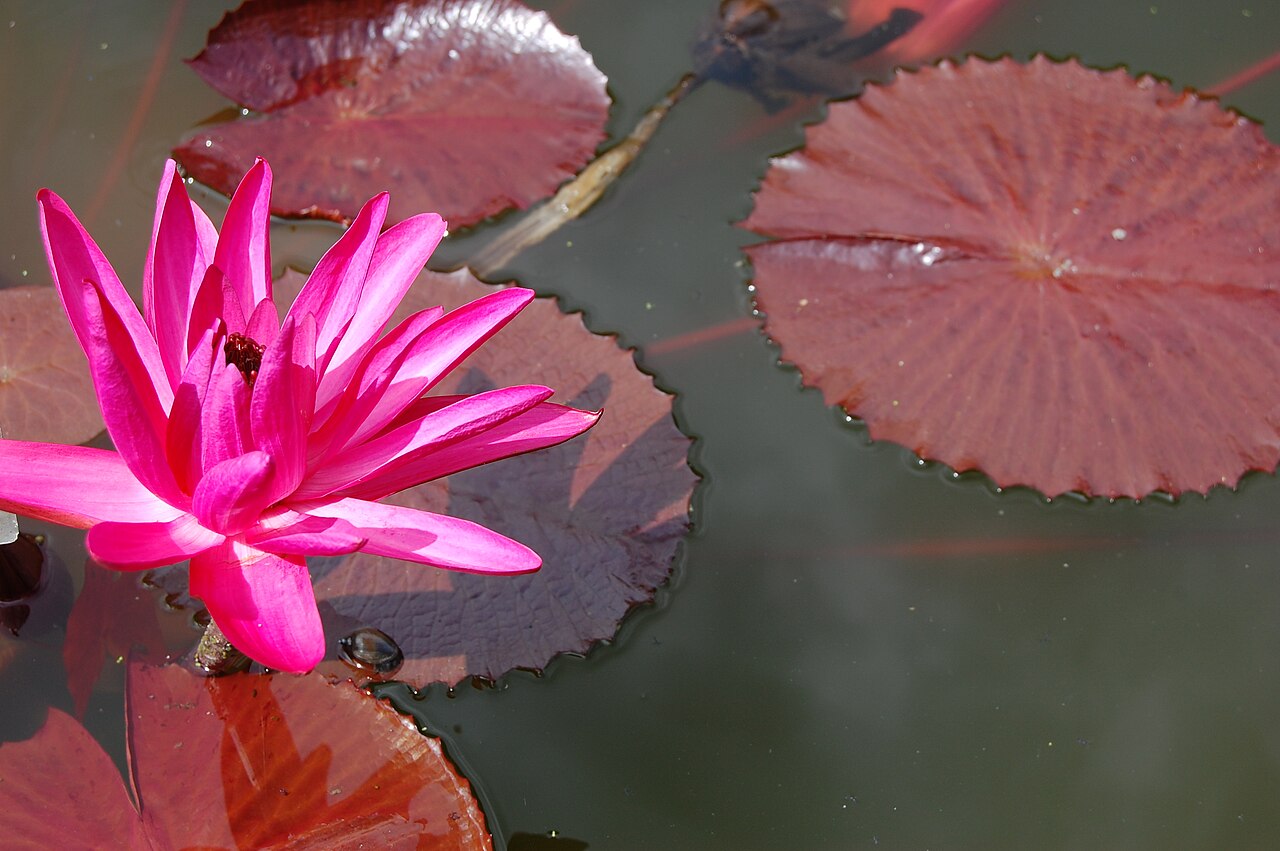
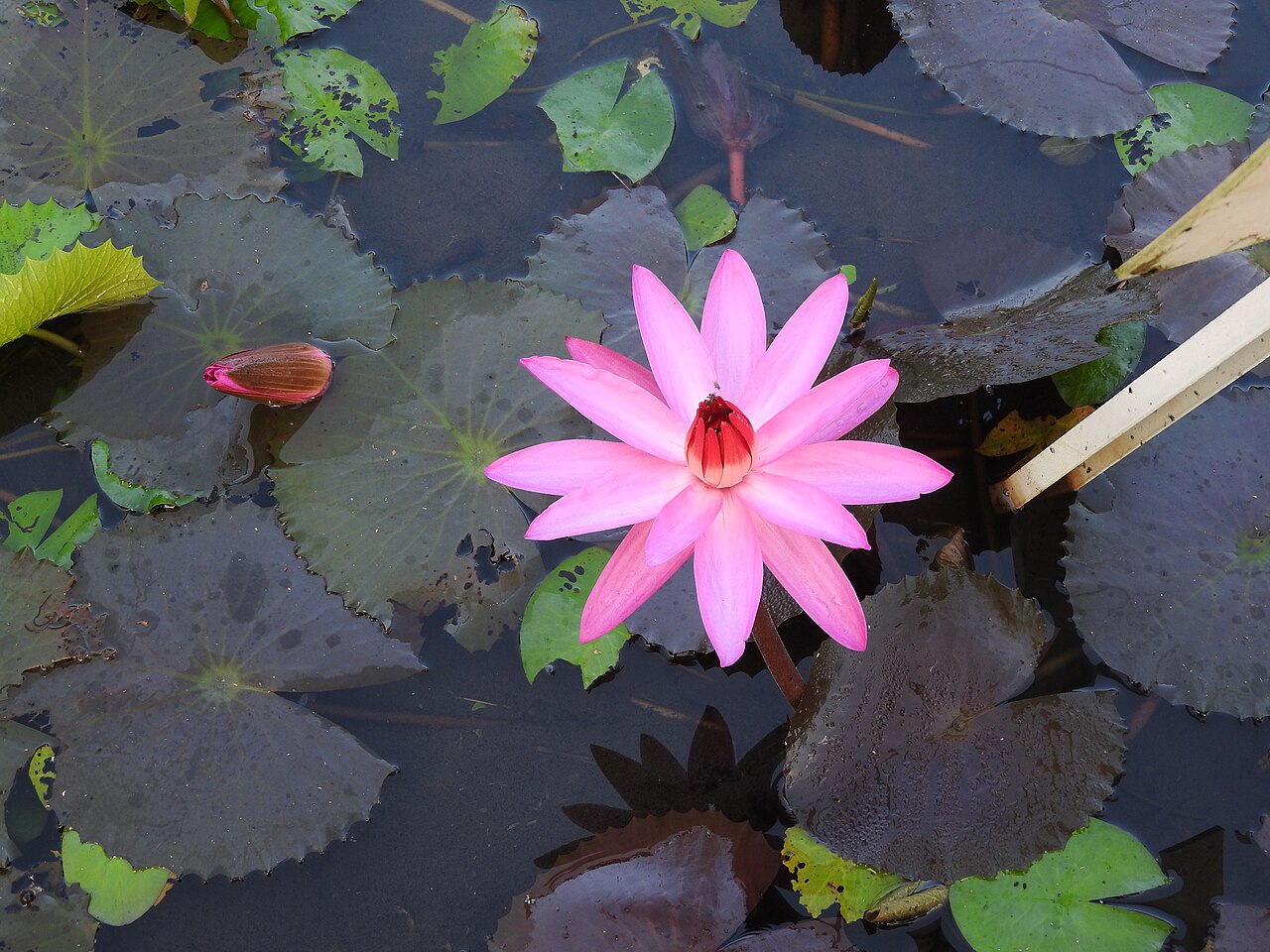
A stout rhizome (about 15 cm long and 8 cm wide in the wild) sends up round leaves on long petioles. In nature the floating leaves are 25–48 cm across: bronzy red to dark green above, dark purple below, with very prominent venation.
In the aquarium water lilies produce submerged leaves, usually 4–20 cm, and larger floating leaves. Under bright light plants stay compact and richly coloured; in poor light the petioles stretch. Flowers are 15–25 cm wide, purplish-red and pleasantly fragrant.
Care
- Tank: spacious, 40–50 cm tall
- Light: strong, at least 12 hours a day; light is especially important for red forms
- CO2: with strong light, adding CO2 or liquid carbon is advisable
- Temperature: 24–28 °C; growth slows in cooler water
- Water: soft (up to 14 °dH), pH 6.0–7.0; water lilies like "old" water, so frequent large changes are undesirable
- Substrate: nutrient-rich, grain size 2–5 mm
- Maintenance: the main task is keeping a low rosette of underwater leaves and not letting floating leaves take over
According to Tetra, water lilies are not easy plants and are not recommended for beginners.
Fertilizing
The substrate must be rich in nutrients: use a long-lasting nutrient base layer when setting up the tank and regular root tablets during growth. During active growth also dose a liquid fertiliser with iron and trace elements.
Breeding
Nymphaea rubra is stoloniferous and in rare cases also reproduces through proliferating pseudanthia. In the aquarium water lilies are propagated from basal offshoots that form young plants, which are carefully separated and replanted. Seed propagation is also possible: pollinate the flower by hand with a soft brush right after it opens and germinate the seeds in soft water. The species may also reproduce apomictically.
Fun facts
- The epithet rubra means "red"
- It was first named by William Roxburgh but only validly published by Henry Cranke Andrews in 1808
- The diploid chromosome count is 2n = 56
- Its flower stalks and seeds are eaten
- In 1886 a specimen grown in the Botanical Garden of Heidelberg University developed a rare proliferating pseudanthium
- Water lilies are hardy plants that are also used to decorate garden ponds