Fish
Congo tetra
Phenacogrammus interruptus
Origin: Central Africa: the Congo River basin (lower and middle reaches).
Also known as: Rainbow Congo tetra, Phenacogrammus interruptus
Fact sheet
- Size
- 8.5 cm
- Lifespan
- 5 years
- Minimum tank size
- 100 L
- Temperature
- 23–28 °C
- pH
- 6–7.5
- Hardness GH
- 3–18 °dH
- Temperament
- Peaceful
- Social behavior
- Schooling
- Group size
- 6+ individuals
- Diet
- Omnivore
Photos
Overview
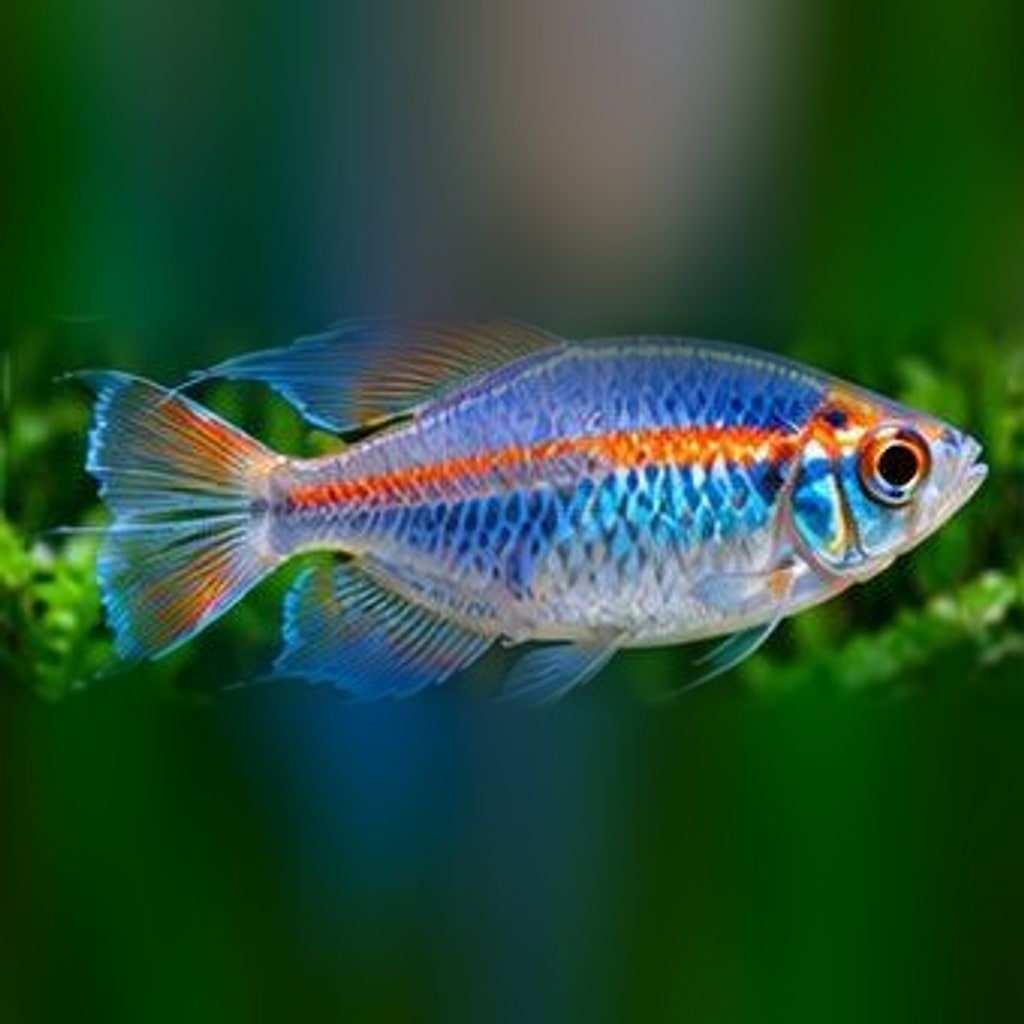
The Congo tetra is the best-known African tetra (family Alestidae). It is noticeably larger than the familiar South American tetras, and its highlights are the iridescent rainbow scales and the unusual feathery tail of the males.
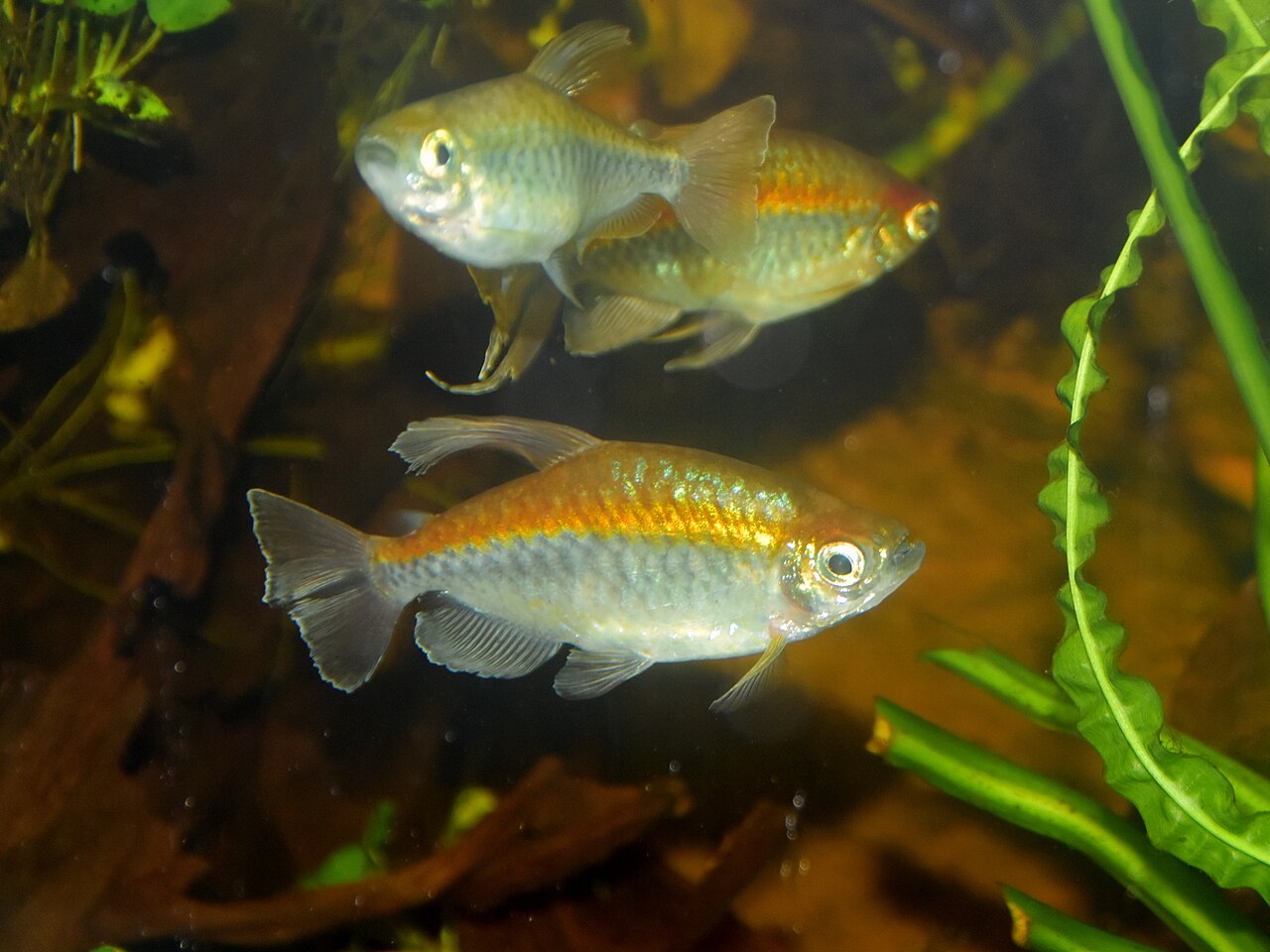
It is hardy and undemanding, and a school of adult Congo tetras in a roomy tank is a spectacular sight. Shops usually sell grey, plain-looking juveniles — the full colours develop as the fish grow up in good conditions.
In the wild Congo tetras live in schools in tannin-rich "blackwater" and feed on insects, crustaceans and worms.
Appearance
The body is elongated and laterally compressed, with large, clearly visible scales. Sizes differ between sources: English Wikipedia gives up to 7.6 cm for males and 7 cm for females; the Tetra blog gives up to 8.5 cm for males and 6 cm for females; Russian Wikipedia mentions up to 10 cm.
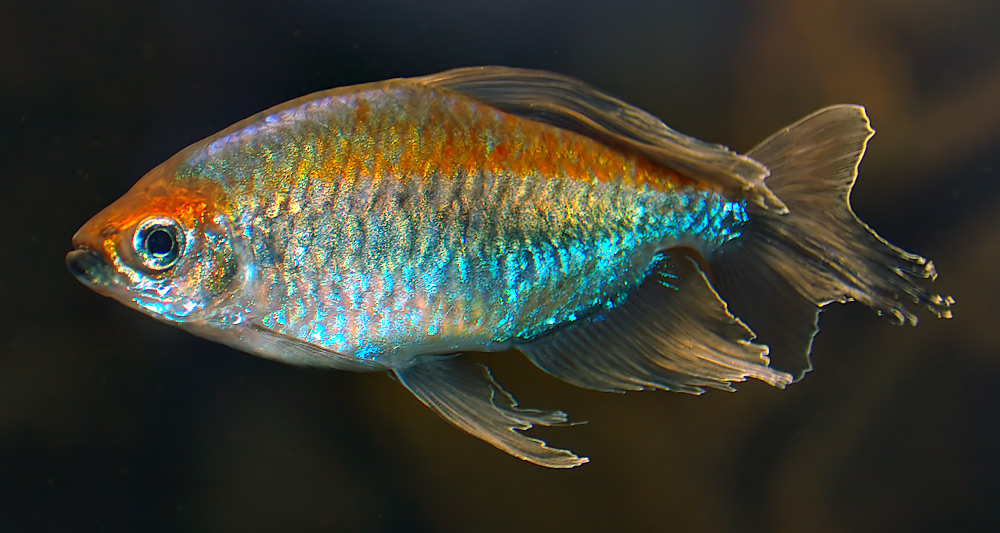
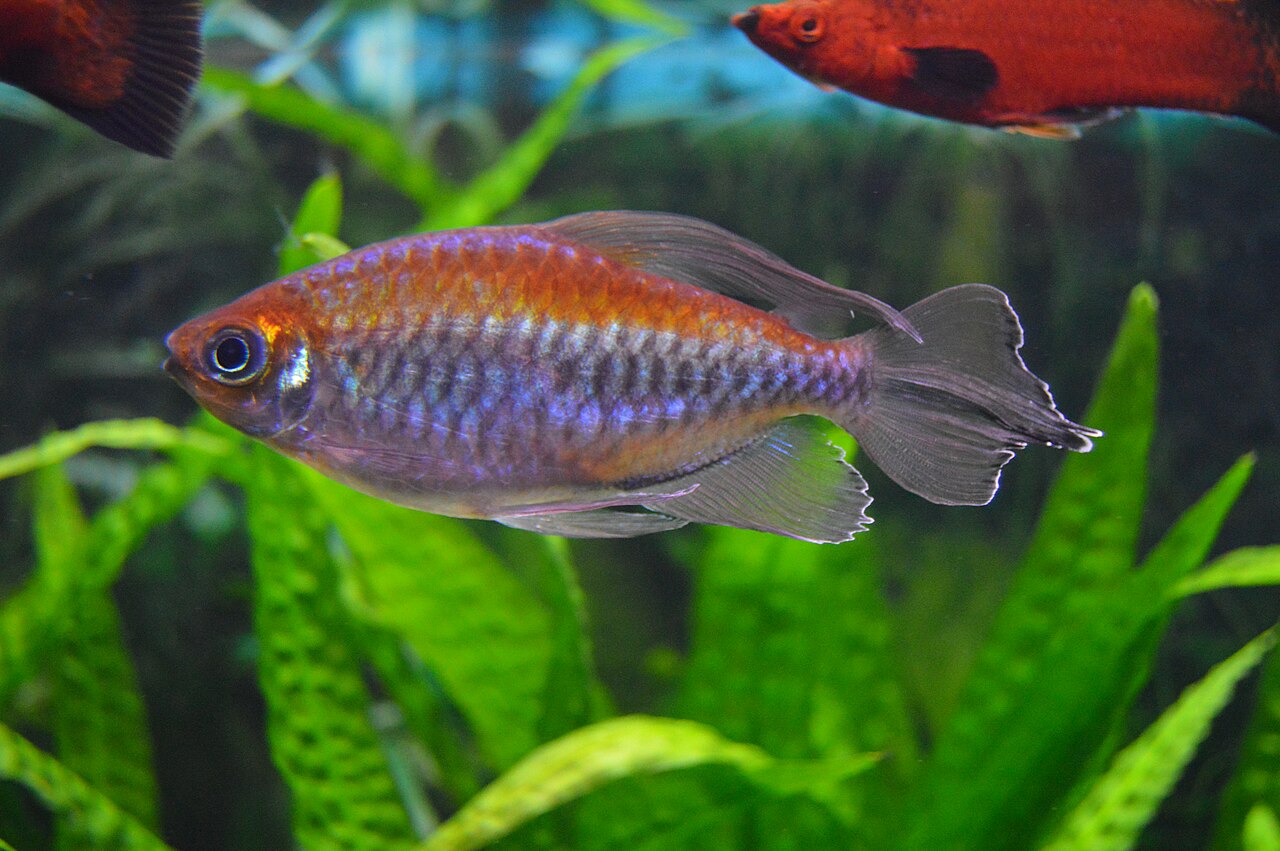
Mature fish shimmer from blue on the back through red and golden yellow to blue above the belly. The fins are translucent with a violet sheen and pale edges. In males the central rays of the tail fin are extended into a greyish-violet feathery tail with white edges, and the dorsal and anal fins are longer too.
Males are larger, brighter and longer-finned; females are smaller, paler and rounder in the belly.
Care
- Tank: from 100 L.
- Group: 6 or more — they only behave naturally in a school.
- Temperature: 23–28 °C.
- Water: pH 6.0–7.5, hardness 3–18 °dGH; they like water slightly acidified with peat.
- Light: moderate, dimmed with floating plants.
- Substrate and decor: dark sand or fine gravel, driftwood, tall stem plants along the sides.
- Filtration: a powerful filter — they are hardy but like clean water; also aeration and a heater.
- Water changes: about 20% weekly.
Lifespan in the home aquarium is up to 5 years.
Feeding
An omnivore. Base the diet on quality dry foods (flakes, crisps, granules), ideally with plant ingredients such as spirulina. Bloodworm, brine shrimp and Daphnia make good treats. Feed several times a day, only as much as is eaten within a few minutes.
Compatibility
A good choice for a community tank with calm medium-sized fish: mollies, platies, larger tetras, dwarf cichlids, peaceful barbs, Corydoras, bristlenose catfish and Hoplosternum.
Very active barbs can be a problem, as they may nip the long fins. Avoid small shrimp — Congo tetras often wipe them out.
Breeding
An egg-scatterer with no parental care; it can spawn in pairs or groups. Sexual maturity comes at about 9–12 months (the Tetra blog says about 10 months).
- Separate and heavily feed the breeders for 1.5–2 weeks beforehand.
- Spawning tank: 40 L or more, with filter, heater, plants and a mesh on the bottom; dim light.
- Lowering the pH to about 6 triggers spawning; English Wikipedia gives 24–27 °C for breeding.
- Spawning usually starts in the early morning: the female releases 20–30 eggs at a time, several hundred (around 300) in total.
- The parents eat the eggs, so remove them right away; take out dead eggs with a pipette.
- Eggs hatch in about 6 days (6–7 according to English Wikipedia).
- Feed the fry infusoria or liquid fry food, then baby brine shrimp and finely crushed flakes. They grow about 5 mm a month, and sexes become distinguishable at 3–4 months.
Fun facts
- The signature feature is the males' tail with extended central rays, like a greyish-violet feather with white edges.
- The IUCN lists the Congo tetra as Least Concern.
- Juveniles in shops are grey and plain — the rainbow colours appear only as the fish mature.
- Sources disagree on the eggs: English Wikipedia calls them adhesive, while the Tetra blog describes them as non-adhesive, falling through a spawning mesh.