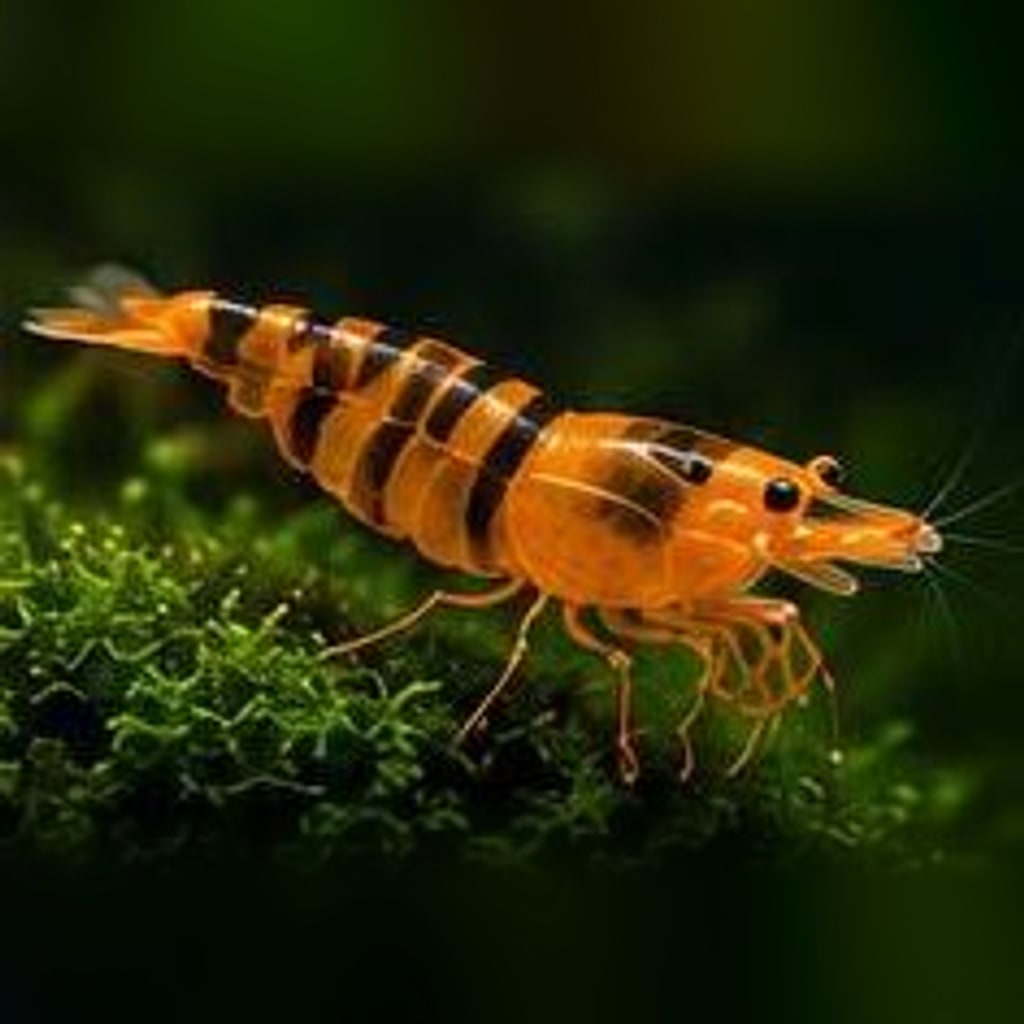
Shrimp
Tiger shrimp
Caridina mariae
Origin: Southern China and Hong Kong: the neighbouring counties of Yingde and Conghua in Guangdong Province, and Hong Kong SAR.
Also known as: Caridina mariae, Caridina cf. cantonensis "Tiger"
Fact sheet
- Size
- 3.8 cm
- Lifespan
- 2 years
- Temperature
- 18–24 °C
- pH
- 6–7.5
- Temperament
- Peaceful
- Diet
- Omnivore
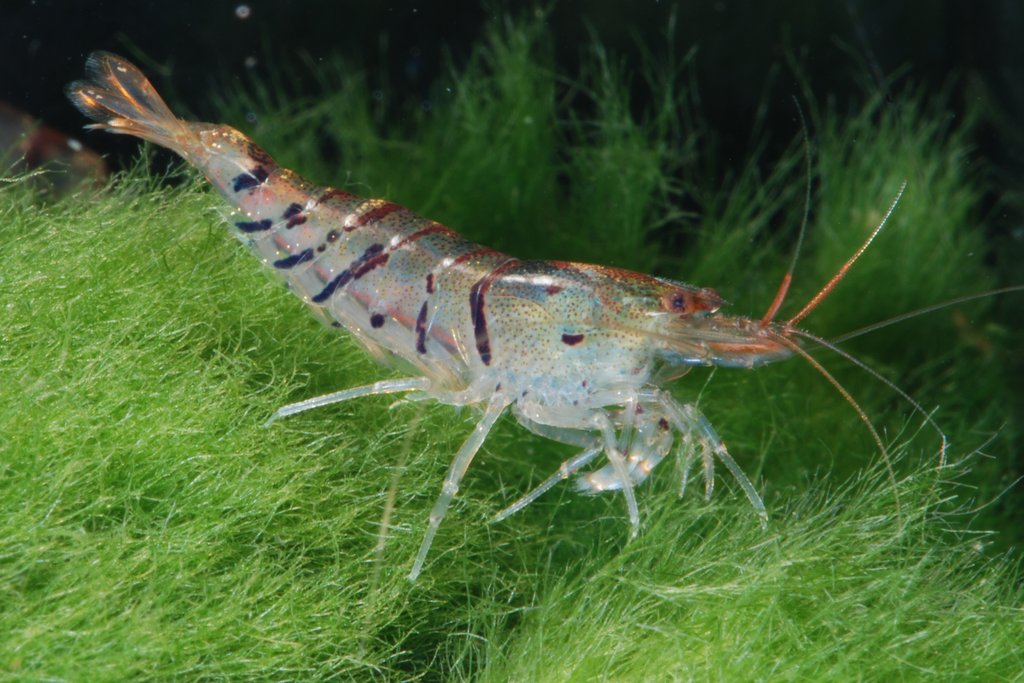
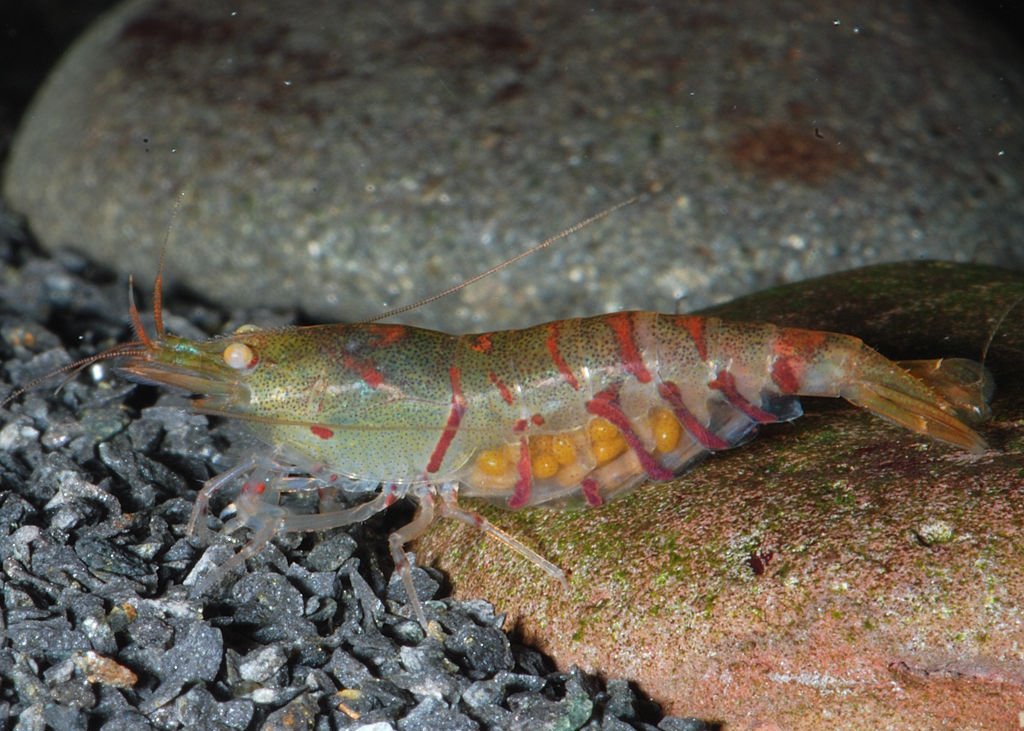
Photos
Overview
The tiger shrimp (Caridina mariae) is a small freshwater shrimp of the family Atyidae that is popular in hobby aquariums. It is named for the dark "tiger" stripes on its semi-transparent body.
The species was described in 2014 by Werner Klotz and Thomas von Rintelen. Its closest relative is the bee shrimp (Caridina cantonensis), and the trade often labels tiger shrimp as forms of C. cantonensis. English Wikipedia lists "Tangerine Tiger" among bee shrimp variants, but its species article treats the tiger shrimp as a separate species, C. mariae.
It is a peaceful omnivore that needs very clean, soft water.
Appearance
Adults reach about 2.5–3.8 cm. Females are larger than males and have a curved underbelly.
The natural colouring is a semi-transparent body with dark brown to black blotches on the carapace and matching "tiger" stripes along the rear of the carapace and the first six abdominal segments. The tail fan has no dark markings. Some variants have orange eyes and orange highlights on the tail fan. The young look like the adults, and any blue, orange or yellow colouring grows darker and stronger as they mature.
Care
- Water: very clean and soft.
- Temperature: 18–24 °C.
- pH: 6.0–7.5, ideally about 6.5.
- Filter: guard the filter intake, because young shrimp can be pulled in.
- According to Tetra, tiger shrimp need almost the same water as bee, crystal and Blue Bolt shrimp.
Lifespan is 1–2 years.
Feeding
An omnivore. The sources used give no detailed feeding advice for the tiger shrimp. For the closely related bee shrimp, the diet is based on algae, biofilm and dedicated shrimp foods.
Compatibility
A peaceful, non-aggressive shrimp. According to Tetra, it gets along with other Caridina shrimp such as crystals, bees and Blue Bolts, because their water needs are almost the same. However, different lines interbreed easily and the offspring are often pale and weak, so keep them apart to preserve a line.
Breeding
- Development is direct: there is a single larval stage before the juvenile stage.
- The larva is well developed and looks like the adult, with working walking and swimming legs. It does not feed and lives on its yolk reserves.
- The young are no more than 3 mm long at birth and grow by moulting.
- Gestation takes about 30 days.
- Cover the filter intake so the young are not sucked in.
Fun facts
- The species is named after Maria, the wife of the first author, for her support on field trips and her patience while he spent his evenings at the microscope.
- C. mariae was described in the paper "To “bee” or not to be" (Zootaxa, 2014), together with another new species, Caridina logemanni.
- A 2020 phylogenetic analysis confirmed that the tiger shrimp is the sister species of the bee shrimp.