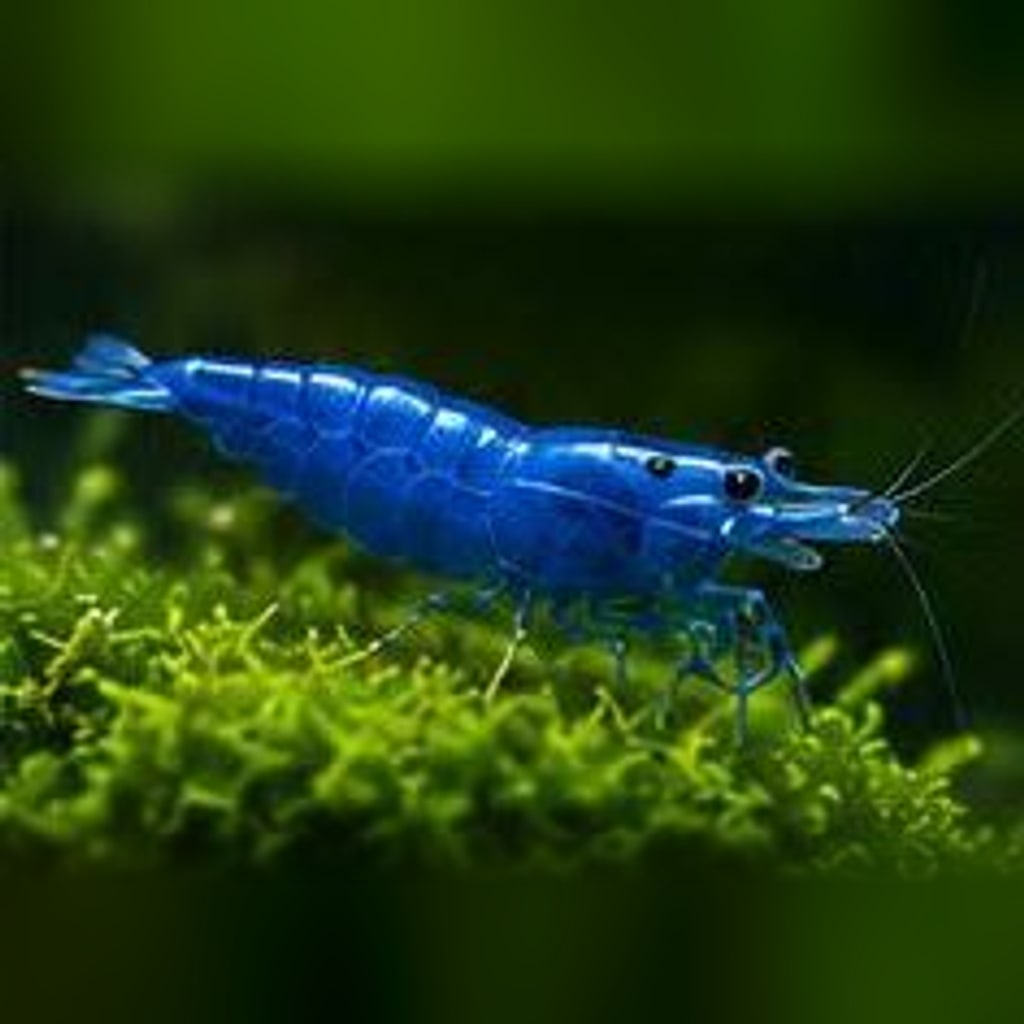
Variety of Cherry shrimp (Neocaridina davidi)
Blue Dream shrimp
Neocaridina davidi 'Blue Dream'
Origin: East Asia: Taiwan, eastern China, the Korean Peninsula and Vietnam. Lives in lakes, ponds, slow rivers and streams. Released aquarium shrimp have established populations in thermally polluted waters of Japan, the USA, Poland and Germany.
Also known as: Blue Dream, Blue Dream Shrimp
Fact sheet
- Size
- 3 cm
- Lifespan
- 2 years
- Minimum tank size
- 10 L
- Temperature
- 22–25 °C
- pH
- 6.5–8
- Hardness GH
- 6–20 °dH
- Hardness KH
- 3–10 °dH
- Temperament
- Peaceful
- Group size
- 10+ individuals
- Diet
- Omnivore
- Eats plants
- No
- Copper sensitive
- Yes
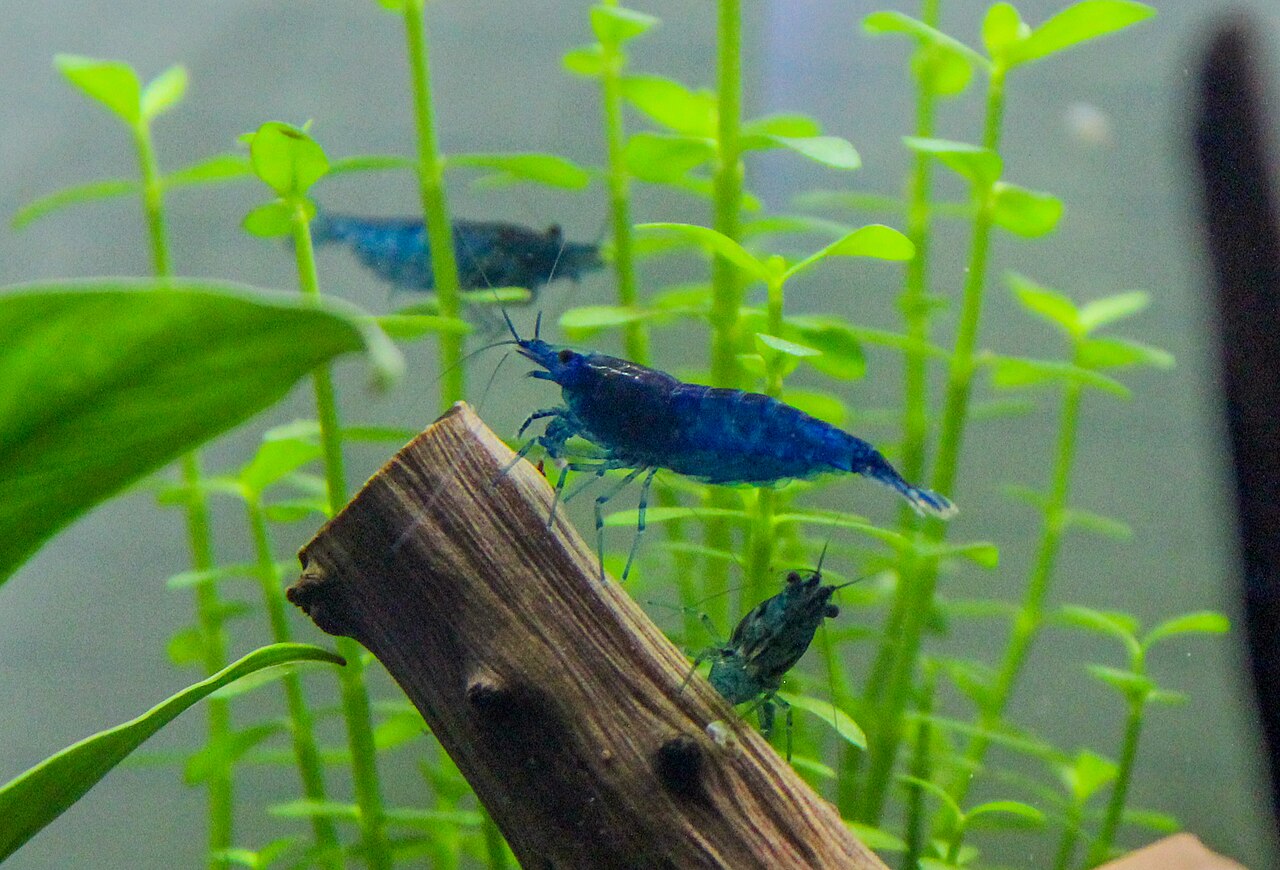
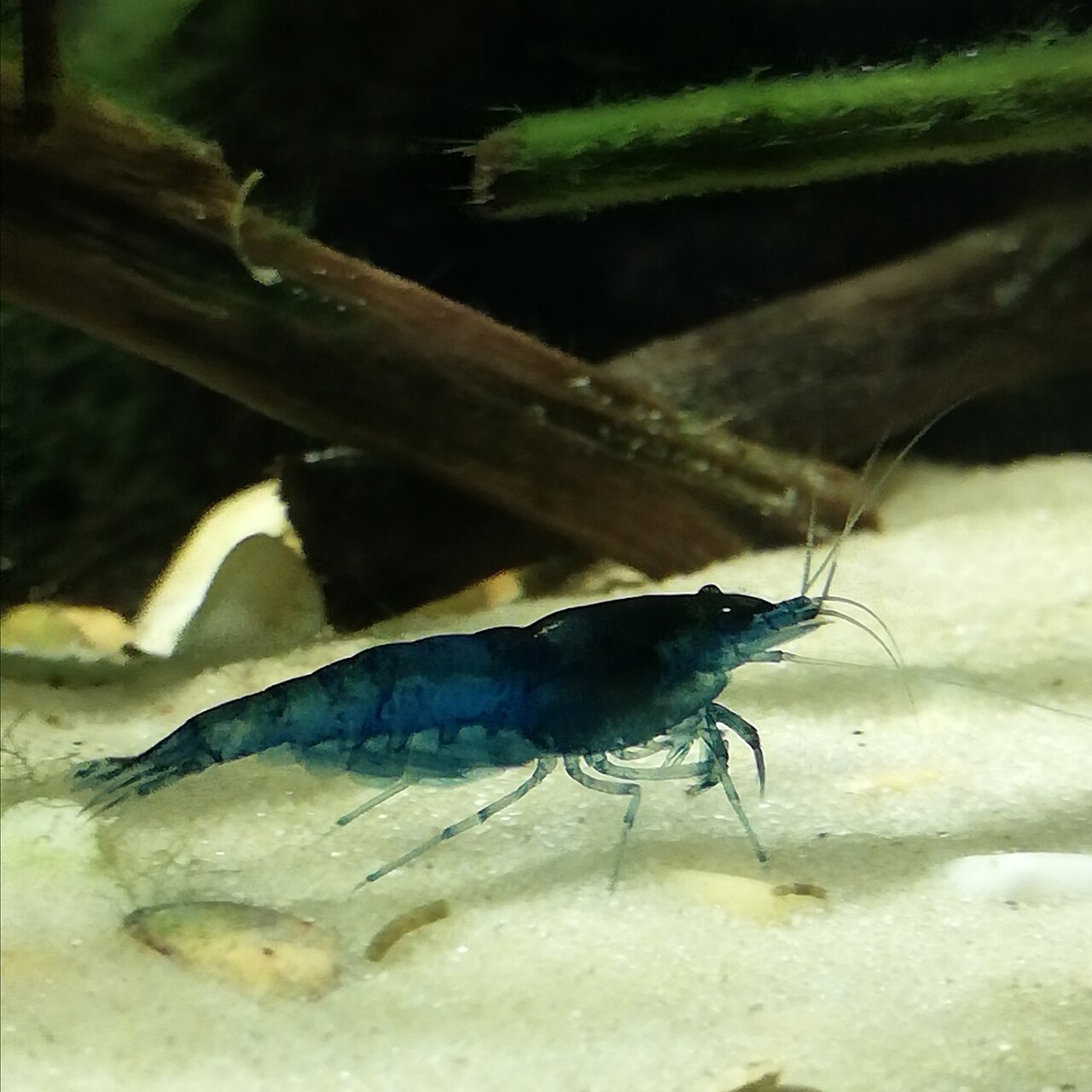
Photos
Overview
A selectively bred form of Neocaridina davidi with deep blue colouring. It kept the parent form's hardiness and easy breeding; care is the same as for the species.
Appearance
The body is light to deep blue; intensity depends on genetics and conditions. Blue comes from iridophores reflecting blue light, or from absent melanophores combined with bluish flesh. According to Tetra this form is somewhat smaller, not exceeding 3 cm. Females are larger and brighter than males.
Care
Shared with the species: Cherry shrimp (Neocaridina davidi)
- Tank size: a small group (up to 10) can live in 5–10 L, but because sudden changes stress them Tetra recommends 30–50 L; Russian Wikipedia gives 20–30 L as suitable, with several dozen shrimp in 40–50 L. Rule of thumb: 1–2 L of water per shrimp.
- Group: keep in a group, ideally 10 or more.
- Temperature: optimum 22–25 °C (Tetra), 23–25 °C (Wikipedia); they tolerate 15–30 °C for a while.
- pH: 6.5–8.0 (Russian Wikipedia gives 7.5–8 for the cherry shrimp).
- Hardness: GH 6–20 (Tetra, colour forms), 2–10 °dH (Wikipedia, genus Neocaridina); KH 3–10 (another Tetra article gives 3–20). In very soft water the shell becomes too weak.
- Plants and moss: live plants are essential as cover, especially during moulting: Java and Christmas moss, Riccia, Cladophora, ferns; driftwood covered with moss is useful.
- Substrate: fine, 0.5–1.5 mm; shrimp look brighter on dark substrate.
- Filtration: a filter with gentle flow plus aeration, e.g. a small internal or air-driven (sponge) filter.
- Lid: cover the tank — shrimp climb out and jump when startled.
- Copper: copper compounds are highly toxic; copper-based fish medications and snail killers are dangerous.
- Water quality: sensitive to ammonia, nitrite and nitrate — add only to a mature tank.
- Water changes: up to 20% weekly.
Lifespan is 1–2 years (Tetra: a year to a year and a half); the warmer the water, the shorter the life.
Feeding
Shared with the species: Cherry shrimp (Neocaridina davidi)
Omnivorous. Feeds on biofilm, algae, detritus and its own moulted exoskeletons; it does not eat vascular plants.
In a community tank leftover fish food is usually enough, but shrimp should also get specialised crustacean food (granules, sinking sticks, wafers). They accept blanched spinach, zucchini, oatmeal, pieces of vegetables and fruit, lettuce, and oak or hazel leaves — remove uneaten remains.
Tetra advises feeding once a day as much as is eaten within 2–3 hours in a shrimp-only tank; Russian Wikipedia suggests 1–2 feedings a week in a species tank. Tetra does not recommend high-protein live or frozen food.
Moults need not be removed — the shrimp eat them.
Compatibility
Shared with the species: Cherry shrimp (Neocaridina davidi)
Completely peaceful but vulnerable because of its small size: small invertebrates are natural food for most fish. Juveniles and freshly moulted shrimp are most at risk.
- Good tankmates: guppies, mollies, neon tetras, danios, celestial pearl danios, otocinclus, bristlenose plecos, small tetras, corydoras, small rainbowfish; snails and other shrimp (Amano, filter shrimp).
- With caution: swordtails, gouramis.
- Unsuitable: any cichlids (even dwarf), large and predatory fish, angelfish, loaches, barbs, large rainbowfish, crayfish; predatory Helena snails catch juveniles.
- Planarians are also a danger.
Colour forms of Neocaridina interbreed easily, so different forms are kept apart to preserve colour.
Breeding
Shared with the species: Cherry shrimp (Neocaridina davidi)
Breeding is easy and needs no special conditions — just a pair, stable water and food. There is no larval stage.
- Sexual maturity: about 2 months (English Wikipedia), about 3 months (Tetra).
- After moulting the female releases pheromones and males swim about searching for her. The male deposits sperm, and the eggs are fertilised as they leave the female's body.
- The female carries 20–30 eggs on her pleopods, fanning and cleaning them. Young or stressed females may drop their eggs.
- Eggs develop in 2–3 weeks; dark eye spots appear shortly before hatching.
- Fully formed shrimp of about 1 mm hatch as miniature adults. They need no special food, grazing on biofilm and microorganisms. Dense plants and moss give them cover.
To keep colours bright, breeders select the most intensely coloured shrimp and add new bloodlines from time to time.
Fun facts
Shared with the species: Cherry shrimp (Neocaridina davidi)
- The species was described by E.-L. Bouvier in 1904 in the genus Caridina; the genus Neocaridina was only separated in 1938.
- The world population is thought to number in the billions, mostly in aquariums.
- Colour is produced by pigment cells called chromatophores (erythrophores, xanthophores, iridophores, leucophores, melanophores); carotenoids for pigment come from food.
- A shrimp can pale or brighten quickly as its pigment cells contract or expand.
- The female fans her eggs with her swimming legs to keep them supplied with oxygen.
- In Europe and the USA the species is considered invasive in warm discharge waters.