Shrimp
Ghost shrimp (glass shrimp)
Palaemon paludosus
Origin: Southeastern United States: common in southern states east of the Appalachians; found in Louisiana (possibly introduced), with scattered records from Texas and California. Lives in fresh or slightly brackish water, usually in lakes among vegetation.
Also known as: Palaemon paludosus (syn. Palaemonetes paludosus), ghost shrimp, glass shrimp, eastern grass shrimp, feeder shrimp
Fact sheet
- Size
- 2.5 cm
- Minimum tank size
- 19 L
- Temperament
- Peaceful
- Diet
- Omnivore
- Copper sensitive
- Yes
Photos
Overview
"Ghost shrimp" is a trade name, not a single species. In the aquarium trade it most often means Palaemon paludosus (Palaemonetes paludosus) of the family Palaemonidae, but other small semi-transparent shrimp are also sold as ghost, glass, grass or feeder shrimp — for example Palaemonetes kadiakensis, P. pugio, and species of Palaemon and Macrobrachium. The English name "ghost shrimp" is also used for unrelated crustaceans: burrowing marine Thalassinidea and caprellid "skeleton shrimps".
P. paludosus is a small, almost transparent shrimp. It is recommended for beginners as it is easy to keep and eats algae and leftover food. It is also widely bought as live food for larger fish.
In the wild it is important prey for birds and fish such as black bass and is considered a keystone species of its habitat.
Appearance
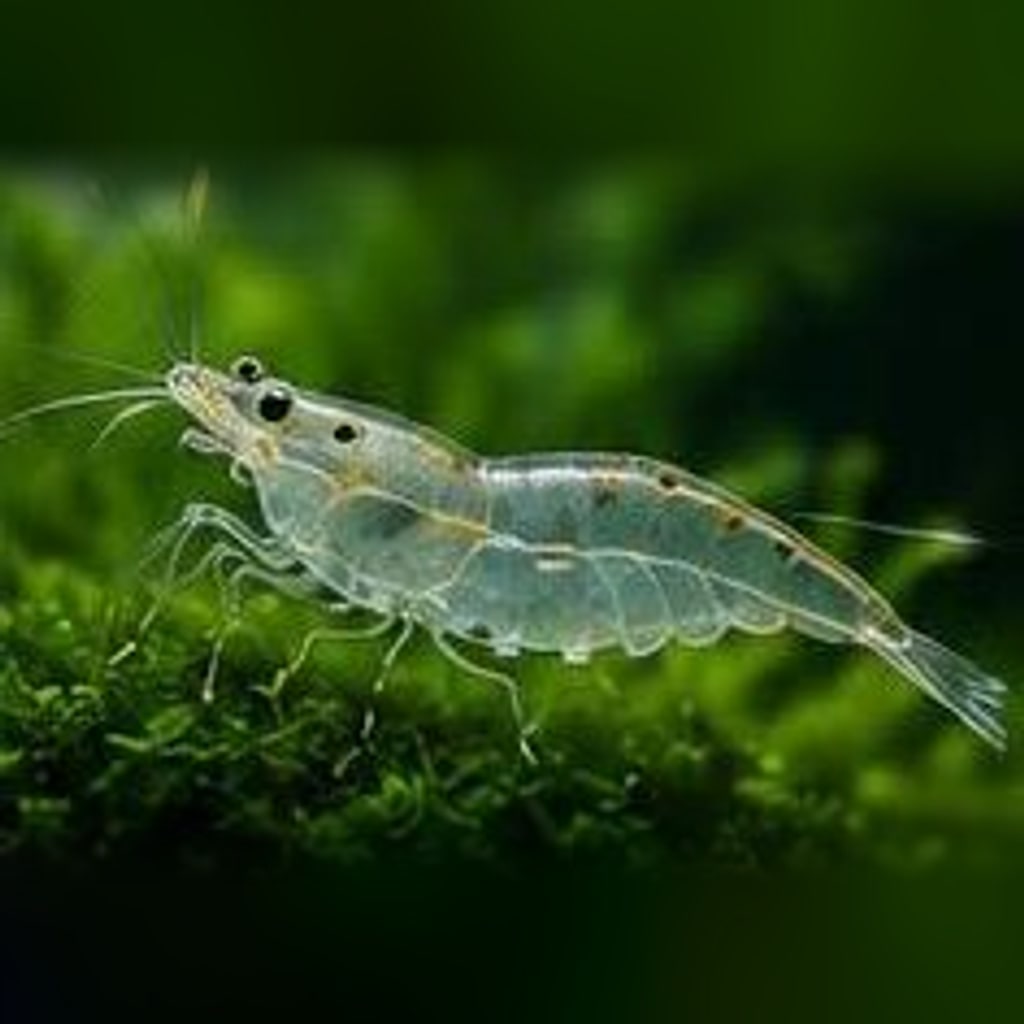
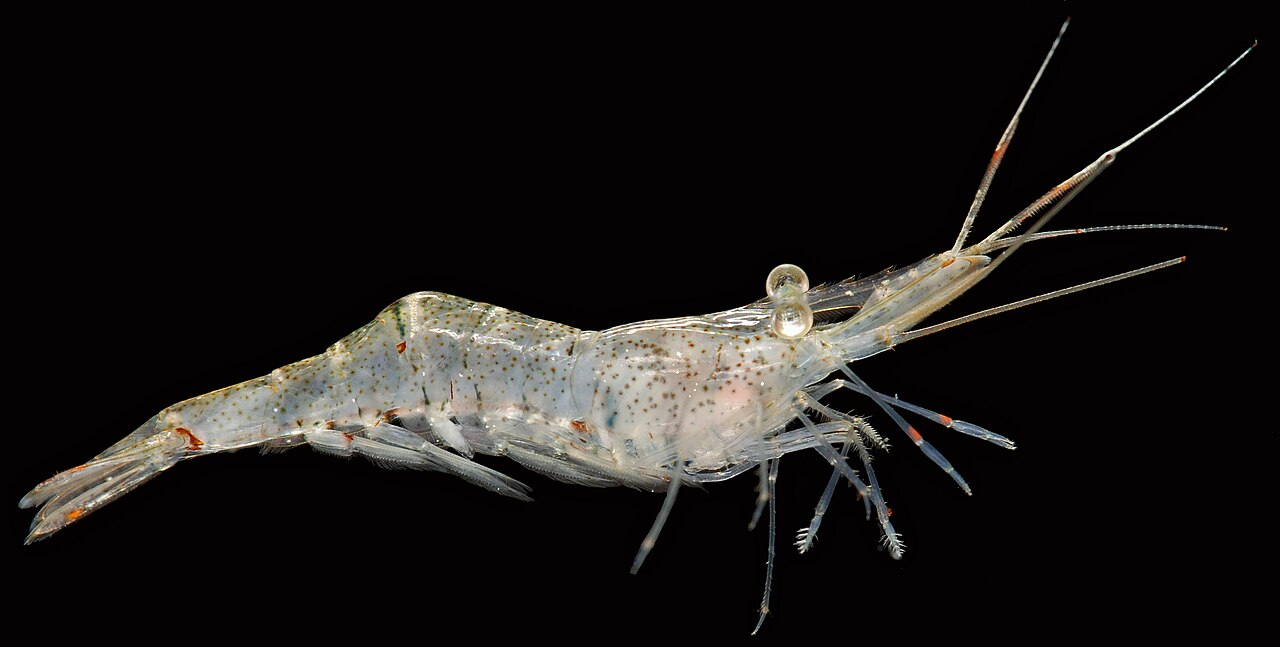
Up to 2.5 cm long; feeder shrimp in general are 1–3 cm. The body is almost entirely transparent. By shifting pigment granules in its body the shrimp can adjust its colour to the background for camouflage.
It is very similar to Palaemonetes kadiakensis and can be told apart by the arrangement of spines on the telson (tail plate).
The sexes are separate; wild populations contain more females than males (about 0.78 males per female). External sex differences are not described in the sources.
Care
- Tank size: according to English Wikipedia, a group of up to 20 can live in a 5-gallon (about 19 L) tank; a guideline is about 3 shrimp per gallon (≈3.8 L).
- Group: keeping a group is recommended for the shrimp's sake.
- Water: fresh or slightly brackish in the wild. Temperature, pH and hardness are not given in the sources used.
- Plants and moss: by day the shrimp hide among vegetation; hornwort and Java moss provide both cover and food.
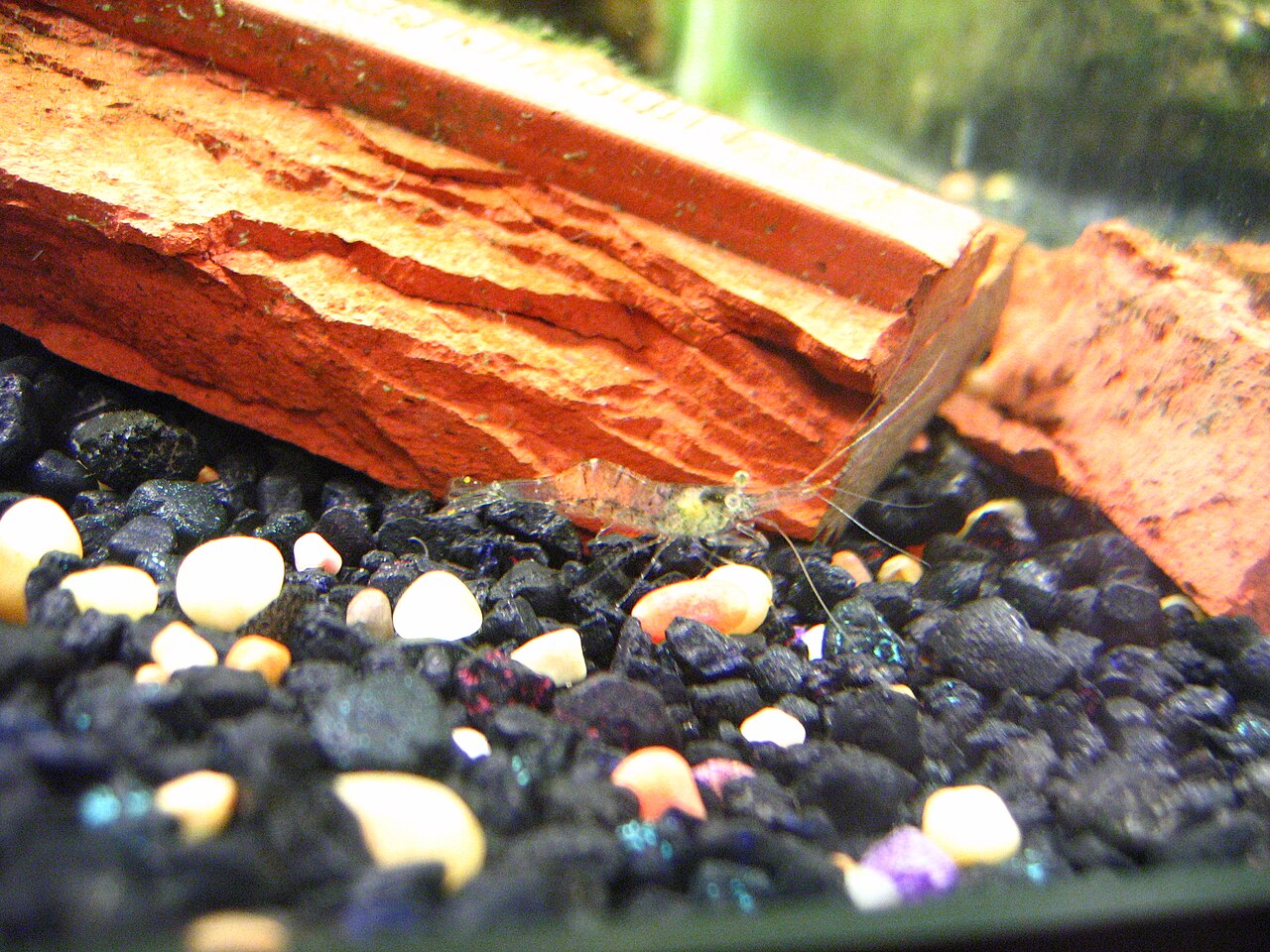
- Decor: they look good over black gravel and against a dark background.
- Copper: like all crustaceans they are extremely averse to copper (their blood contains haemocyanin).
Lifespan: in the wild the shrimp die after the spawning season ends, completing their life cycle; no exact figure is given in the sources.
Feeding
Omnivorous. In the wild it eats algae, aquatic insects, insect larvae and eggs, diatoms (Fragilaria, Navicula) and plankton, feeding mostly at night.
In the aquarium it eats leftover food of other inhabitants, detritus, decaying plant matter and algae, including hair algae. Suitable foods include brine shrimp, algae wafers, daphnia, spirulina, bloodworm, mosquito larvae and Indian almond leaves.
The more algae in the tank, the less supplementary food is needed. Feed small portions and avoid overfeeding — the shrimp tend to eat non-stop.
Compatibility
Peaceful: safe with most fish and invertebrates.
Being small, it is prey itself: in the trade it is sold as live food for larger, aggressive fish, and in the wild it is eaten by birds and fish such as black bass. Kept with large or predatory fish, the shrimp will not last long.
Breeding
Reproduction is sexual. The species is polygynous — a male mates with several females.
- The timing of the breeding season depends on water temperature.
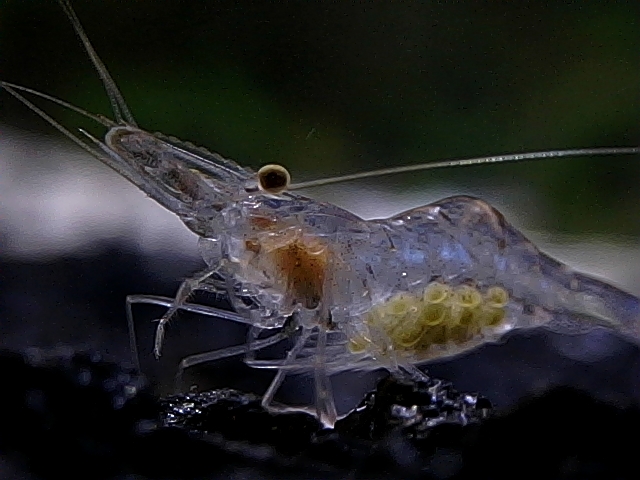
- A female lays up to 85 eggs per clutch.
- Individuals die after the spawning season — reproduction completes their life cycle.
Larval development (whether there is a larval stage, whether brackish water is needed) is not described for P. paludosus in the sources used.
Fun facts
- The shrimp camouflages itself by redistributing pigment granules in its body.
- It is parasitised by the isopod Probopyrus pandalicola, which sterilises females and affects the development of male sexual characteristics.
- Thanks to their high carotenoid content (astaxanthin, canthaxanthin), feeder shrimp enhance the colour of fish that eat them.
- Its distribution in dense smartweed (Polygonum) beds is linked to reduced predation in these complex habitats.
- The genus Palaemonetes is now treated as part of Palaemon, so the species appears under both names.