Snails
Assassin snail
Anentome helena
Origin: Southeast Asia: Indonesia (including Lake Toba on Sumatra), Malaysia and Thailand. Lives in both flowing and still waters — clear rivers and lakes, at shallow depths — and prefers fine sandy or muddy substrate.
Also known as: Anentome helena, Clea helena, bumblebee snail
Fact sheet
- Size
- 2 cm
- Lifespan
- 2 years
- Minimum tank size
- 15 L
- Temperature
- 23–27 °C
- pH
- 7–8
- Hardness GH
- 8–15 °dH
- Temperament
- Predator
- Group size
- 6+ individuals
- Diet
- Carnivore
- Eats plants
- No
- Copper sensitive
- Yes
Photos
Overview
The assassin snail is a predatory freshwater gastropod of the family Nassariidae, almost all of whose members are marine. The shell is closed by an operculum.
In aquariums it is valued above all for its appetite for other small snails: it chases its prey or waits in ambush, inserts its proboscis into the shell and sucks the snail out. A few assassins help reduce ramshorn, bladder and Malaysian trumpet snails without manual removal or chemicals.
It is hardy, ignores fish and plants, but is a danger to small snails and freshly moulted shrimp.
Appearance
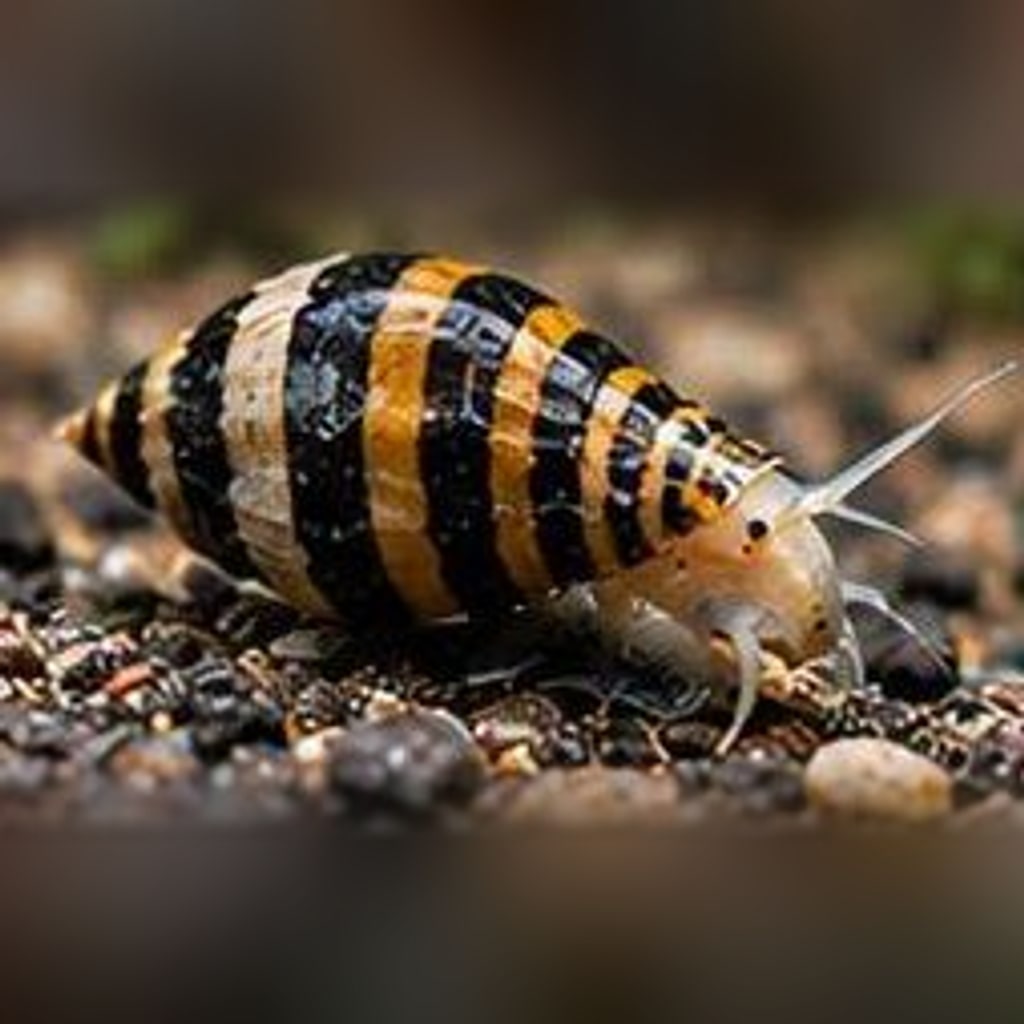
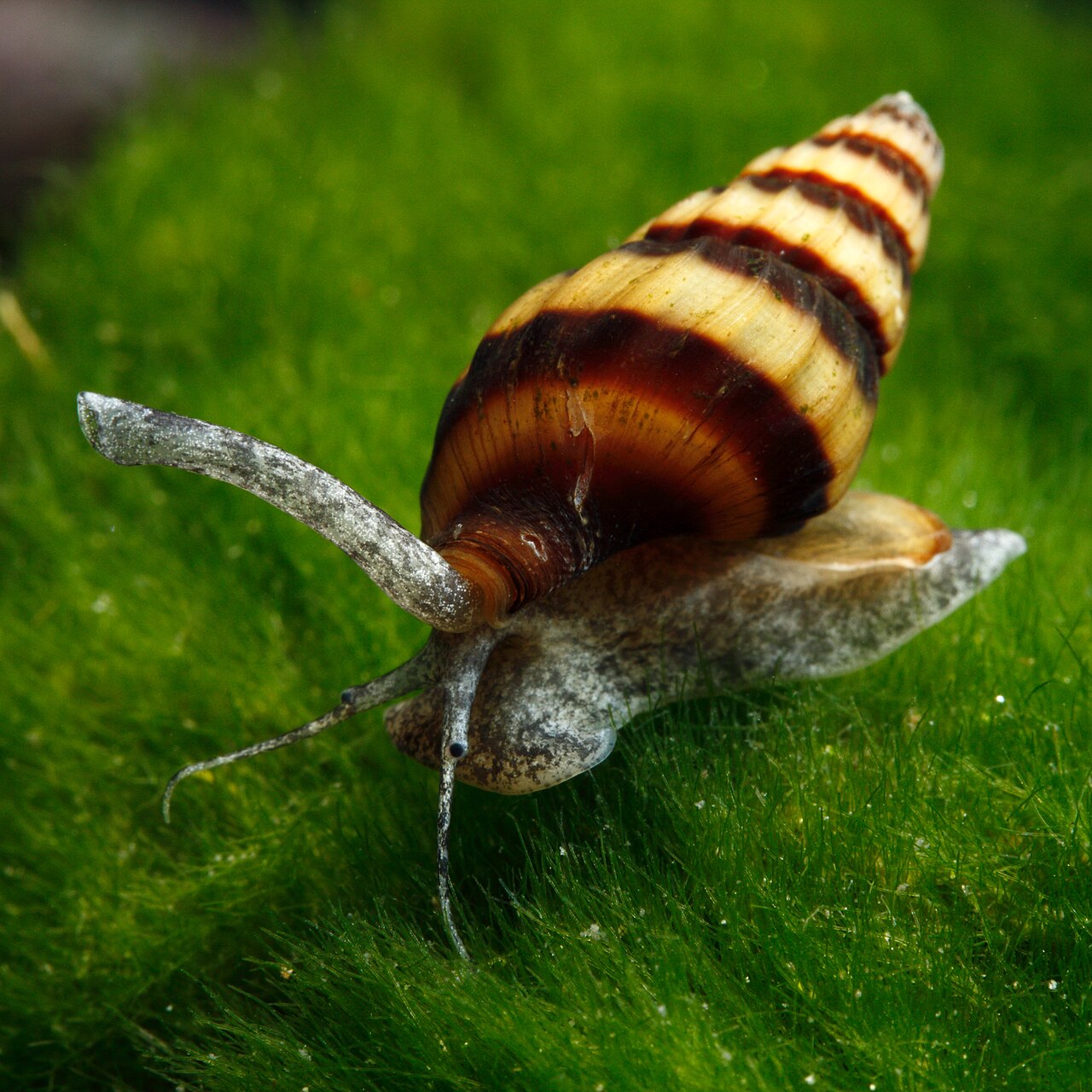
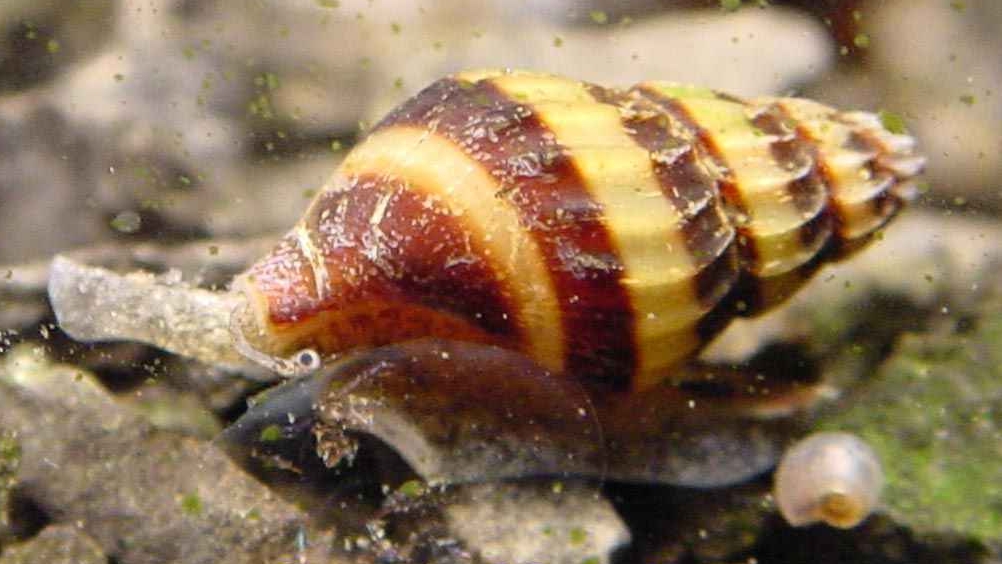
The shell is elongated, conical and ribbed, with 6–8 whorls and alternating yellow (light tan) and dark brown or black spiral bands. Some specimens have completely brown shells without banding. The aperture is relatively large and oval, closed by an almond-shaped operculum.
Shell size is 18–32 mm according to English Wikipedia, or 18–28 mm long and 7–13 mm wide according to Russian Wikipedia; aquarium specimens are usually smaller, and according to Tetra large individuals rarely exceed 2 cm.
The body is grey or brownish with speckles and a large pale foot. A long breathing tube (siphon) is clearly visible. The mouth is extended into a proboscis, and the eyes sit at the base of the tentacles.
Care
- Tank: 3–5 L is enough for one snail, but 15–20 L or more is optimal; provide a filter, aeration and a heater.
- Temperature: 23–27 °C.
- pH: 7.0–8.0; very soft, acidic water damages the shell.
- Hardness: GH 8–15 — minerals are needed for shell growth. No salt is needed; the species is fully freshwater.
- Substrate: coarse sand or fine rounded gravel up to 2 mm — assassins often burrow, especially after feeding.
- Lighting: any; bright light does not bother them.
- Water changes: about 20% weekly.
- Copper: medications containing copper or its compounds are deadly to assassin snails — do not use them in a tank with snails.
In aquariums the assassin snail lives on average about two years, and several years in good conditions.
Feeding
A predator and scavenger. In the wild it eats other gastropods and their eggs, worms and carrion; according to English Wikipedia it often attacks snails larger than itself, although in aquariums it usually leaves adult apple snails and nerites alone.
In aquariums assassins are used to control pest snails — ramshorns, bladder snails and Malaysian trumpet snails. Once the snails are gone they need protein-rich food: sinking tablets for bottom feeders, bloodworm, brine shrimp; they also eat fish food leftovers and the bodies of dead fish.
Assassin snails do not eat plants — any plant species can be kept with them.
Compatibility
- Fish: peaceful species such as guppies, mollies, danios, rasboras, tetras, corydoras and gouramis. An assassin snail is too slow to attack healthy fish.
- With caution: angelfish and barbs may harass the snails.
- Avoid: snail-eating fish (pufferfish, loaches), large predatory cichlids (oscars, cichlasomas, acaras) and African cichlids.
- Shrimp: not recommended with small shrimp — freshly moulted individuals are especially vulnerable.
- Snails: all small snails and juveniles (including young apple snails) will be eaten; large adult apple snails, nerites and Theodoxus are usually left alone.
- Eggs: any fish eggs they find will be eaten.
Breeding
- Assassin snails have separate sexes, but males and females cannot be told apart, so keep a group of at least 6 to breed them.
- They mature at about six months, at a size of about 1 cm. A pair stays close together; mating is long — up to two hours according to Tetra, many hours according to English Wikipedia.
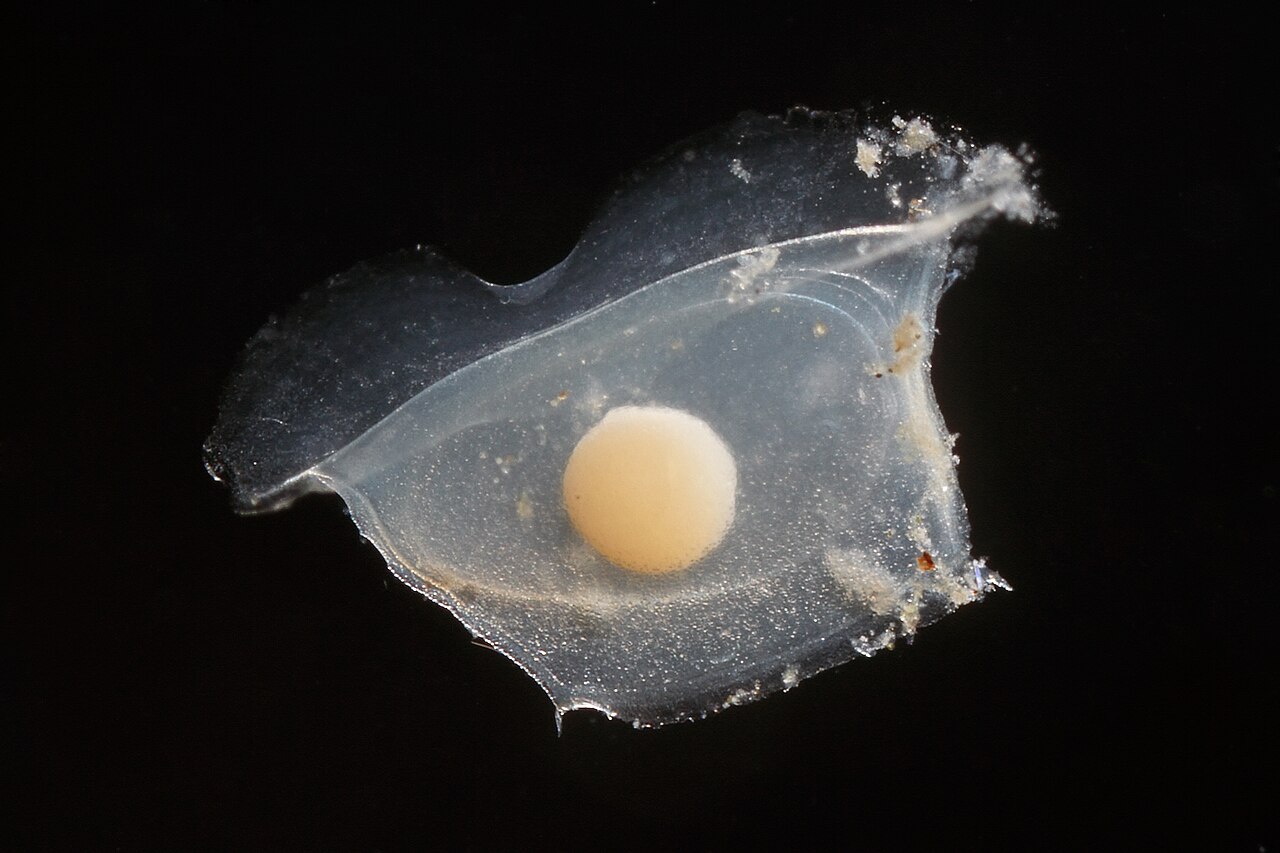
- The female lays clear, almost square capsules 1–1.5 mm in size on hard surfaces (decor, plants, the filter), each containing a single yellow egg.
- Incubation takes 20–30 days according to Tetra (2–6 weeks depending on temperature according to Russian Wikipedia); 23–25 °C is optimal.
- A female can lay several hundred eggs a year, but only a small proportion survive: juveniles suffer from cannibalism.
- Hatchlings immediately burrow into the substrate and may stay there for up to six months, until they reach a few millimetres (2–5 mm according to different Tetra articles).
- They breed year-round, even in a community tank, but active fish (barbs, rainbowfish, loaches, large cichlids) may prevent it — move the pair to a separate tank then.
Fun facts
- The assassin snail belongs to the family Nassariidae, almost all of whose species live in the sea.
- The name "bumblebee snail" comes from the banded shell; it is also used for the marine snail Engina mendicaria.
- It spends most of its time buried in the substrate and is least active at midday, but quickly emerges when it senses food.
- It can serve as an intermediate host of the trematode Echinostoma revolutum (confirmed in Chiang Mai province, Thailand).
- When introduced outside its range, it may be a serious threat to native freshwater snails.