Snails
Rabbit snail
Tylomelania spp.
Origin: Endemic to Sulawesi, Indonesia. Most species live only in Lake Poso and the Malili lake system (Matano and Towuti, and the smaller Lontoa, Mahalona and Masapi). The water there is relatively soft but with a fairly high pH, and the shallows stay at 27–30 °C almost all year. Some species live on rocks, others on sand.
Also known as: Tylomelania spp., Tylo, Sulawesi snail
Fact sheet
- Lifespan
- 7 years
- Minimum tank size
- 15 L
- Temperature
- 24–30 °C
- pH
- 7.3–8.5
- Hardness GH
- 5–7 °dH
- Temperament
- Peaceful
- Diet
- Omnivore
- Eats plants
- Yes
- Copper sensitive
- Yes
Photos
Overview
Tylomelania is a genus of operculate freshwater snails in the family Pachychilidae. In the aquarium hobby its members are known as "rabbit snails". There is no single "typical" species: various species and forms are traded, such as Tylomelania sp. Poso "Yellow", "Orange Flash" and the black T. patriarchalis.
Keepers are attracted by the varied shells — smooth, ribbed or spiny — and the brightly coloured body, as well as the slow, manageable reproduction: the snails are livebearers that produce one young at a time.
Rabbit snails are voracious, nocturnal animals that need warm, alkaline water.
Appearance
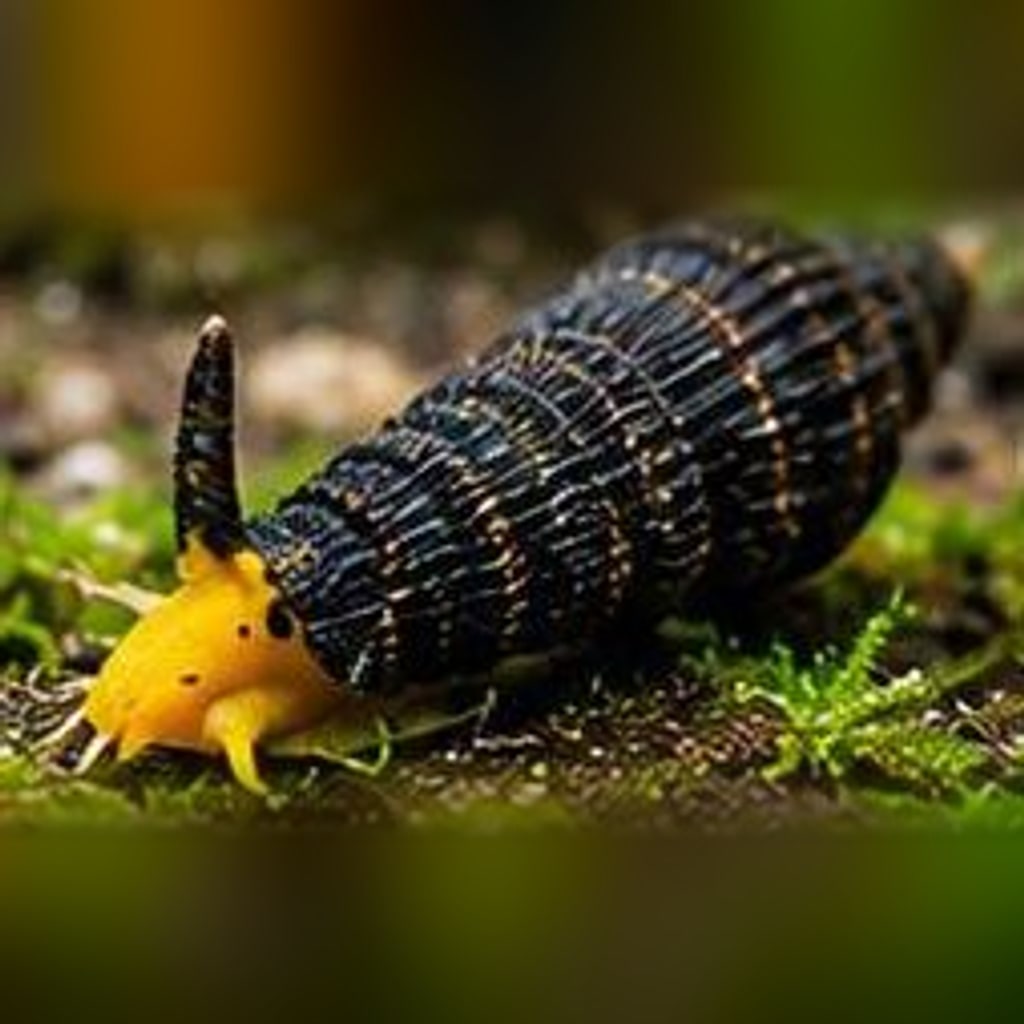
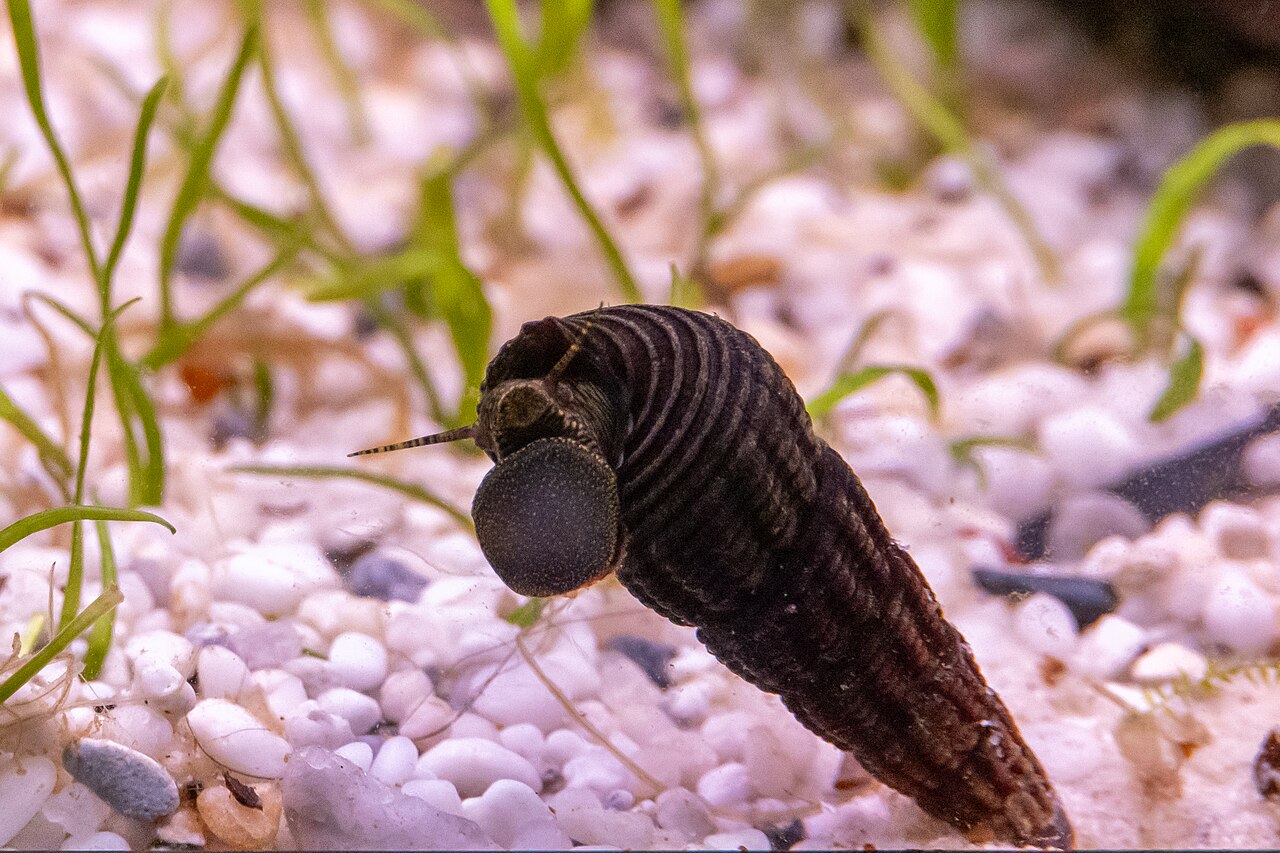
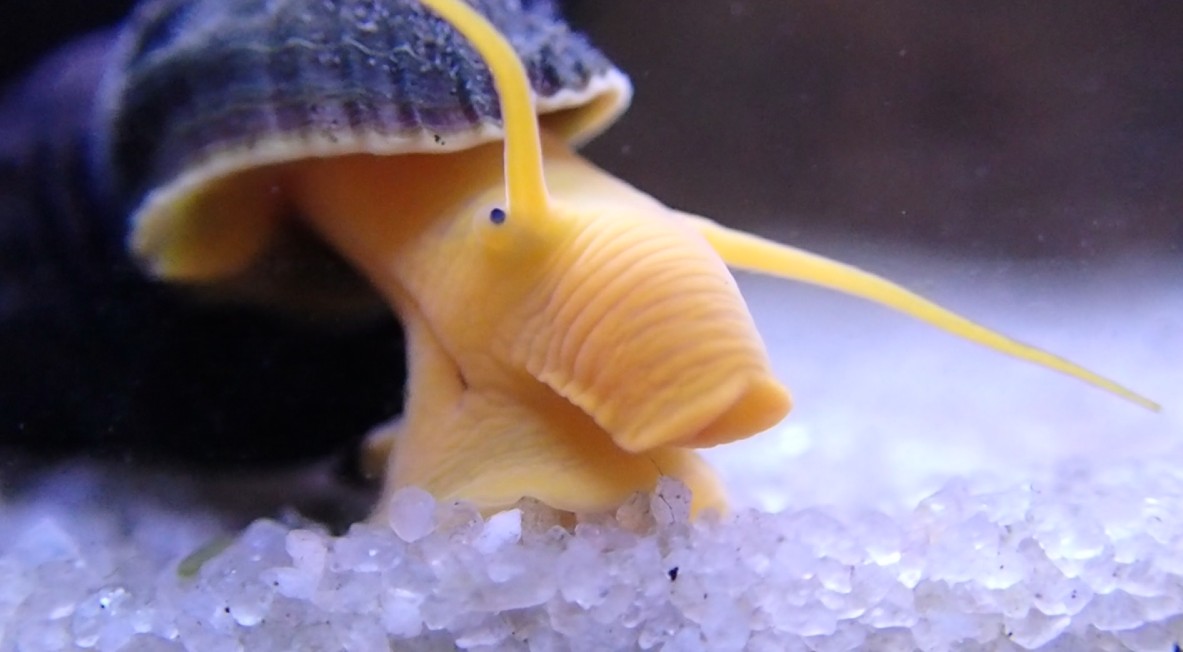
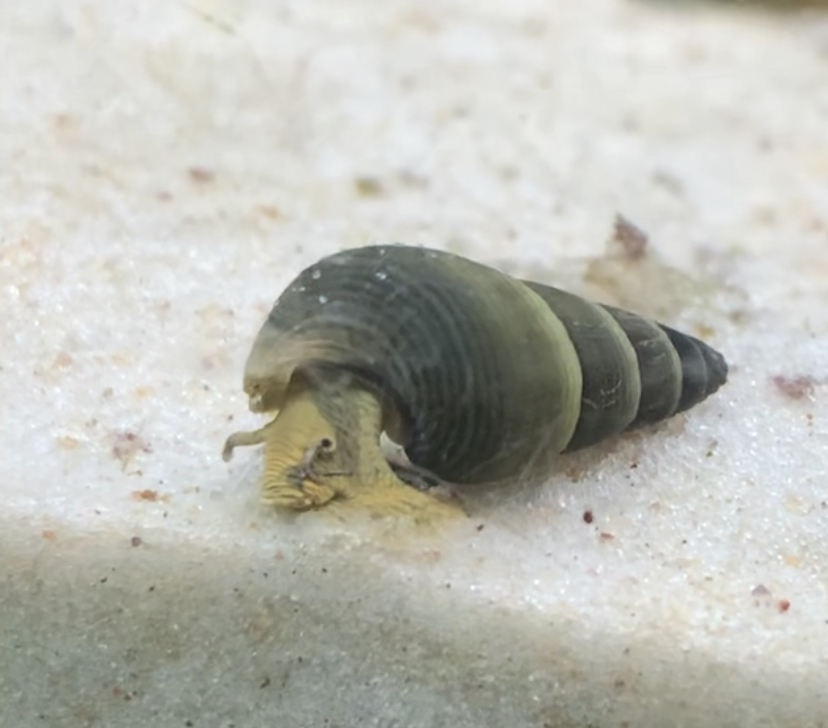
The shell is tall and elongated, smooth or with ribs, spines and knobs, coloured from dark (black, brown) to bright (yellow, orange), often with dots. The body is often bright yellow, lime green or spotted. The mouth is extended like a trunk, and the eyes sit at the base of long, thin tentacles.
Size depends strongly on the species: 2 to 12 cm according to Tetra. For example, the shell of T. zeamais is 29 mm tall and that of T. gemmifera 46.5 mm (according to Wikipedia).
According to Tetra, species from rocky habitats are more brightly coloured, while those from sandy habitats more often have rounded, plain shells.
Care
- Tank: 10–15 L of water per snail.
- Temperature: 24–29 °C according to Wikipedia, 27–30 °C according to Tetra — a heater is required.
- pH: 7.3–8.5 according to Wikipedia, 7.5–8.5 according to Tetra; acidic water damages the shell.
- Hardness: 5–7 °dH according to Tetra; in harder water the snails may become dormant.
- Substrate: soft, ideally sand with a few large stones on top.
- Lighting: subdued — they are nocturnal; hiding places and floating plants help.
- Good filtration and aeration are needed.
- Copper: copper-based medications are deadly to snails — do not use them.
In suitable conditions rabbit snails live 5–7 years.
Feeding
Omnivorous and very hungry: leftovers and algae alone are not enough, so they must be fed at least twice a day. They eat almost anything, but the diet must include plant matter — for example sinking spirulina wafers.
Rabbit snails eat soft, delicate plants, so choose tough species for their tank. They do not hunt other snails.
Compatibility
- Best kept in a species tank, which avoids conflicts and makes sure the snails get enough food.
- Shrimp: Sulawesi shrimp such as the cardinal shrimp are a good match.
- Fish: small, peaceful, warmth-loving species — tetras, neons, livebearers (Poeciliidae), small catfish.
- Avoid: large aggressive fish.
Breeding
- Rabbit snails have separate sexes (they are not hermaphrodites), and males and females look alike — keep a group to breed them.
- They are livebearers (ovoviviparous): development takes place in the female's brood pouch, and fully formed young are born.
- Reproduction is slow: according to Wikipedia the female produces a single juvenile at a time; according to Tetra one or two "eggs" in a white envelope that soon dissolves.
- Newborns are 3–15 mm according to Tetra; according to Wikipedia they reach almost 2 cm in some species — the largest newborns of any viviparous gastropod.
- The young start feeding actively right away.
Fun facts
- The name "rabbit snail" has nothing to do with sea hares (Aplysia).
- 34 species of Tylomelania had been described by 2005; Thomas von Rintelen and colleagues described 15 more in 2003–2008.
- Diversification of the genus began about 5.4 million years ago; its closest relative is Pseudopotamis from the Torres Strait Islands.
- Species of the genus most likely cannot live above roughly 700 m altitude.
- When first introduced to a tank, rabbit snails try to touch all of its inhabitants (according to Tetra).