Snails
Nerite snail (zebra nerite)
Vittina natalensis
Origin: Coastal plain of East Africa: Kenya, Mozambique, Somalia, South Africa and Tanzania. The species name natalensis refers to the Natal region of South Africa.
Also known as: Zebra nerite, tiger nerite, zebra snail, tiger snail, spotted nerite, red spotted snail, Neritina natalensis (former name)
Fact sheet
- Size
- 2.5 cm
- Lifespan
- 3 years
- Minimum tank size
- 8 L
- Temperature
- 22–27 °C
- pH
- 7.5–8
- Hardness GH
- up to 20 °dH
- Temperament
- Peaceful
- Diet
- Herbivore
- Eats plants
- No
- Copper sensitive
- Yes
Photos
Overview
Nerites are snails of the family Neritidae, which includes marine, brackish-water and freshwater species. The aquarium trade name "nerite" covers several different species; the best known is the zebra nerite, listed on English Wikipedia as Vittina natalensis (formerly Neritina natalensis).
Aquarists value it for its bold striped shell and for grazing algae without harming plants. Adults live in fresh water, but the species can only reproduce in salt or brackish water, so nerites never overrun a freshwater tank.
The name "zebra nerite" is ambiguous: it is also used for other species, such as the small marine Puperita pupa from the tropical western Atlantic.
Appearance
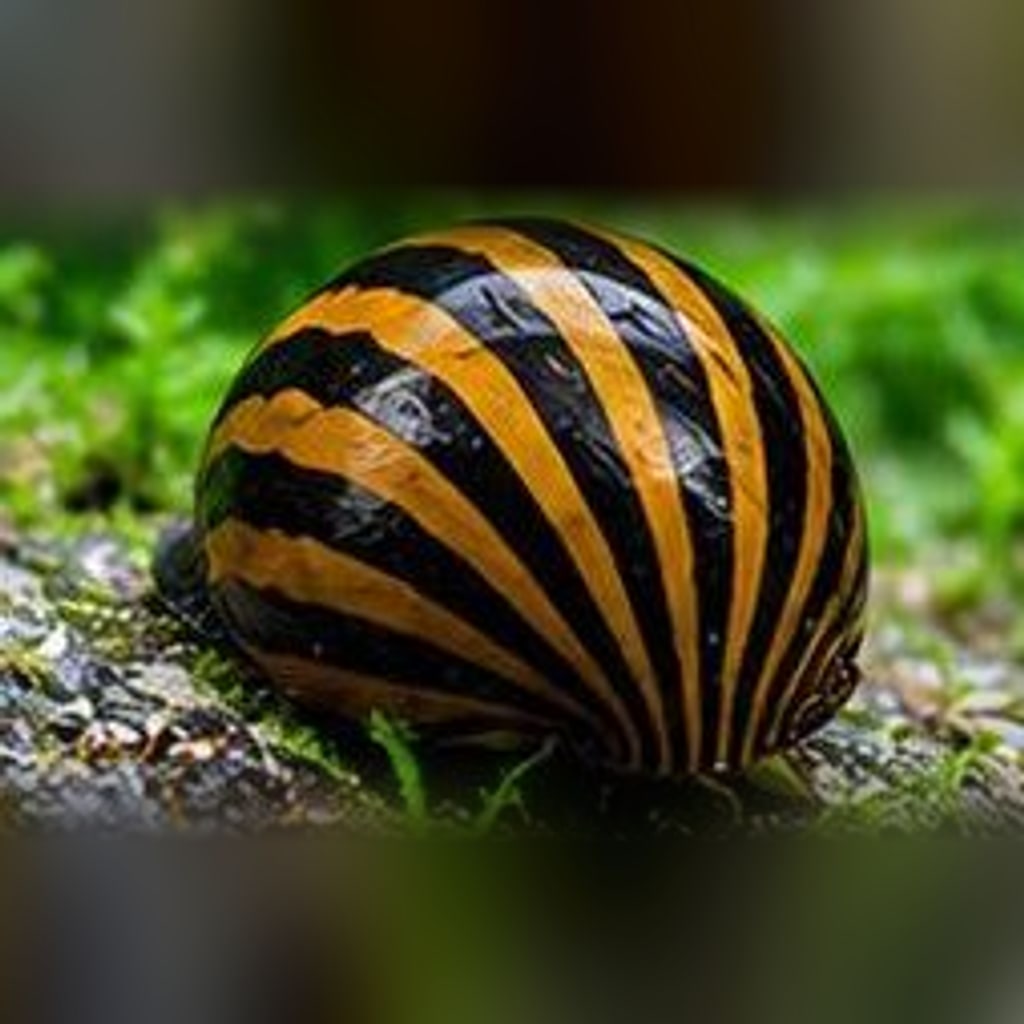
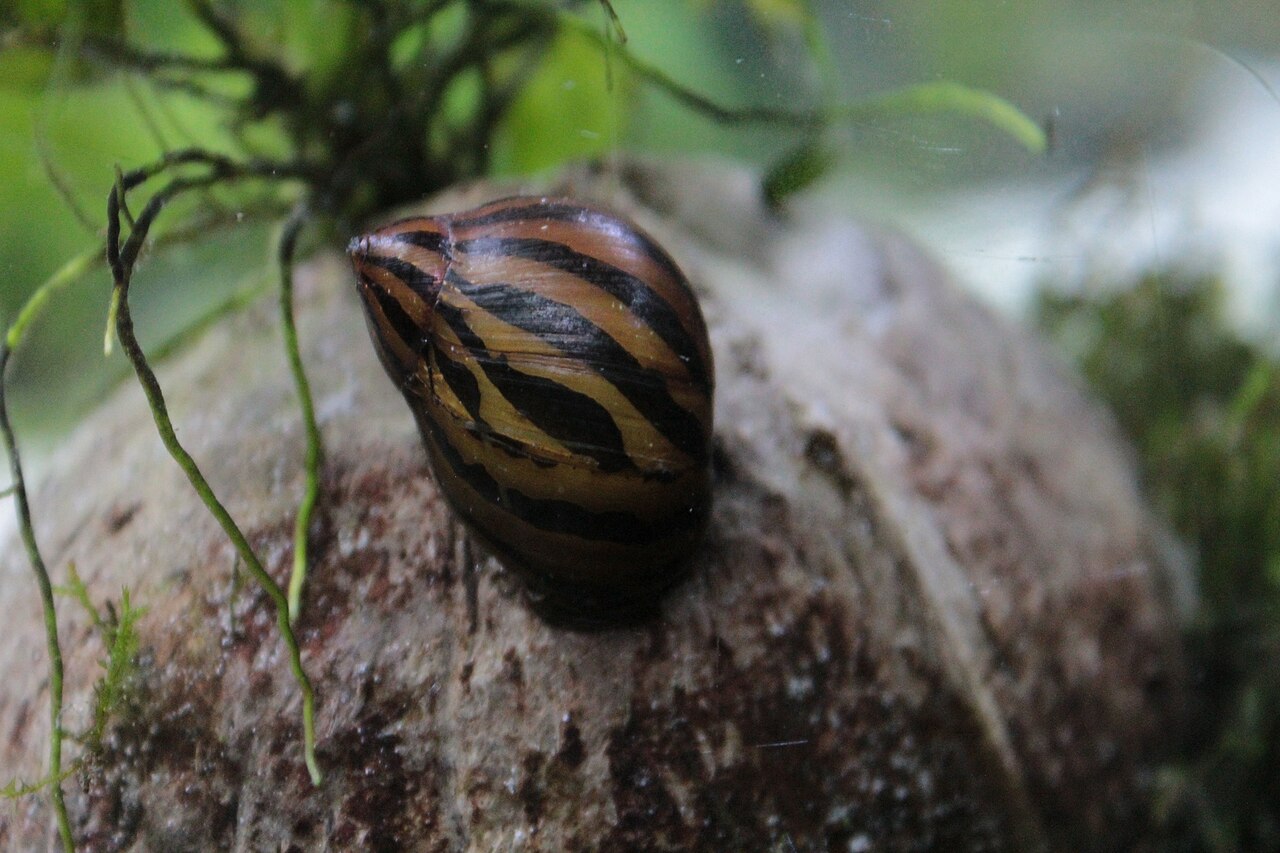
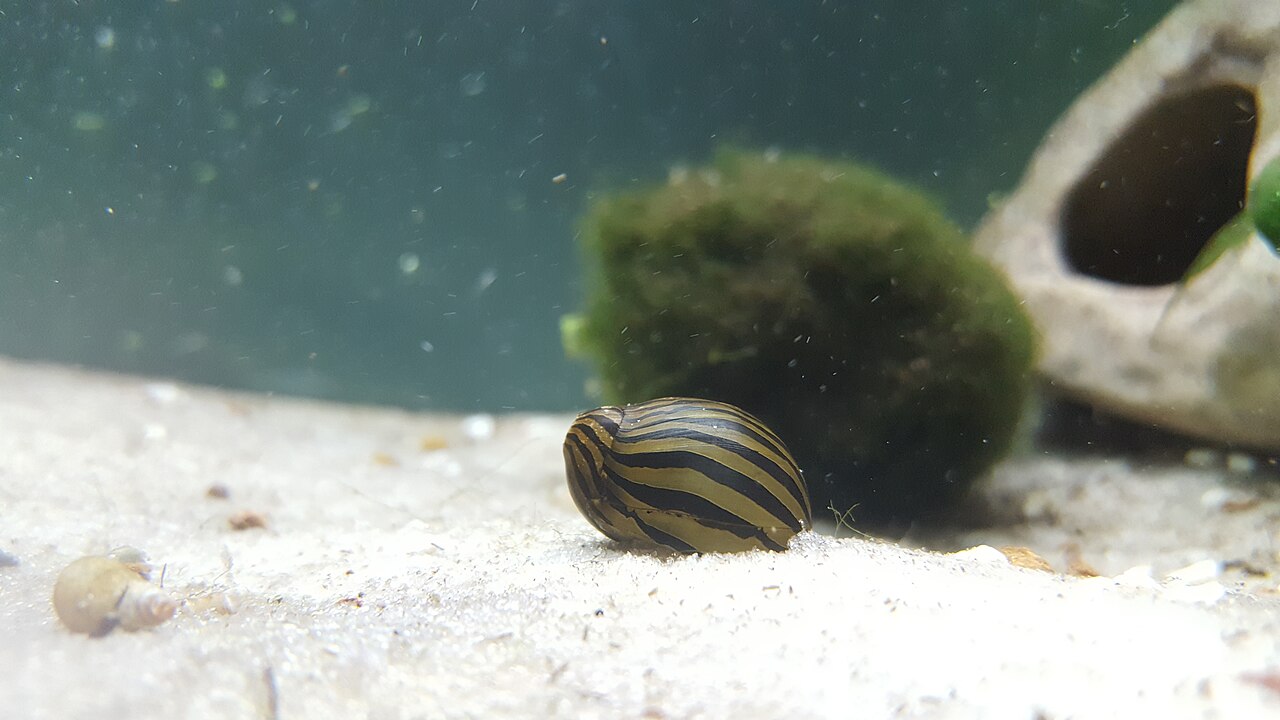
The shell is oval to rounded and grows to about 2.5 cm in diameter in the aquarium (up to 3 cm according to Tetra). It is yellow-olive to orange-brown with black stripes; in some individuals the stripes break into zigzags, dashes or spots, so hardly any two shells look the same.
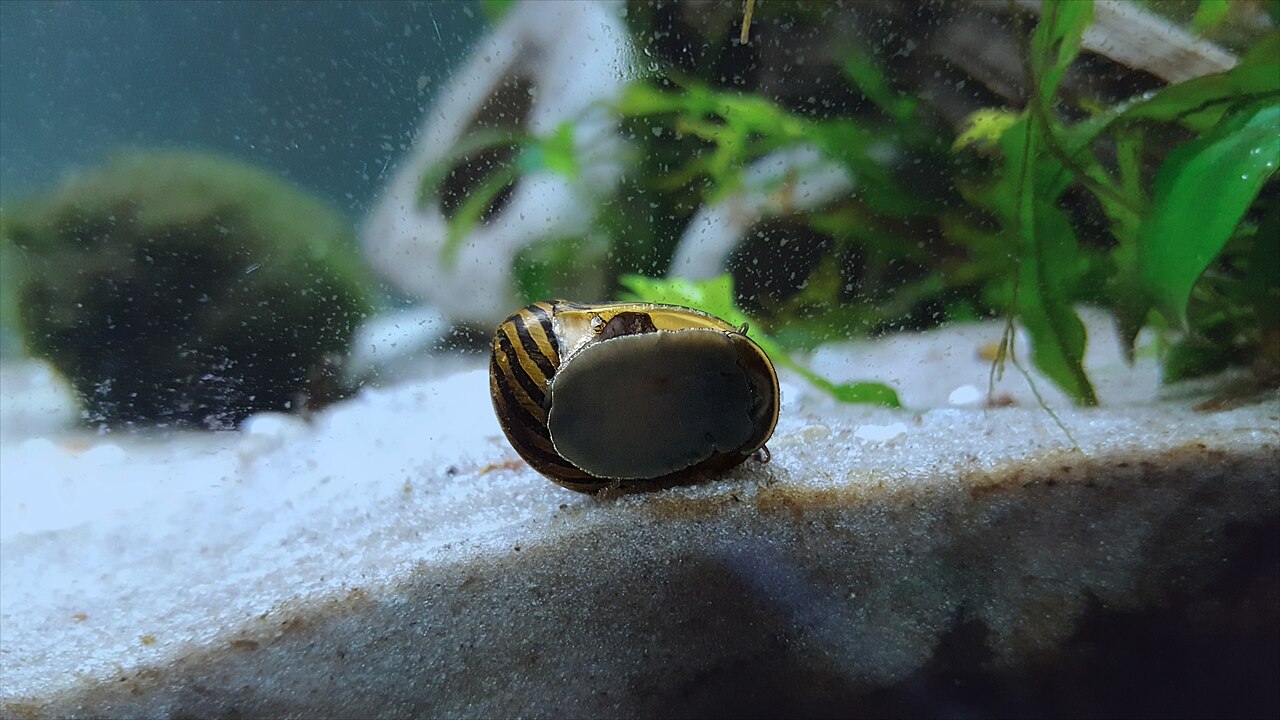
The aperture is closed by a small operculum. The foot and head are almost completely hidden under the shell and are black or brownish; the head carries thin, thread-like tentacles. Males and females look alike.
Care
- Volume: 8–10 L per snail (Tetra); avoid crowding.
- Temperature: 22–26 °C according to Wikipedia, 22–27 °C according to Tetra.
- pH 7.5–8.0; moderately hard water (up to 20 °dGH). In acidic, mineral-poor water the shell deteriorates.
- Use a lid: snails may crawl out of the tank and die.
- They do not tolerate high nitrogen compounds: add them only to a mature tank, change about 20% of the water weekly, and provide filtration and aeration.
- Copper: nerites are highly sensitive to copper-based medications.
- Sudden changes in water parameters often kill newly added snails. Place them in the tank aperture-down, as they find it hard to right themselves.
- Remove a dead snail at once, as it quickly fouls the water.
In the aquarium nerites live 2–3 years.
Feeding
Nerites are strictly herbivorous and feed on algae and dead plant matter. They clean glass, substrate and decorations quickly and do not damage living plants, so they suit planted tanks.
When algae run short, supplement with spirulina-rich foods. Nerites help against algae but are not a cure: the cause of the imbalance in the tank still has to be found and fixed.
Compatibility
Peaceful snails that harm no one. Good tankmates are small peaceful fish (livebearers, tetras, rainbowfish, barbs, catfish) and shrimp.
Avoid large predatory fish and snail-eating species such as loaches (Botia) and pufferfish. Predatory assassin snails are also unsuitable. Nerites can live with other algae-eating snails (apple snails, Physa), but they compete for food, so this works only in a roomy tank.
Breeding
- Nerites have separate sexes, but males and females look the same, so about 10 snails are kept for breeding.
- Eggs are laid on hard surfaces as firm white dots up to 3 mm long that are hard to remove; many aquarists dislike how they look on decorations.
- The larvae need salt or brackish water to develop, and the young later return to fresh water. As a result, no offspring appear in a freshwater tank.
- To breed them, move the decoration with eggs to a separate tank within three days and gradually add salt; this is difficult at home.
Fun facts
- The name nerite comes from Nerites, a sea god in Greek mythology.
- A nerite may sit motionless in one spot for up to a couple of days. This is normal and does not mean it has died.
- The strong radula of nerites can break even the hard shells of diatoms.
- A nerite lying on its back may be unable to turn itself over.