Snails
Mystery snail (Pomacea diffusa)
Pomacea diffusa
Origin: South America: the Amazon Basin (Brazil, Peru, Bolivia). The type locality is Santa Cruz de la Sierra, Bolivia. Introduced to Florida, Hawaii and Southeast Asia.
Also known as: Spike-topped apple snail, apple snail, golden mystery snail, Pomacea bridgesii (older sources), "Ampullarius" (incorrect trade name)
Fact sheet
- Lifespan
- 5 years
- Minimum tank size
- 40 L
- Temperature
- 18–28 °C
- pH
- 6.5–7.8
- Hardness GH
- 8–18 °dH
- Temperament
- Peaceful
- Diet
- Omnivore
- Eats plants
- Yes
- Copper sensitive
- Yes
Varieties
Photos
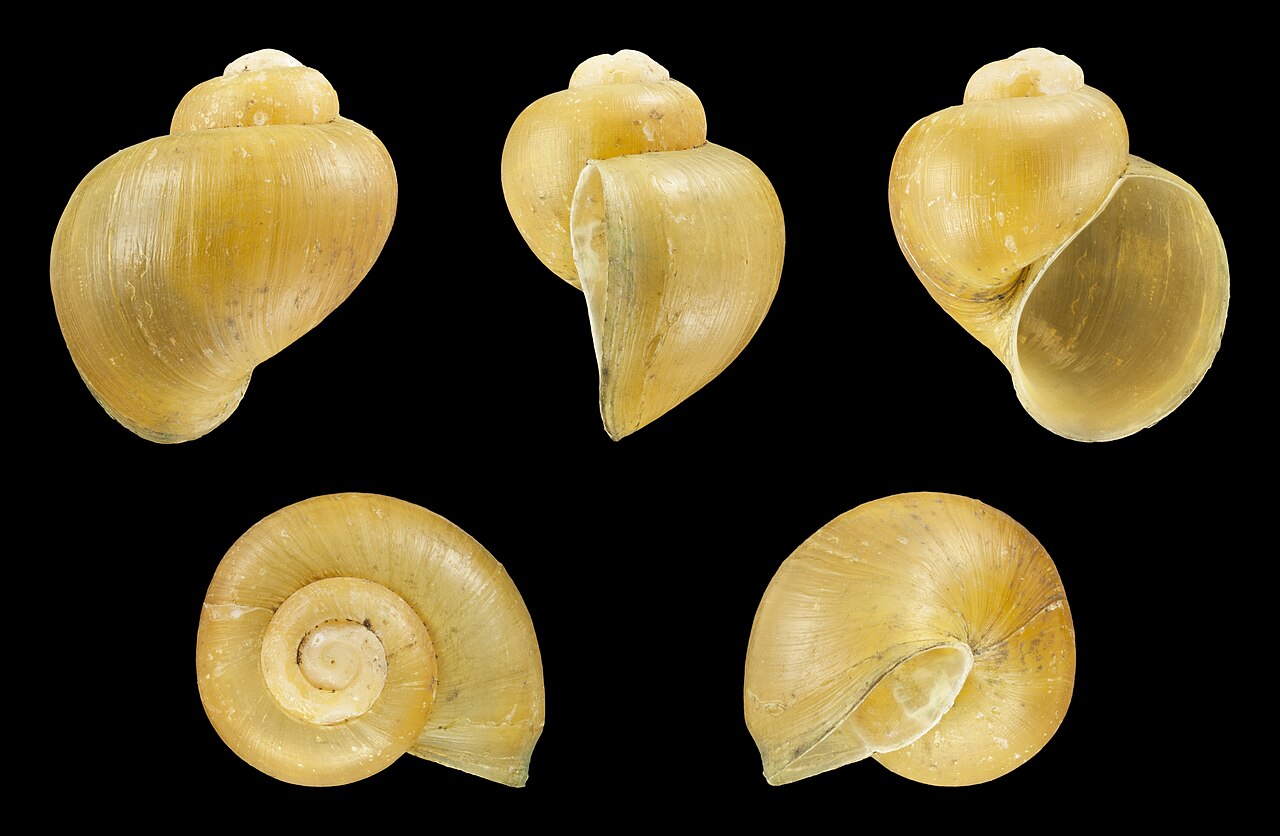
Overview
Apple snails are large freshwater snails of the family Ampullariidae and the most popular snails in the hobby. They are kept for their colourful shells, their hardiness and their habit of cleaning up leftover food.
The scientific name has long been confused. Pomacea diffusa was originally described as a subspecies of Pomacea bridgesii; genetic studies have confirmed that the two are separate species. According to English Wikipedia, both are the most common apple snails in aquarium shops and both are sold as "mystery snails"; P. diffusa, however, is the only apple snail allowed in US trade because it is not an agricultural pest. Russian Wikipedia and Tetra still describe the aquarium snail as Pomacea bridgesii.
The EU has banned imports of all apple snails since 2013, because other species of the genus, such as P. canaliculata and P. maculata, became serious rice pests.
Appearance
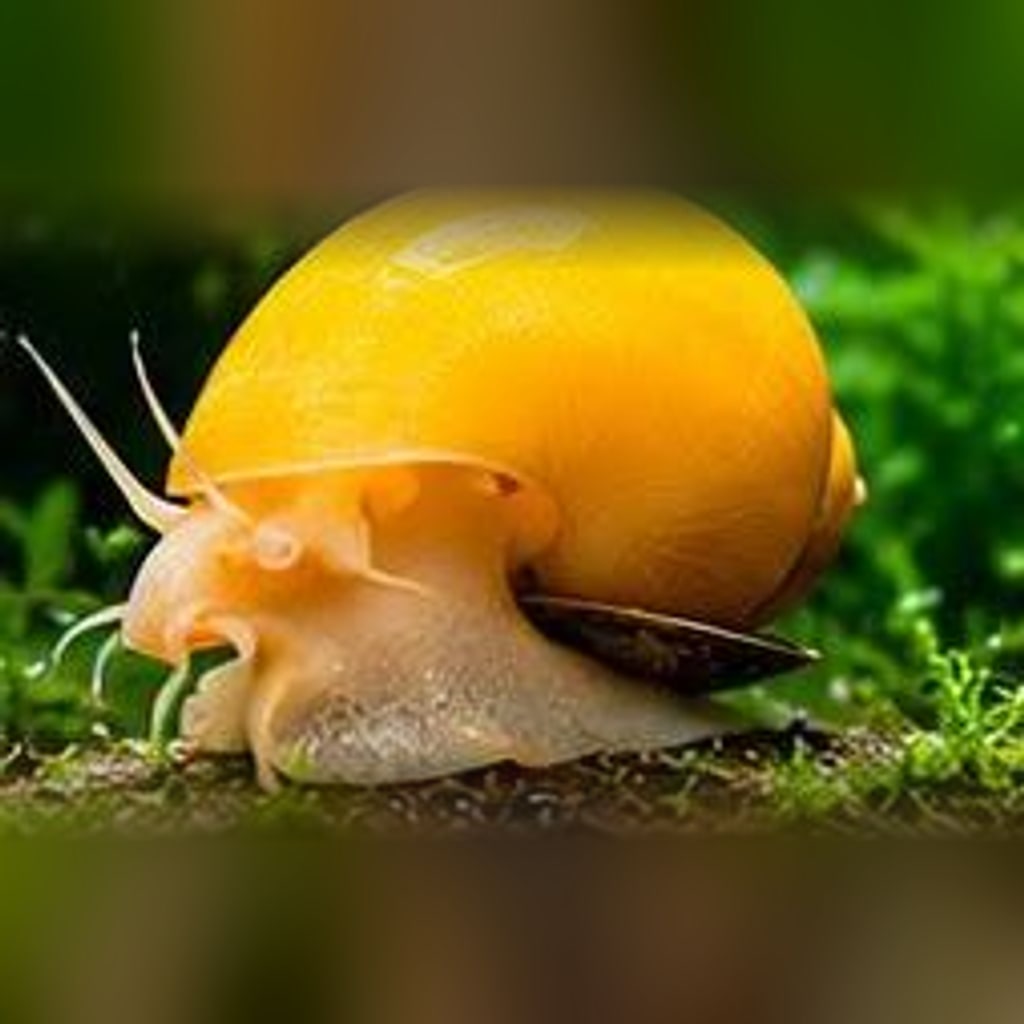
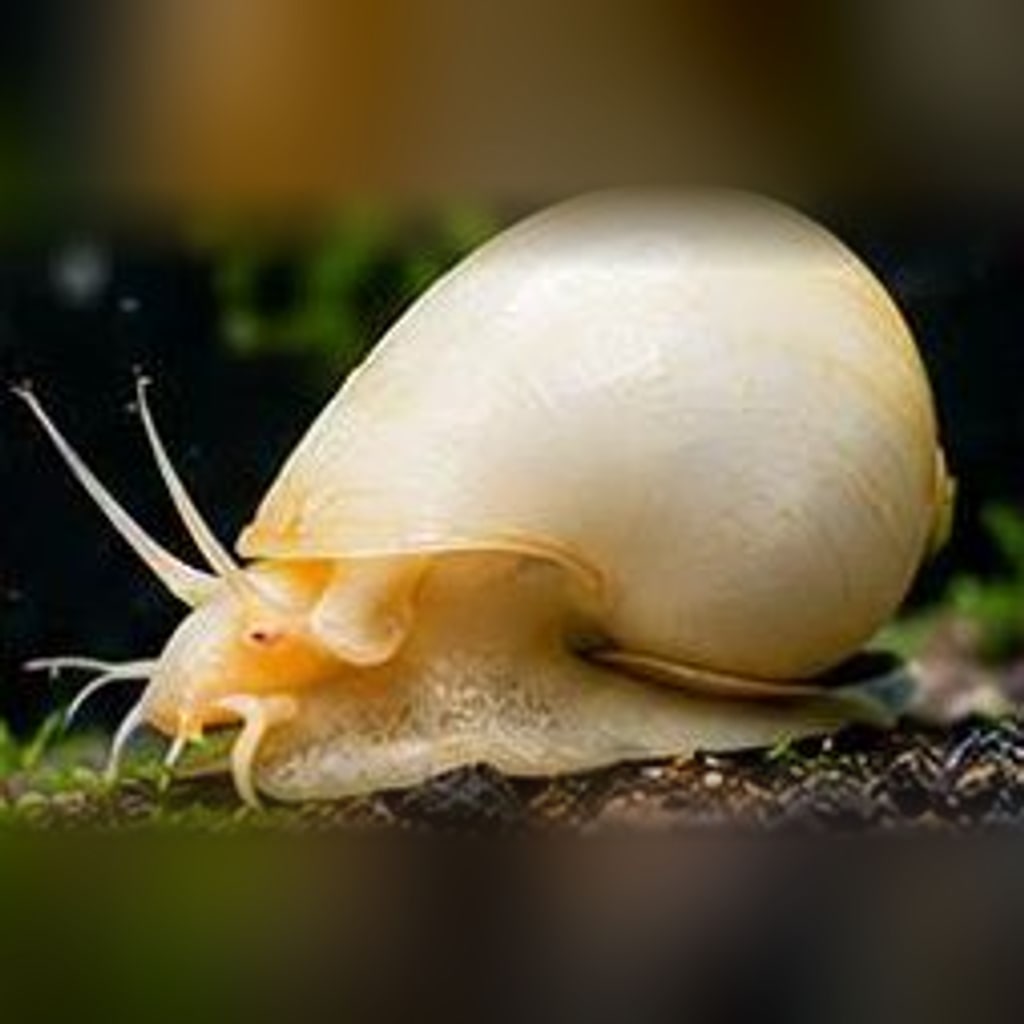
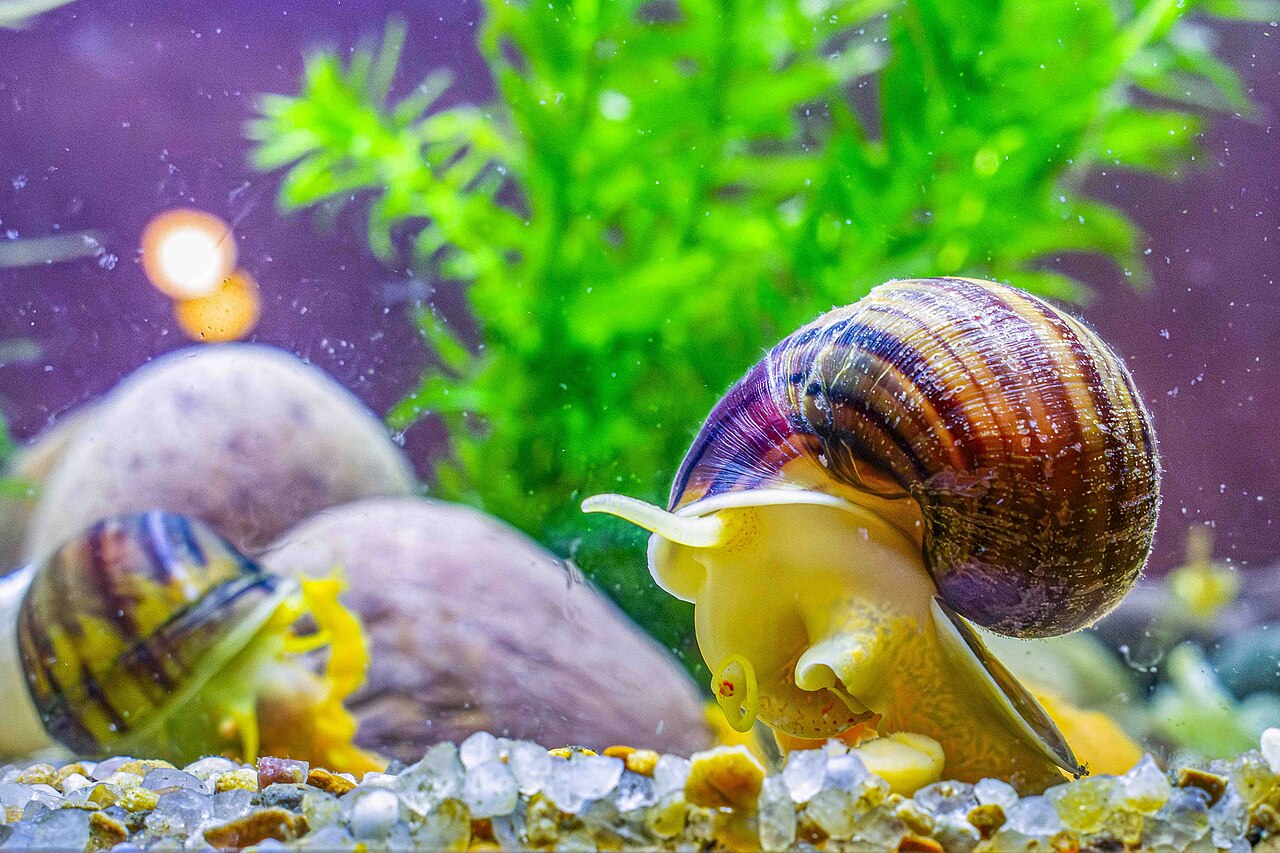
The coiled shell has a relatively high, pointed spire (hence "spike-topped") and no channelled suture. The classic colour is light brown with darker bands, but aquarium strains come in many colours: yellow (the most popular), white, blue, almost black, purple, pink and jade, with or without bands.
A dark horny operculum on the back of the foot seals the aperture. The head has tentacles, and the eyes sit on thin stalks. A long siphon lets the snail breathe air. Males and females look alike.
Care
- Volume: at least 10 L per adult snail; for a species tank, 40 L or more.
- Temperature: 18–28 °C optimum according to Wikipedia, 23–25 °C according to Tetra. The snails cannot survive below 10 °C and become inactive at 18 °C and below.
- pH 6.5–7.8; GH 8–18. Do not keep them in soft water: they need calcium for the shell.
- A tight lid without large gaps is essential: snails, especially females looking for a place to lay eggs, climb out and die.
- Keep free access to the surface, as they regularly breathe air through the siphon.
- Provide strong filtration, aeration and regular water changes with gravel cleaning: the snails are greedy eaters and produce a lot of waste.
- Copper: snail-control medications are usually copper-based and are dangerous to molluscs.
- Use sand or smooth gravel, and prefer hard-leaved plants (Anubias, Cryptocoryne).
At 18–25 °C apple snails live 3–5 years; in warm water, usually no more than a year and a half.
Feeding
Omnivorous: they pick up leftovers (flakes, pellets, tablets) and eat algae and dead fish. Leftovers alone are not enough, so feed sinking foods for bottom dwellers that contain plant matter (spirulina), plus vegetables such as blanched lettuce.
Well-fed P. diffusa usually leave plants alone, but hungry snails eat soft leaves. They are not suitable for tanks with valuable delicate plants.
Compatibility
Apple snails do not harm fish; stories that they hunt fish are a myth. They are often seen on dead fish, but they only eat the remains.
Good tankmates are small livebearers, danios, tetras, neons, catfish and shrimp. Active barbs nip their tentacles. Large cichlids and gouramis may eat the snails or keep them from reaching the surface to breathe. Pufferfish and loaches are incompatible. Predatory assassin snails leave adults alone but eat juveniles.
Breeding
- Sexes are separate, but males and females look the same, so at least 6 snails are kept for breeding.
- They mature at about one year old.
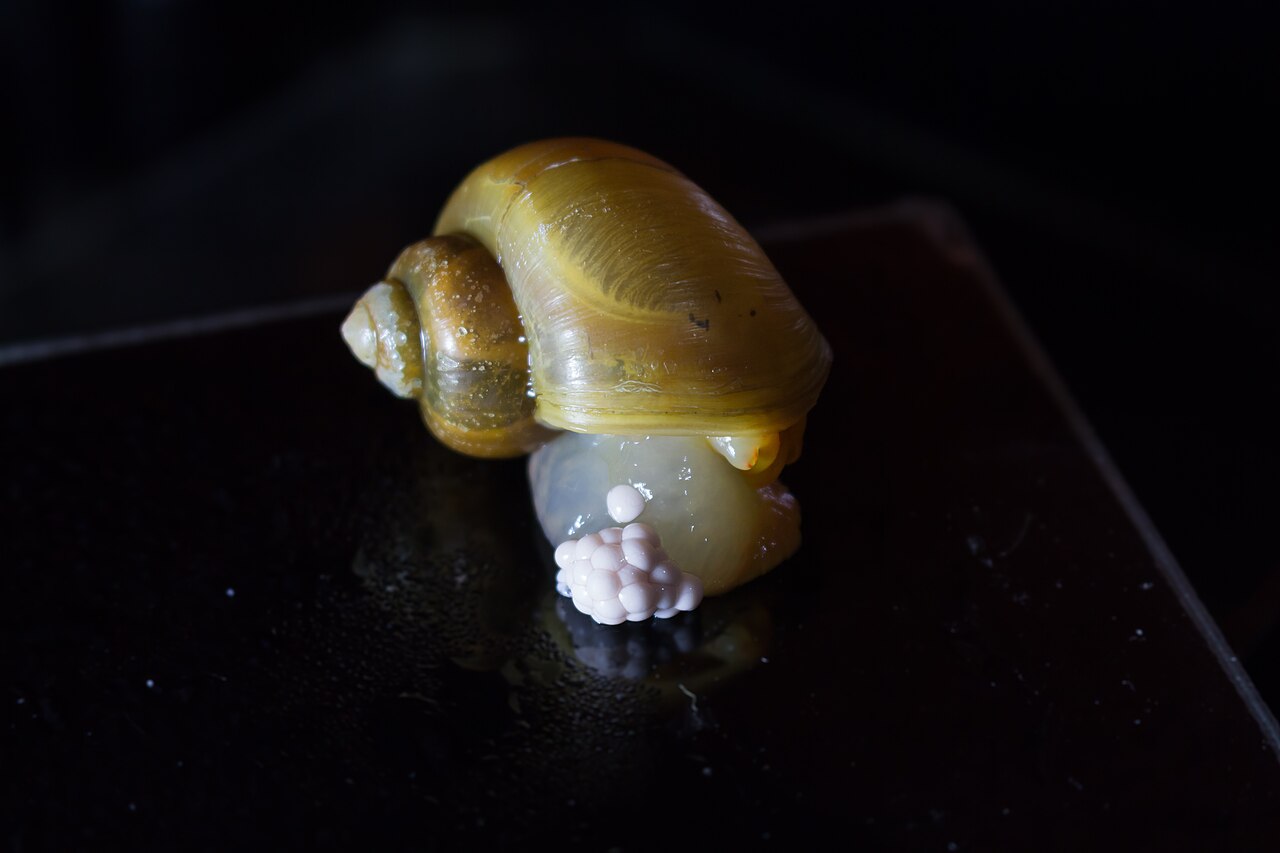
- The female lays eggs at night above the waterline, on the glass, lid or driftwood. The clutch looks like a bunch of grapes 2–4 cm long, made of eggs 2–3 mm across; it is soft and white at first, then hardens and turns pinkish or salmon.
- Keep the clutch moist but out of the water: submersion destroys it, and heat from a lamp dries it out.
- The eggs hatch in 2–4 weeks, faster in warm conditions (about two weeks at 24–26 °C). One clutch can hold up to 200 eggs.
- Hatchlings are fully independent; in a community tank fish eat them.
Fun facts
- Apple snails breathe with both a gill and a lung; the siphon lets them take air while staying hidden from predators.
- They can fully regrow an eye after it is cut off through the middle of the eyestalk.
- A floating apple snail is not necessarily dead: it is often buoyed up by air trapped in the shell.
- The first apple snails reached Germany from South America in 1904.