Snails
Malaysian trumpet snail
Melanoides tuberculata
Origin: Northern and eastern Africa and southern Asia (from the Middle East to southern China and Indonesia). Accidentally introduced to many tropical and subtropical regions, including the USA, Brazil, the Caribbean and southern Europe.
Also known as: Red-rimmed melania, Malayan livebearing snail, MTS, Melanoides tuberculatus (incorrect spelling), melania
Fact sheet
- Size
- 3.5 cm
- Lifespan
- 3 years
- Temperature
- 18–28 °C
- Temperament
- Peaceful
- Diet
- Omnivore
- Eats plants
- No
- Copper sensitive
- Yes
Photos
Overview
The Malaysian trumpet snail is a small burrowing snail of the family Thiaridae and one of the most common inhabitants of freshwater aquariums. It is rarely bought on purpose: the young are so small that they arrive unnoticed on plants, substrate or decorations.
Aquarists are divided over it. Some value it for turning the substrate so it does not go stagnant, and for eating leftovers and algae. Others regard it as a pest, because it is a livebearer and in a warm, overfed tank it quickly fills the whole substrate.
During the day the snails usually stay buried and become active at night. They breathe only with gills and never need to come to the surface for air.
Appearance
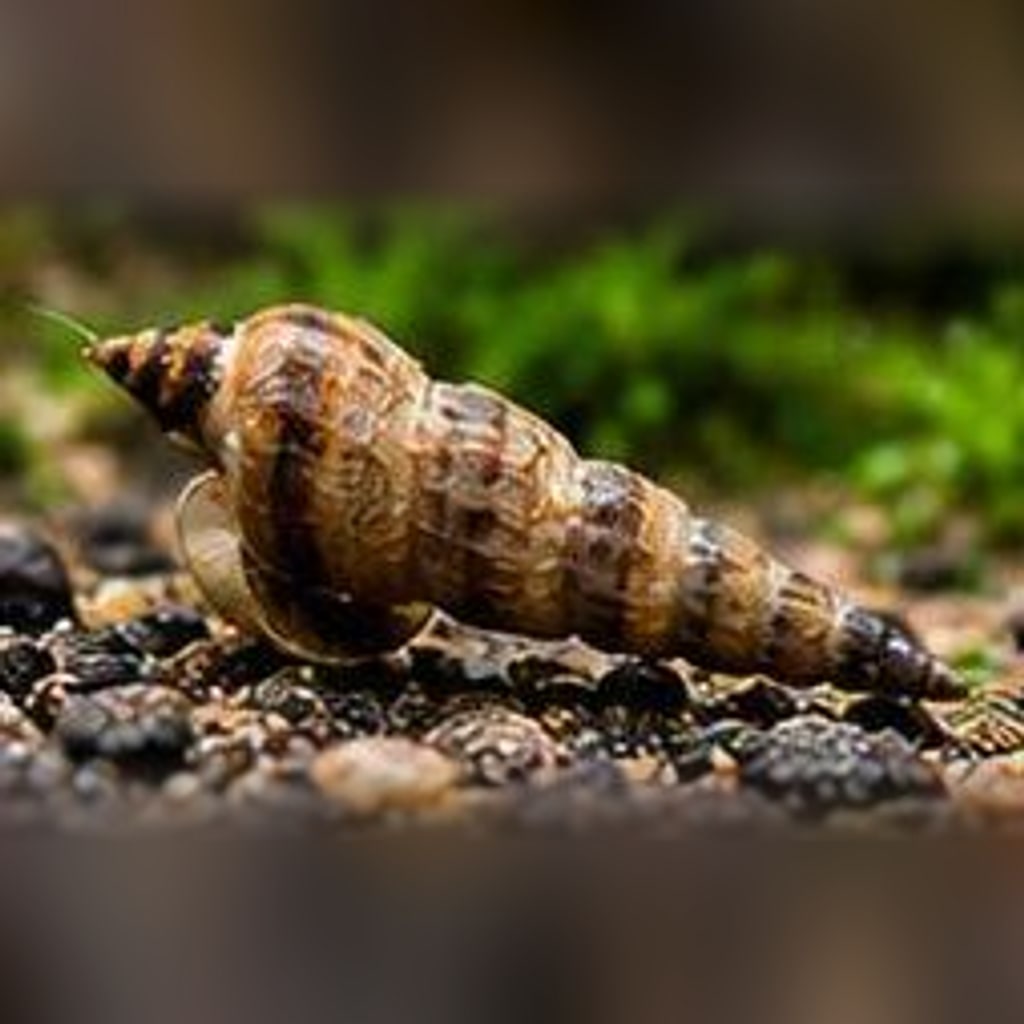
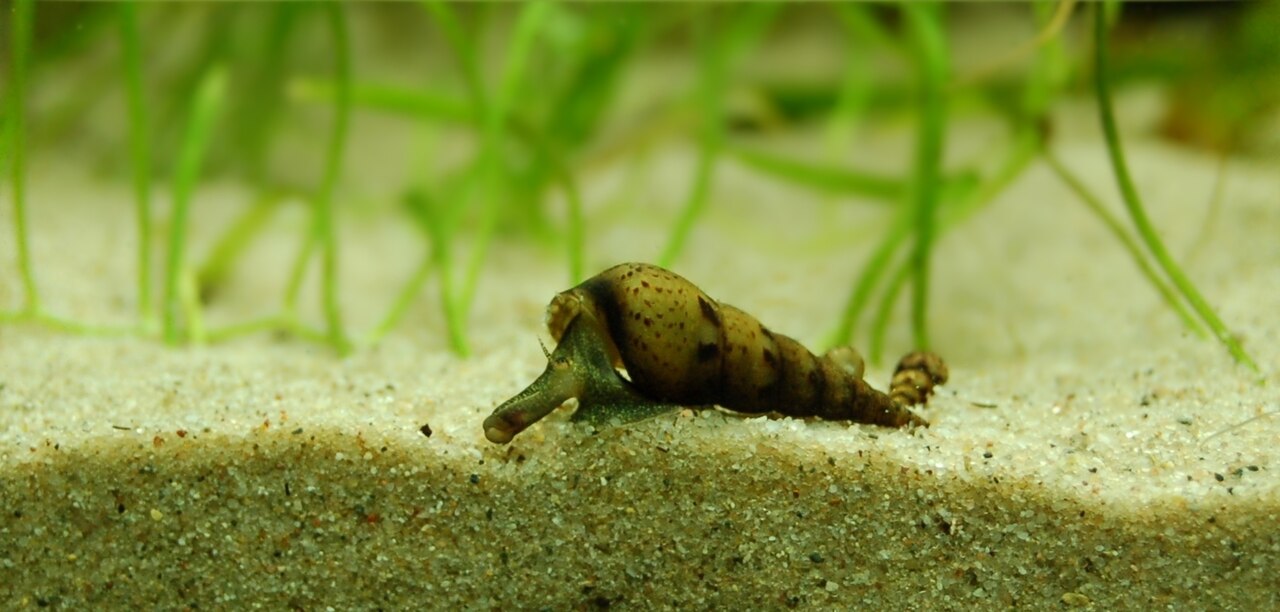
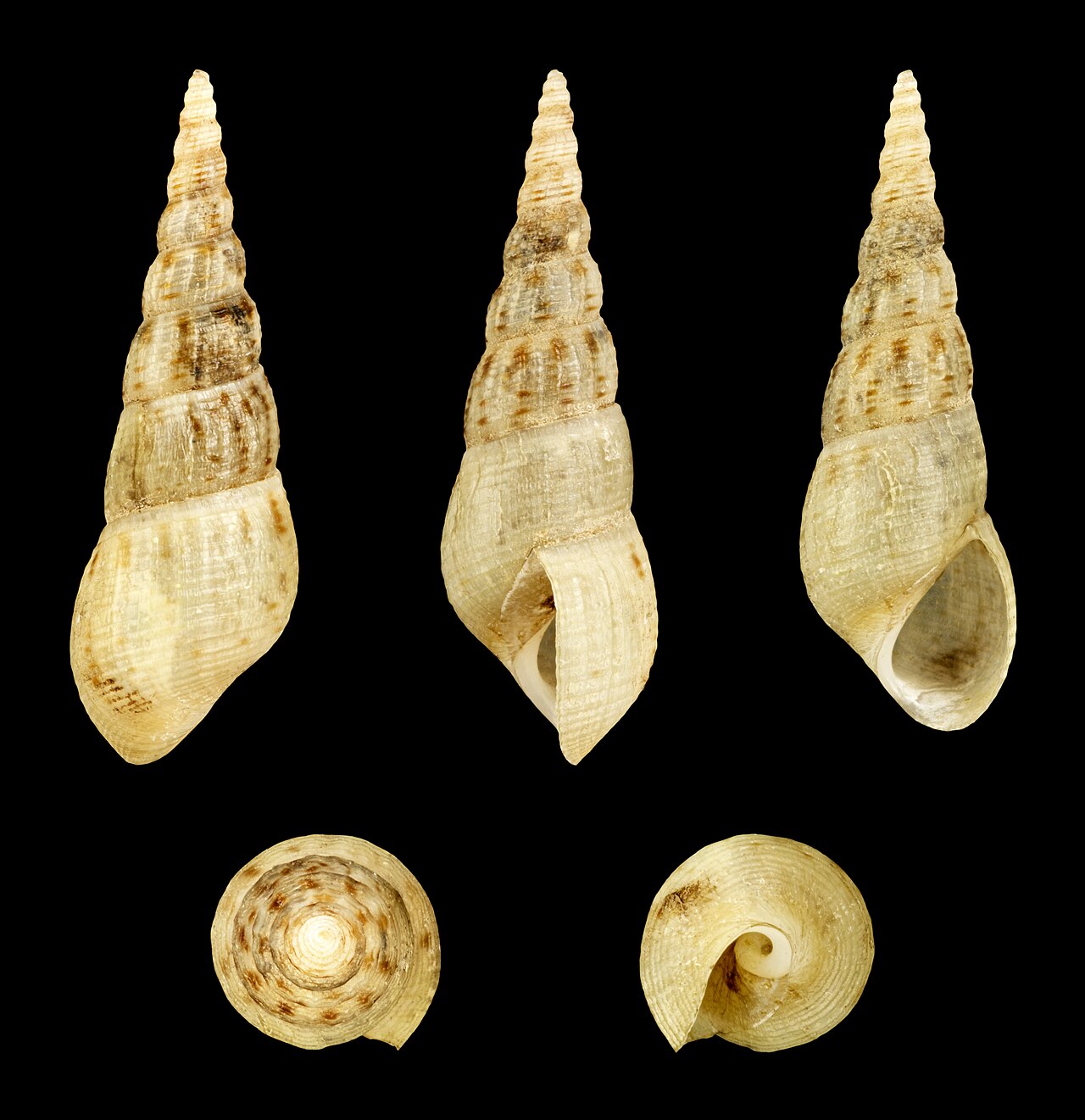
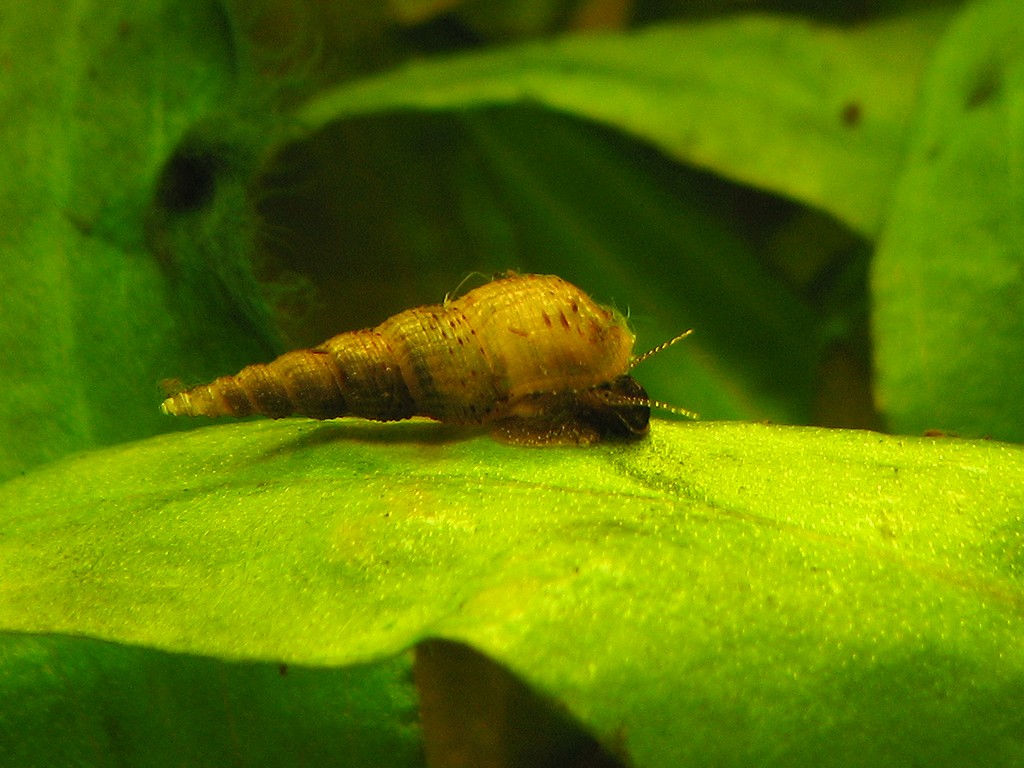
The shell is elongated and conical, like a small tower. According to Wikipedia the average length is 20–36 mm, with exceptional specimens up to 80 mm; Tetra gives 30–35 mm, no more than 3.5 cm. Sources give different whorl counts, from 5–7 to 10–15. The surface has radial ribs and fine spiral lines.
The shell is usually light brown or greenish-brown with rust-coloured spots and dashes arranged in a spiral along the sutures, which gives the name red-rimmed melania. The aperture is closed by an operculum. The head carries two long, thin tentacles with the eyes at their base.
Care
- Volume: tank size does not matter to these snails.
- Temperature: 18–28 °C according to Tetra; Wikipedia gives a preferred range of 18–25 °C, though the species also tolerates 18–32 °C.
- Hardness and pH are not important; the snails even tolerate brackish water.
- Good aeration is important: when oxygen runs low they leave the substrate en masse and sit on the glass. This is a useful warning that the substrate is going bad.
- Substrate: fine gravel of 2–6 mm is ideal, but they also live among large stones.
- Copper: snail-control products are often copper-based and also harm fish and other invertebrates.
- Population control: do not overfeed. Remove extra snails with bait (a slice of cucumber, banana peel) or a trap, or keep fish and snails that eat them.
According to Wikipedia they live about two years on average; Tetra gives 2–3 years in the aquarium.
Feeding
They feed on algae (microalgae) and detritus, i.e. decaying organic matter, including leftover food. In a community tank they need no extra feeding, though sinking tablets for bottom dwellers can be offered.
They do not damage live plants. They are seen on dead fish because they eat the remains, not because they attack fish.
Compatibility
They get along with almost any fish regardless of size or temperament and harm no one.
The exceptions are snail-eating fish: pufferfish, loaches (Botia) and paradise fish. Predatory assassin snails hunt them and help reduce their numbers.
Breeding
- They are livebearers: eggs develop in the mother's brood pouch, and fully formed young about 1–2 mm long are born.
- Sources disagree on whether males are needed. According to Wikipedia, females reproduce by parthenogenesis, without fertilisation; males are rare and make up 10–33% of the population (up to 40% according to Russian Wikipedia). According to Tetra, the sexes are separate and both a male and a female are needed, with parthenogenesis being rare.
- A brood contains from 10 to 60–70 young. Snails start reproducing at a shell length of 5–10 mm.
- Juveniles hide among plant roots and grow slowly, about 5–6 mm a month according to Tetra.
- With plenty of food the population grows fast, up to a "living" substrate.
Fun facts
- In the wild densities can exceed 35,000 snails per square metre; up to 10,000 per m² have been recorded in Florida.
- They tolerate salinity up to 30–32.5 ppt, and die at a water temperature of about 50 °C.
- In the wild they are intermediate hosts of trematodes, including some dangerous to humans (such as the Chinese liver fluke).
- In Brazil they have displaced Biomphalaria snails, which carry the schistosomiasis parasite.