
Snails
Red ramshorn snail (Planorbella duryi)
Planorbella duryi
Origin: Endemic to the freshwater ecosystems of Florida, USA. Introduced to Hawaii, several European countries (Great Britain, Ireland, Hungary, Poland, Slovakia), Nigeria and Palestine; found in aquariums worldwide.
Also known as: Ramshorn snail, ram's horn snail, red ramshorn, Seminole rams-horn, Helisoma duryi (former name)
Fact sheet
- Size
- 2.5 cm
- Lifespan
- 2 years
- Minimum tank size
- 1 L
- Temperature
- 22–28 °C
- Temperament
- Peaceful
- Diet
- Omnivore
- Eats plants
- No
- Copper sensitive
- Yes
Photos
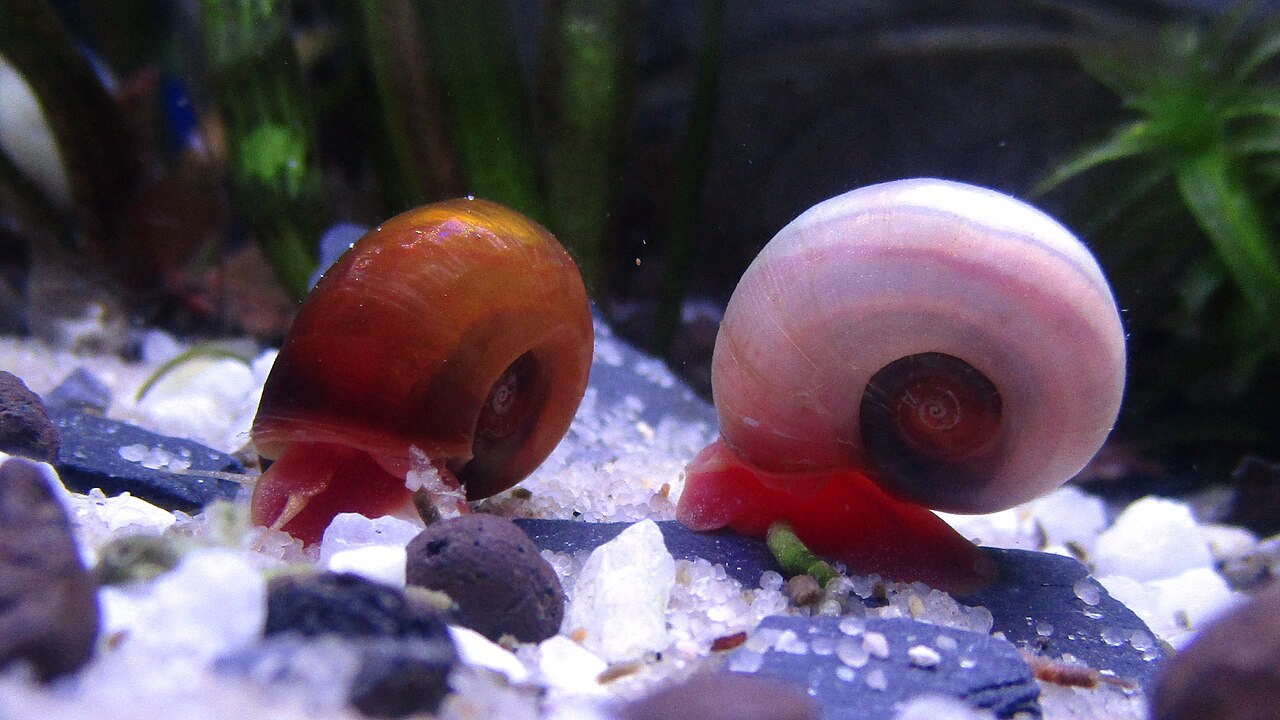
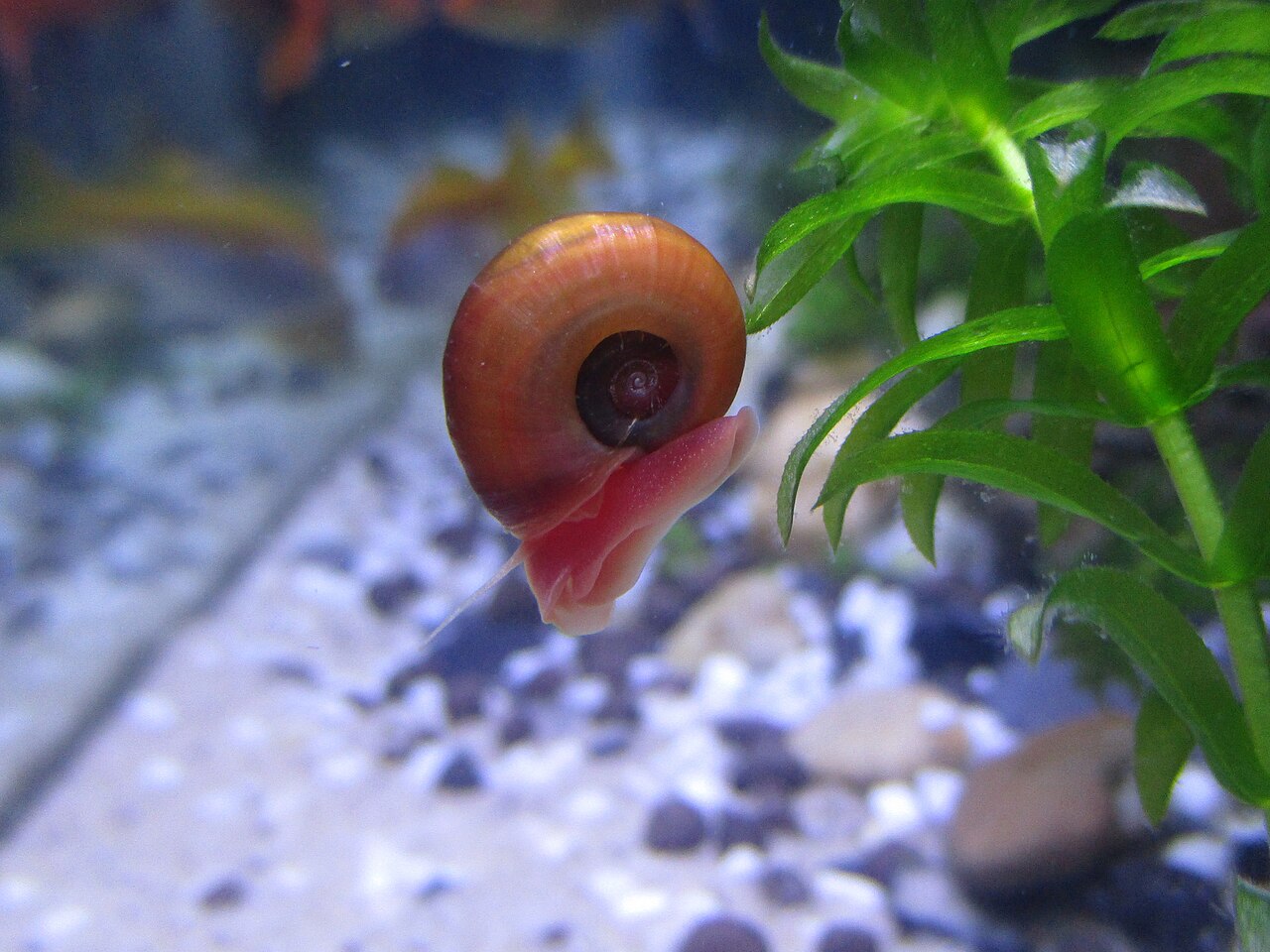
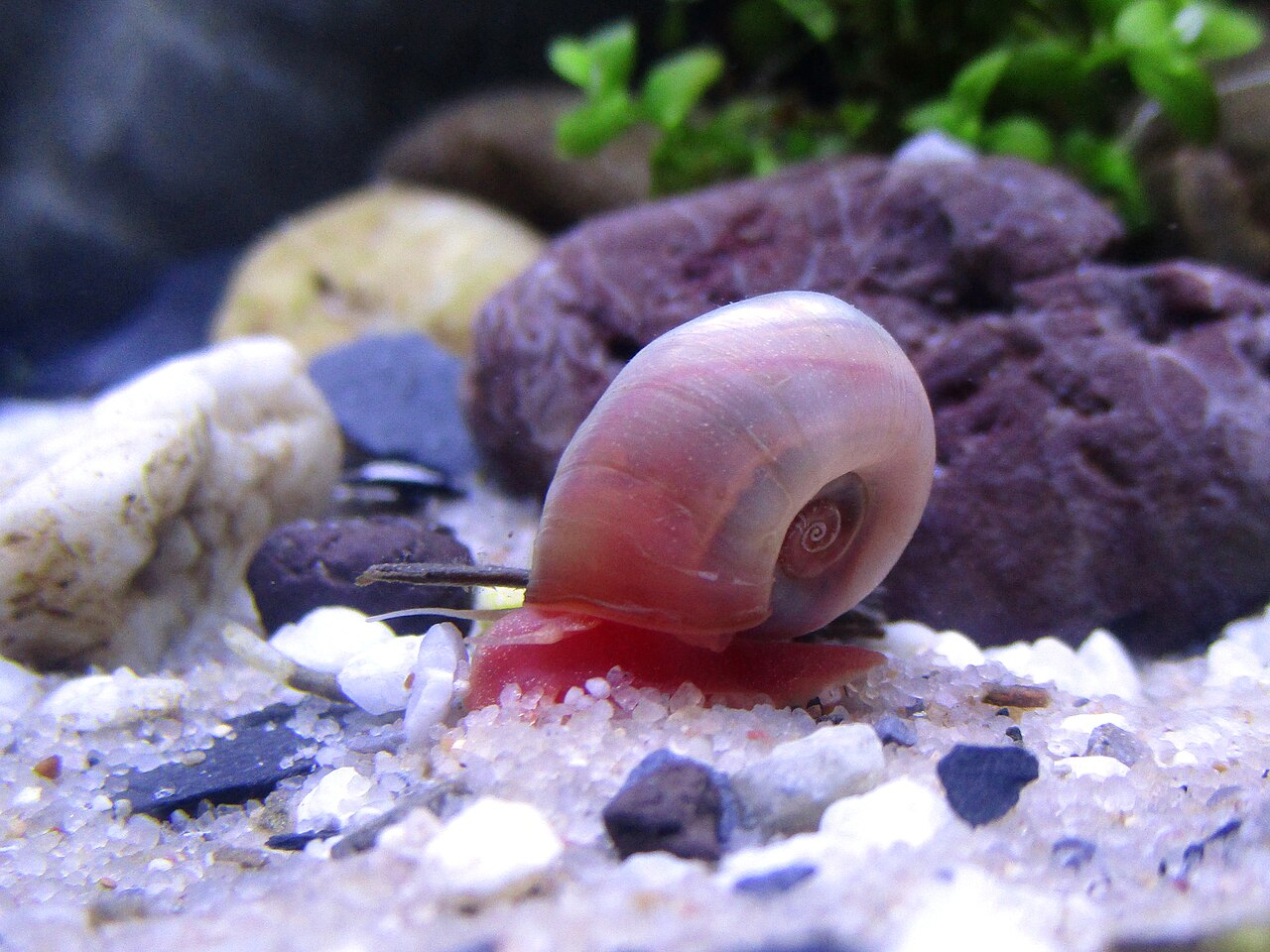
Overview
In the aquarium trade, "ramshorn snail" is the name for freshwater snails with a planispiral shell, coiled flat like a ram's horn. Two species of the family Planorbidae are common in aquariums: the North American Planorbella duryi and the European-Asian Planorbarius corneus, the great ramshorn.
In Russian aquarium tradition "катушка роговая" means Planorbarius corneus, the largest ramshorn in European Russia, with a shell up to 35 mm, reddish-brown or olive in colour; its albinos can be red or white. However, Wikipedia states that the red, pink, blue and other colour forms were bred in captivity from Planorbella duryi. Aquariums also mostly hold warmth-loving tropical ramshorns, whereas P. corneus lives in cooler waters. This entry therefore covers Planorbella duryi, with P. corneus mentioned for comparison.
Ramshorns often arrive by accident as eggs on new plants. Some aquarists value them as a clean-up crew, while others consider them pests because they breed so fast.
Appearance
The shell is flat and disc-shaped, with 4–8 whorls; each whorl is thicker than the one before, and the sutures are clearly visible. Most aquarium ramshorns are only a little over 1 cm, but some reach 2.5 cm. The shell of P. duryi is smooth, shiny and not striated; that of P. corneus is larger, with visible growth lines.
Wild P. duryi are brown. Captive-bred colours include brown, brown leopard, blue, blue leopard, red/orange, pink, green and purple. Red ramshorns lack the dark pigment melanin, and their skin looks bright red because of their blood, which, unlike that of most snails, contains haemoglobin.
There is no operculum. The head has one pair of long, thin tentacles with the eyes at their base.
Care
- Volume: according to Tetra, a tank of 1 L or more is enough.
- Temperature: 22–28 °C is optimal; in poor conditions the snails go dormant.
- Other water parameters matter little, but the shell needs calcium-rich water; if necessary, add cuttlebone or crushed eggshell (advice given for P. corneus, which can be kept the same way as P. duryi).
- Use a lid so the snails cannot crawl out; poor water quality also drives them out of the water.
- Keep the current gentle.
- Copper: most snail-control products are copper-based and dangerous to shrimp, crayfish and other invertebrates.
- Population control: above all, do not overfeed. Remove extra snails with bait: a blanched lettuce leaf, a cucumber slice or banana peel.
- Remove dead snails, as they quickly foul the water.
According to Wikipedia ramshorns live about a year; Tetra says they rarely live longer than 2 years in the aquarium.
Feeding
Ramshorns eat algae, leftover food, dead and decaying plant matter and dead fish. They need no extra feeding: food that falls to the bottom is enough.
According to Tetra, they do not damage living plants. Wikipedia says they eat only the most delicate plants, though some varieties readily eat the leaves of stem plants such as Cabomba and Egeria (anacharis).
Compatibility
Ramshorns are harmless and can live with any peaceful fish: danios, neons, tetras, guppies, corydoras, White Cloud Mountain minnows, as well as shrimp. Bristlenose catfish get along with adult snails but may eat their eggs.
Ramshorns are eaten by pufferfish, loaches (Botia), paradise fish, most gouramis, crayfish and Macrobrachium prawns, as well as assassin snails and apple snails. Bettas and paradise fish are a danger mainly to juveniles with soft shells. Ramshorn shells are generally softer than those of many other snails, so they are often bred as food for pufferfish. Avoid adding ramshorns from the wild: they can carry fish parasites.
Breeding
- Ramshorns are simultaneous hermaphrodites: each has both male and female organs, and any two snails can mate. They can store sperm for several weeks, so even a single snail may lay eggs.
- Eggs are laid on plant leaves and glass in clear gelatinous capsules, usually 10–12 eggs each.
- Incubation takes from 7–9 days at 27–29 °C to 18–24 days at 20–22 °C (Tetra: 14–30 days; for P. duryi usually about three weeks).
- Hatchlings are pale white with soft shells and colour up over several weeks. They mature at 4–6 weeks.
- A healthy adult can lay several clutches a week when food is plentiful, so in warm water (25–28 °C) and with overfeeding the population grows fast.
Fun facts
- Ramshorns can crawl upside down along the water surface, supported by surface tension; if disturbed, they sink at once.
- Thanks to haemoglobin, ramshorns survive in oxygen-poor water.
- The shell is actually left-handed (sinistral), even though it looks right-handed.
- The "giant" or "Colombian ramshorn" is not a ramshorn at all but the apple snail Marisa cornuarietis, which has an operculum.
- A sudden boom in ramshorn numbers is a sign that the fish are being overfed.