Plants
Water wisteria
Hygrophila difformis
Origin: South and Southeast Asia. According to English Wikipedia, marshy habitats of the Indian subcontinent (Bangladesh, Bhutan, India, Nepal); according to Tetra, India, Burma, Nepal, Malaysia and Thailand. It grows in shallow water, overgrown slow streams and swamps, and often in rice fields.
Also known as: Hygrophila difformis; in Russian-speaking aquaristics also "gigrofila sinema". A form with pale leaf veins is sold as "Weiss-grün".
Fact sheet
- Height
- 50 cm
- Temperature
- 20–28 °C
- pH
- 5.5–8.5
- Hardness GH
- 2–15 °dH
- Lighting
- Low
- CO₂
- Not needed
- Growth rate
- Fast
- Placement
- Midground, Background
Photos
Overview
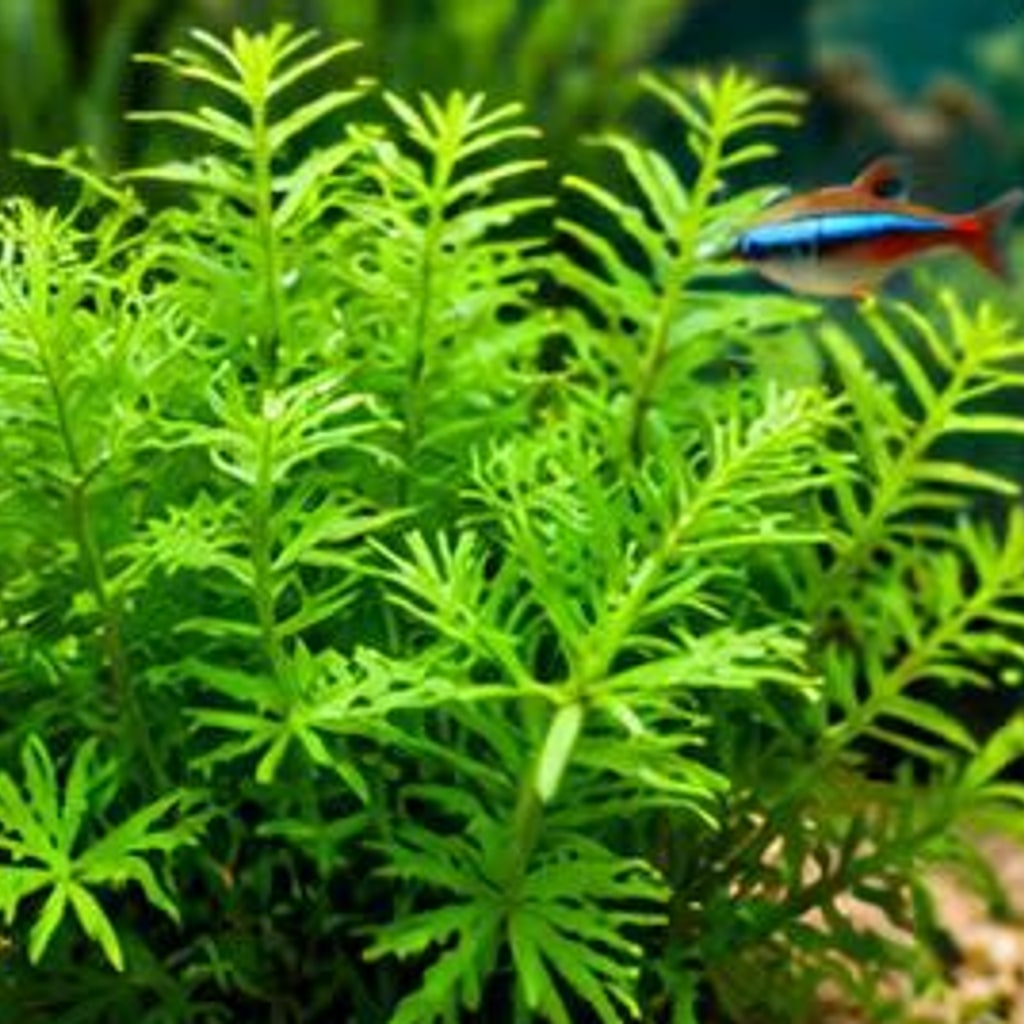
Water wisteria is a stem plant in the acanthus family. It is easy to grow and one of the most popular plants for the tropical aquarium, a good choice for beginners.
Its fast growth takes up a lot of nutrients from the water, which helps prevent algae, especially in a newly set-up tank. Dense stands give shelter to fish and fry.
Appearance
The stem is smooth and 20–50 cm long; in the wild the plant is 15–25 cm wide. In the aquarium, according to Tropica, stems reach 20–30 cm in height and 6–12 cm in width after two months. Leaves are opposite, each pair set at right angles to the next.
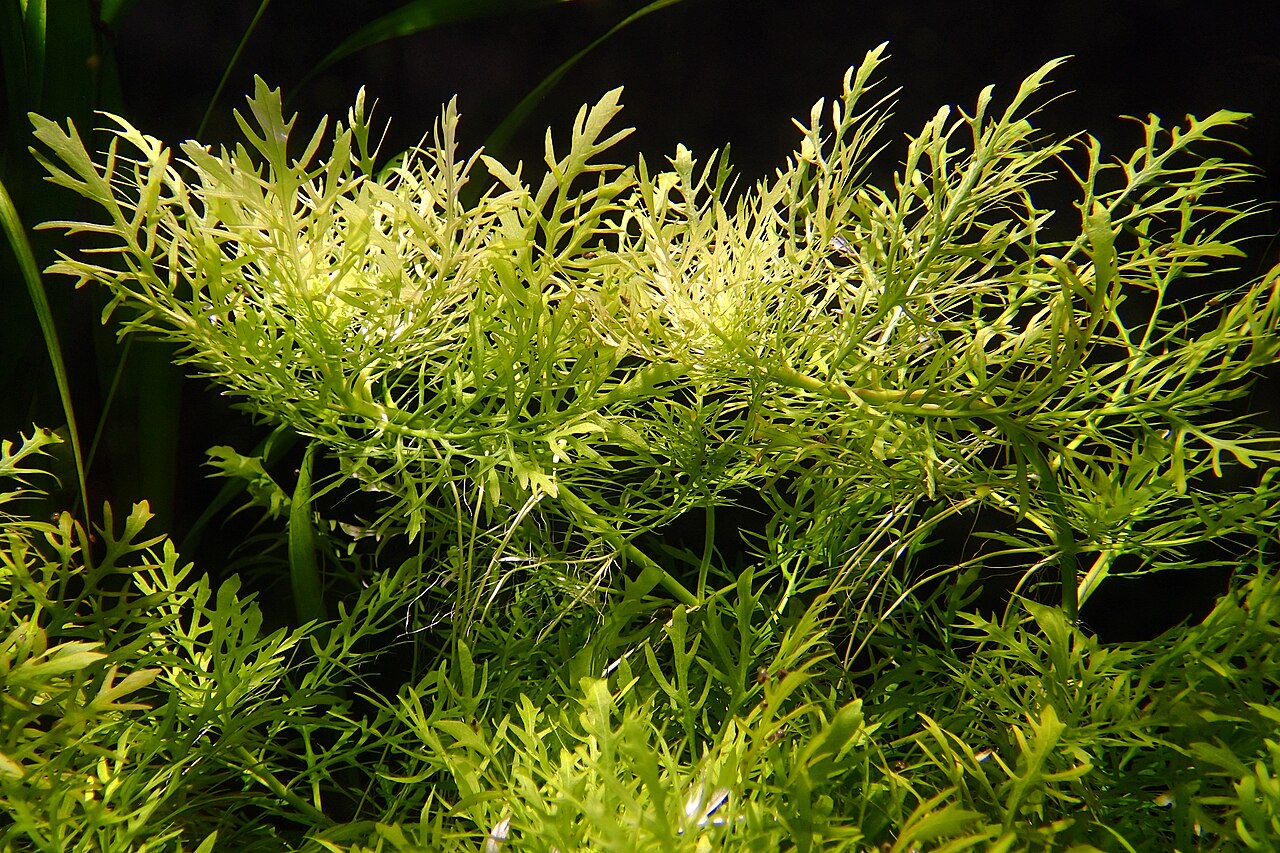
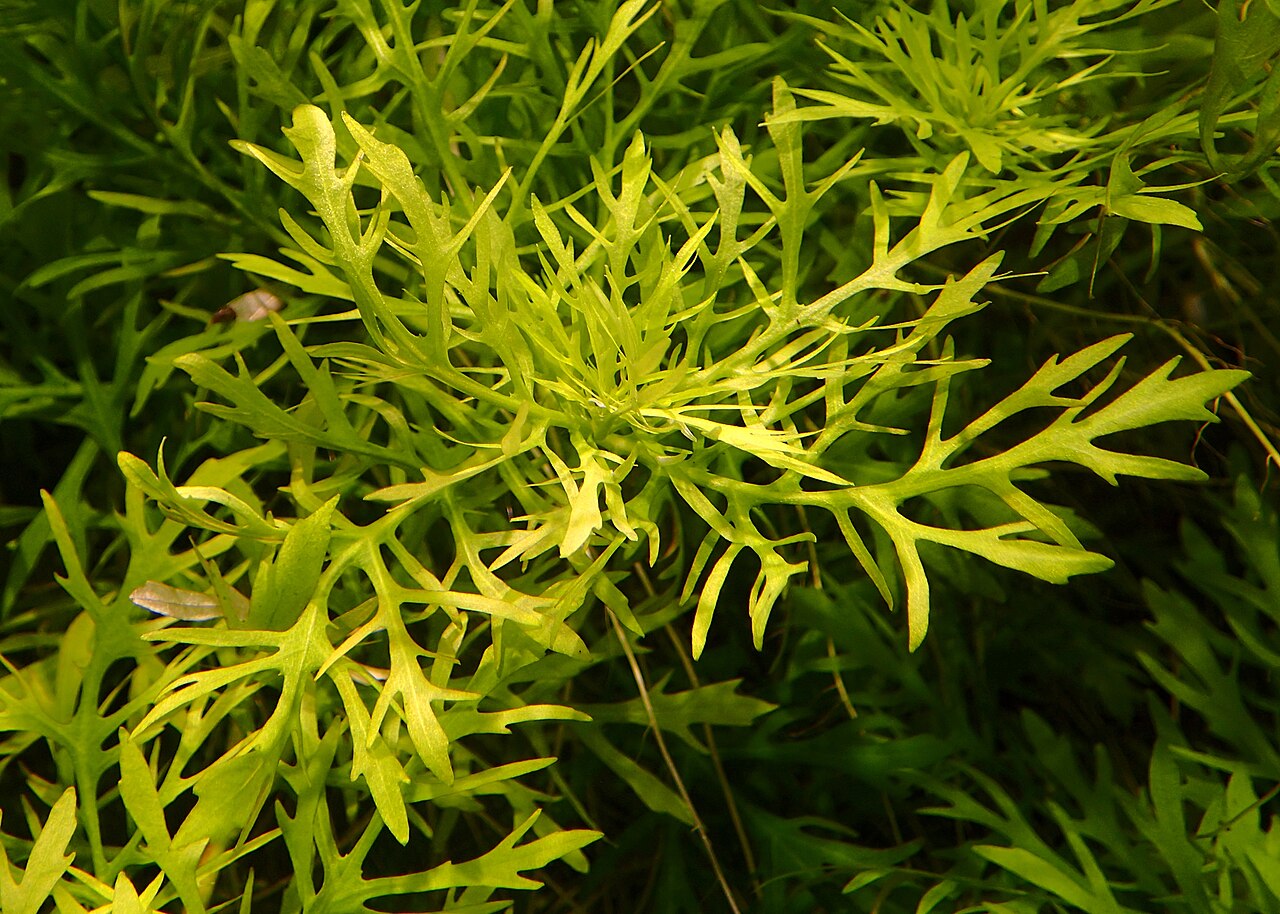
The species shows heterophylly — different leaf shapes on the same plant. New leaves start out entire and become pinnately lobed, fern-like, as they grow. In strong light the leaves are larger and more deeply cut; in weak light they stay small and elliptic. Submersed leaves are light green above and silvery beneath.
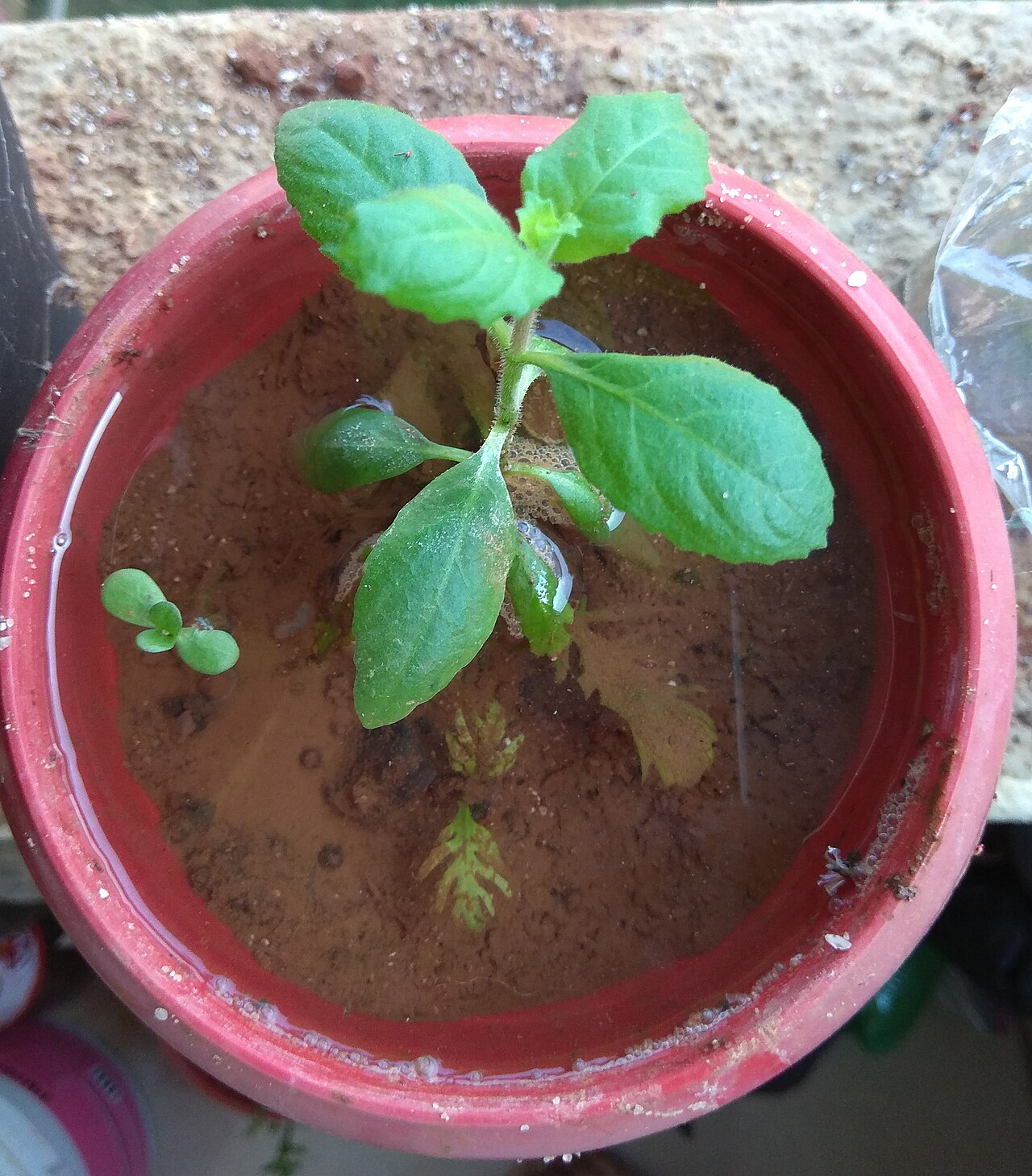
Emersed shoots carry ordinary rounded, undivided leaves; in a paludarium the leaves turn dark green and hairy. Small, fragrant pinkish flowers may develop on emersed shoots.
Care
- Placement: midground or background, near the side walls; striking as a group in large tanks. It can also grow floating. Not well suited to small tanks, where it quickly fills the space and crowds out other plants.
- Substrate: coarse sand or fine gravel of 2–5 mm, at least 4 cm deep; a nutrient-rich substrate with organic matter is preferable.
- Light: low demand according to Tropica. It grows in low light, but the most finely cut leaves form under moderate to strong light. Photoperiod 8–12 h according to Tetra, at least 12 h according to Russian Wikipedia.
- CO2: not required, but extra CO2 speeds up growth.
- Temperature: 20–28 °C (optimum 24–28 °C); growth slows at lower temperatures.
- Water: pH 5.5–8.5 (5.7–8.5 according to Tetra), GH 2–15; tolerates both soft and hard water. Regular water changes, about 20% weekly, are advisable.
- Trimming: because of its fast growth it needs regular thinning and cutting back.
- Difficulty: easy, suitable for beginners.
Fertilizing
It grows best with nutrient-rich water and substrate. Small doses of mineral fertiliser are advisable.
It is sensitive to a lack of micronutrients, especially iron: leaves turn pale and growth slows. This makes the plant a handy indicator — pale leaves suggest the tank needs liquid fertiliser.
Breeding
Easily propagated from cuttings. A top with 3–4 nodes is cut off and left floating until roots appear, then planted in the substrate. Stem trimmings and even single leaves laid on wet sand can also be rooted.
When planting stems, remove the leaves from the lowest 5 cm.
Fun facts
- Despite the name "water wisteria", it is not closely related to true wisteria.
- Leaf shape depends on light and on whether the shoot grows under or above water.
- It grows equally well in aquariums, paludariums and humid greenhouses.