Plants
Wendt's Cryptocoryne
Cryptocoryne wendtii
Origin: Endemic to Sri Lanka: central, western and north-western parts of the island, where it grows along and on the banks of streams and rivers. Introduced to Florida (USA).
Also known as: Cryptocoryne wendtii; Wendt's water trumpet; crypt; forms and cultivars: 'Green', 'Brown', 'Tropica', 'Mi Oya'; the brown form is listed in Russian literature as Cryptocoryne wendtii rubella
Fact sheet
- Height
- 30 cm
- Temperature
- 24–28 °C
- Hardness GH
- 9–16 °dH
- Lighting
- Low
- CO₂
- Not needed
- Growth rate
- Medium
- Placement
- Foreground, Midground, Background
Varieties
Photos

Overview
Cryptocoryne wendtii is a herbaceous marsh plant of the arum family (Araceae) and one of the most common aquarium crypts. It was described by the Dutch botanist Hendrik de Wit (1958) and named after the German aquarist and writer Albert Wendt.
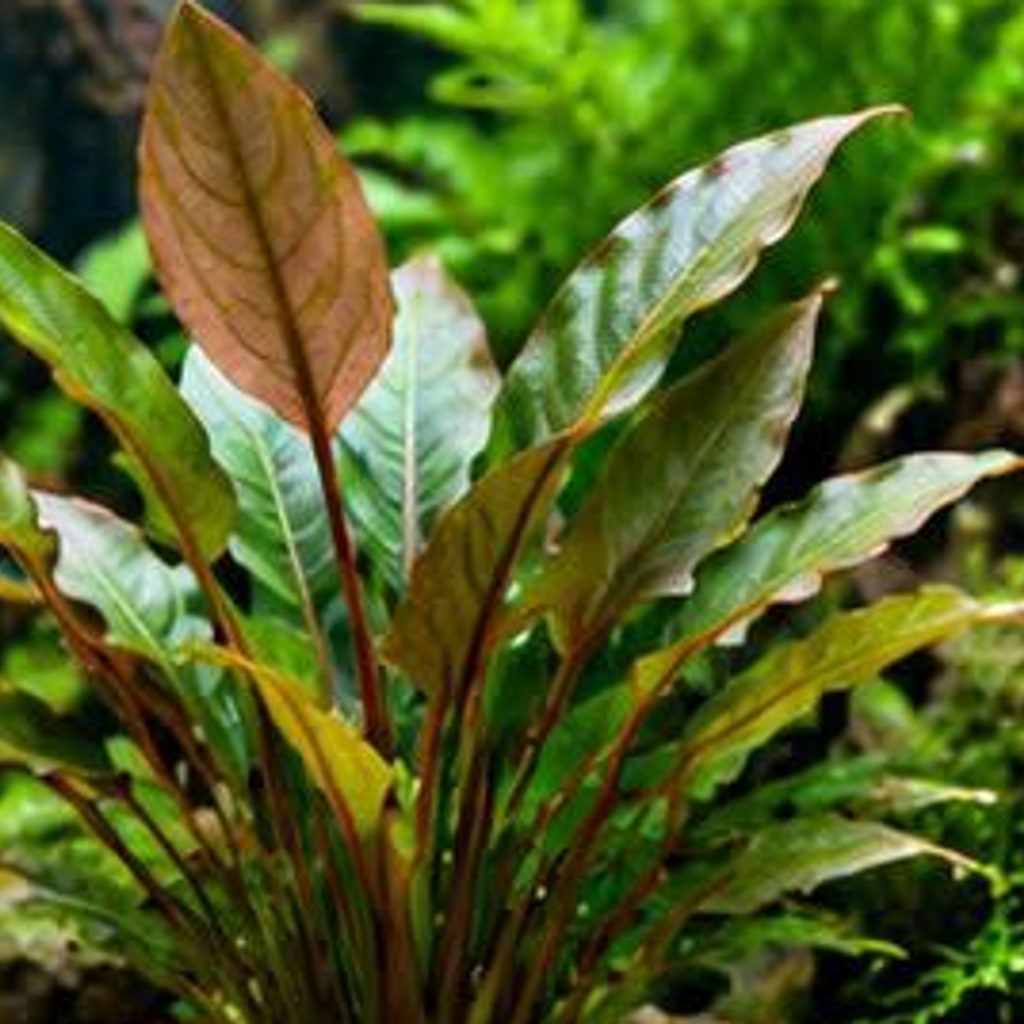
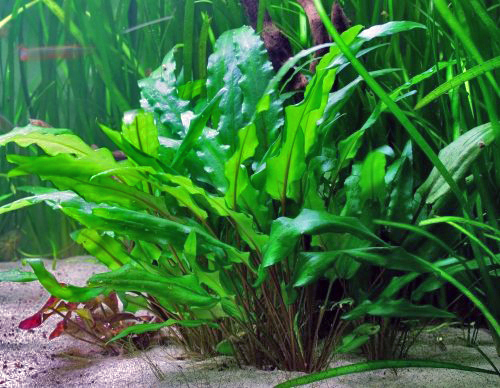
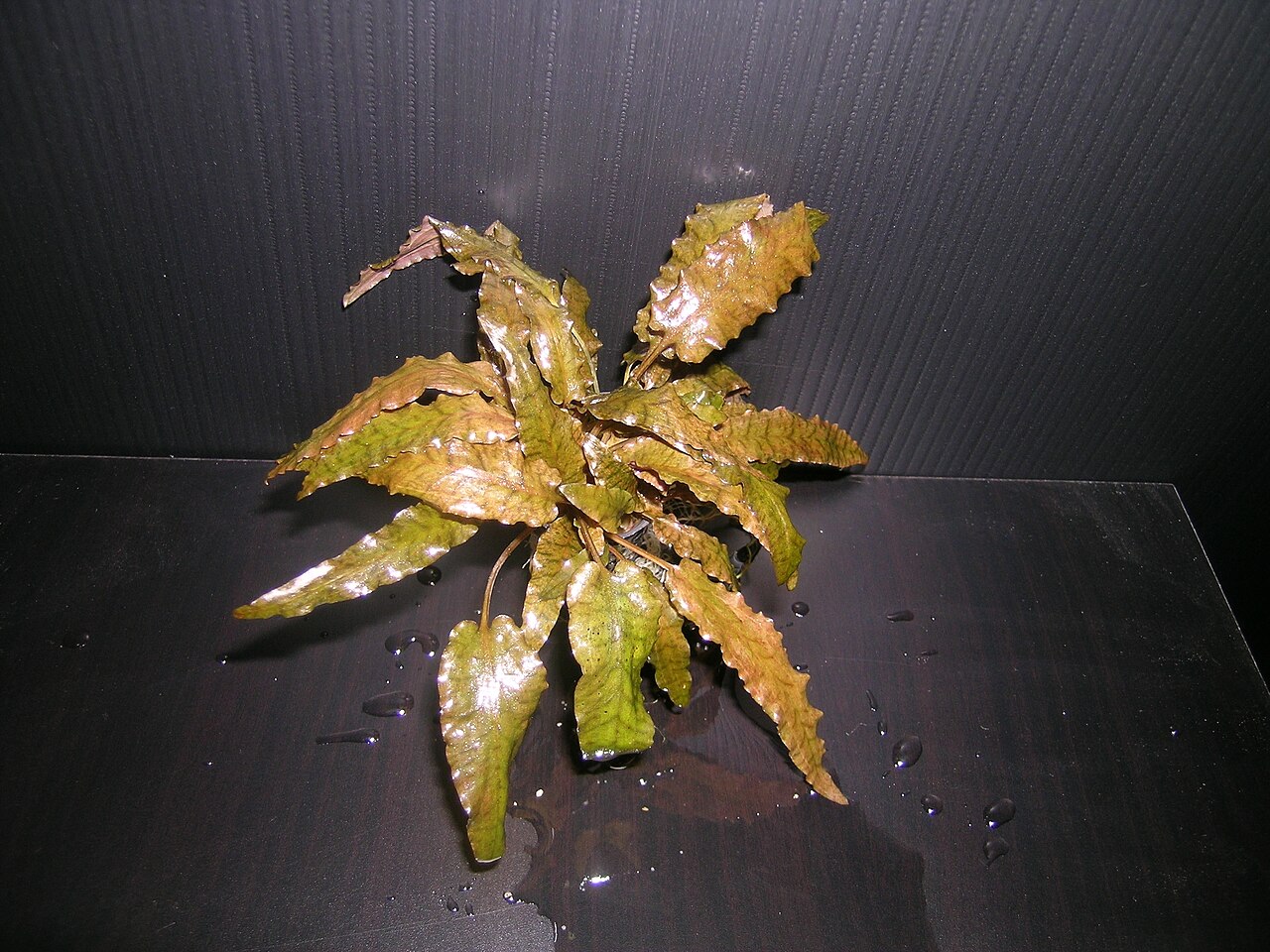
It is a very variable species: green, olive, brown and red-brown forms are sold, and the same plant changes its look with light and other conditions. It is undemanding, needs no CO2 or strong light, and grows well in the shade of taller plants.
Appearance
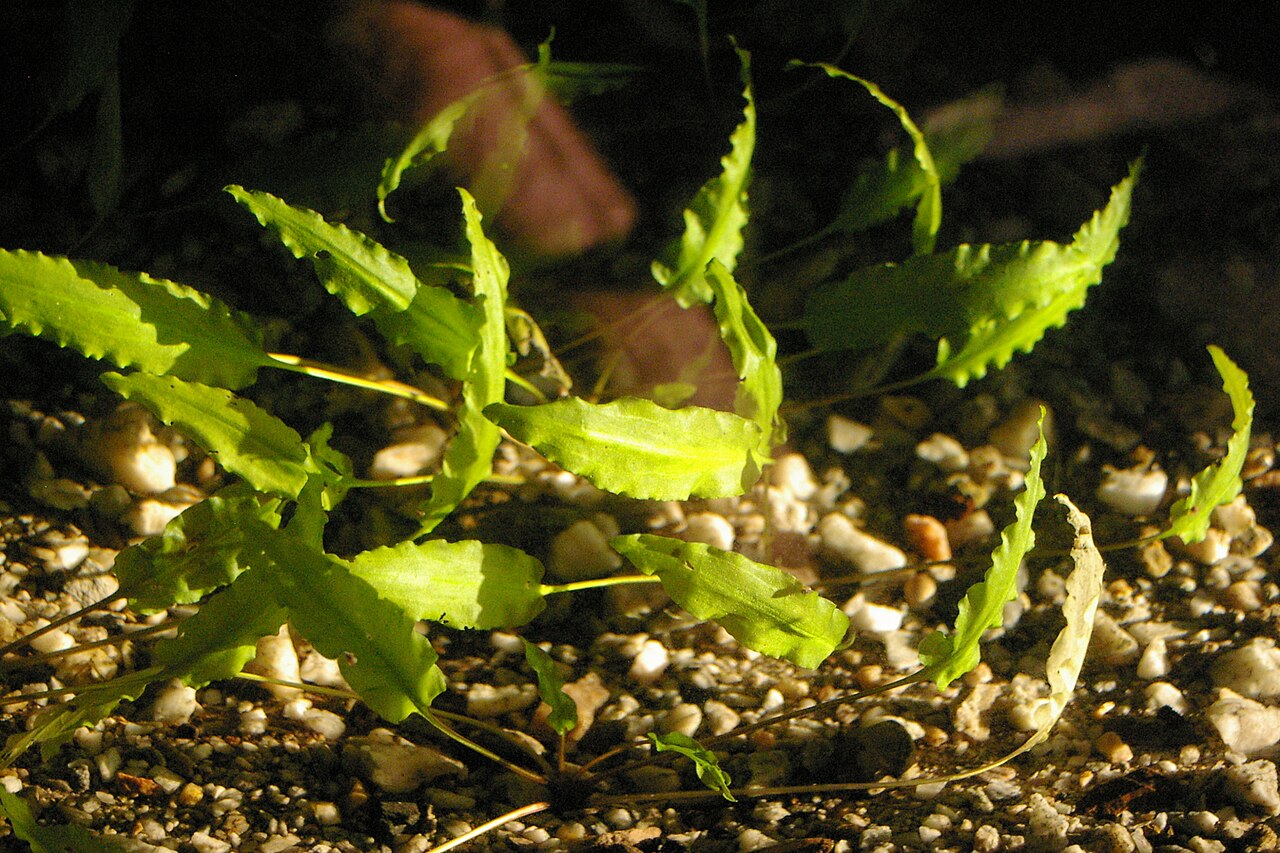
A stemless plant with leaves arranged in a rosette on long petioles (5–20 cm) and a long creeping rhizome. The leaf blade is elliptic, narrowly lanceolate or narrowly ovate, 5–15 cm long and 2–3 cm wide, with a pointed tip and straight or wavy margins.
Colour ranges from green and olive to dark brown and red-brown, sometimes marbled, depending on conditions. The plant is 10–30 cm tall (25–30 cm according to Russian Wikipedia). Under very strong light it stays low and compact, and in open spaces the leaves almost lie on the bottom.
Care
- Placement: foreground, midground or background depending on the form; tolerates shade from taller plants well.
- Substrate: coarse sand mixed with fine gravel, ideally with some mulm, or a nutrient base layer; at least 5 cm deep because the root system is strong.
- Light: undemanding; diffuse light and a photoperiod of at least 12 hours (Tetra, Russian Wikipedia). Tropica rates its light demand as low.
- CO2: not required (Tropica: low).
- Temperature: 24–28 °C; at 20–22 °C growth slows down markedly. Tetra's genus overview gives 24–26 °C as optimal.
- Water: medium hardness, GH 9–16; the pH value itself matters little, but sudden swings are dangerous. Grows in hard water and in both fresh and "old" water.
- Crypt melt: after a sudden change of conditions — a pH swing, transplanting, new lighting or filter media, very soft water — the leaves turn mushy and dissolve within a short time. The rhizome survives and regrows leaves once conditions settle; C. wendtii is less prone to this than most crypts. According to English Wikipedia, nursery plants are often grown emersed, and the switch to submersed growth can itself trigger melt; recovery takes about 30 days, and crypts are best planted in tanks that have been running for at least three months.
Difficulty: easy — one of the hardiest and most adaptable species of the genus (Tropica: Easy).
Fertilizing
Crypts take up much of their nutrition through the roots, so a nutrient-rich or mulm-rich substrate and root feeding are important. Tetra recommends a long-lasting nutrient base layer or regular root tablets, plus occasional small doses of micronutrients and liquid fertiliser with iron and potassium.
Root feeding means liquid fertiliser can be used less often, which lowers the risk of algae.
Breeding
In the aquarium it reproduces only vegetatively: by runners from the creeping rhizome and by dividing the rhizome. A daughter plant can be separated and replanted once it has 2–3 leaves. In very coarse substrate the runners come up right next to the mother plant and compete with it for nutrients.
In a paludarium or humid greenhouse it grows faster and may flower, but no seeds are produced. Emersed-grown plants can be planted in the aquarium without any preparation.
Fun facts
- The genus name comes from Greek words for "hidden" and "club"; the English name water trumpet refers to the trumpet-shaped inflorescence.
- The 'Mi Oya' form is named after the Mi Oya river in north-western Sri Lanka, where the plants spend most of the time out of water in a humid environment and tolerate floods.
- The cultivar 'Tropica' is named after the Danish nursery Tropica.
- According to Russian Wikipedia, four subspecies of C. wendtii are recognised.
- C. wendtii is considered the most variable species of the genus.