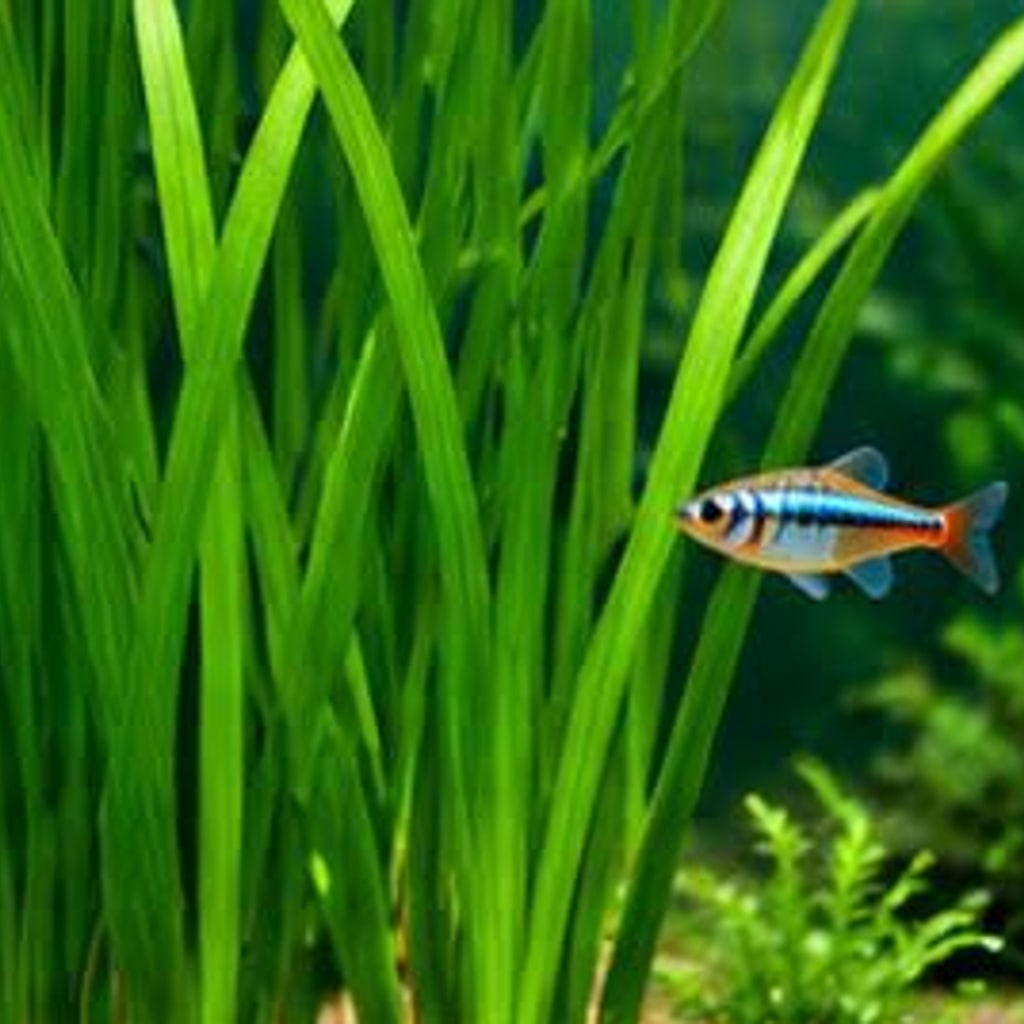
Plants
Vallisneria spiralis
Vallisneria spiralis
Origin: Tropical and subtropical regions of the Old and New World, reaching into the temperate zone: Europe, Africa (including Lakes Malawi and Tanganyika) and south-western Asia. In Russia it occurs on the lower Volga and Don, in Ciscaucasia and in the Far East. It grows in shallow (up to 1 m) still or slow-flowing waters, often on muddy bottoms. Introduced to the USA; naturalised in geothermal ponds in Iceland.
Also known as: Straight vallisneria; tape grass; eel grass; vallis; trade forms such as 'Tiger'; the twisted-leaf form V. spiralis f. tortifolia (V. tortissima)
Fact sheet
- Height
- 100 cm
- Temperature
- 20–28 °C
- pH
- 6–7.5
- Hardness GH
- 5–15 °dH
- Hardness KH
- 5–12 °dH
- Lighting
- Medium
- CO₂
- Not needed
- Growth rate
- Fast
- Placement
- Background, Midground
Photos
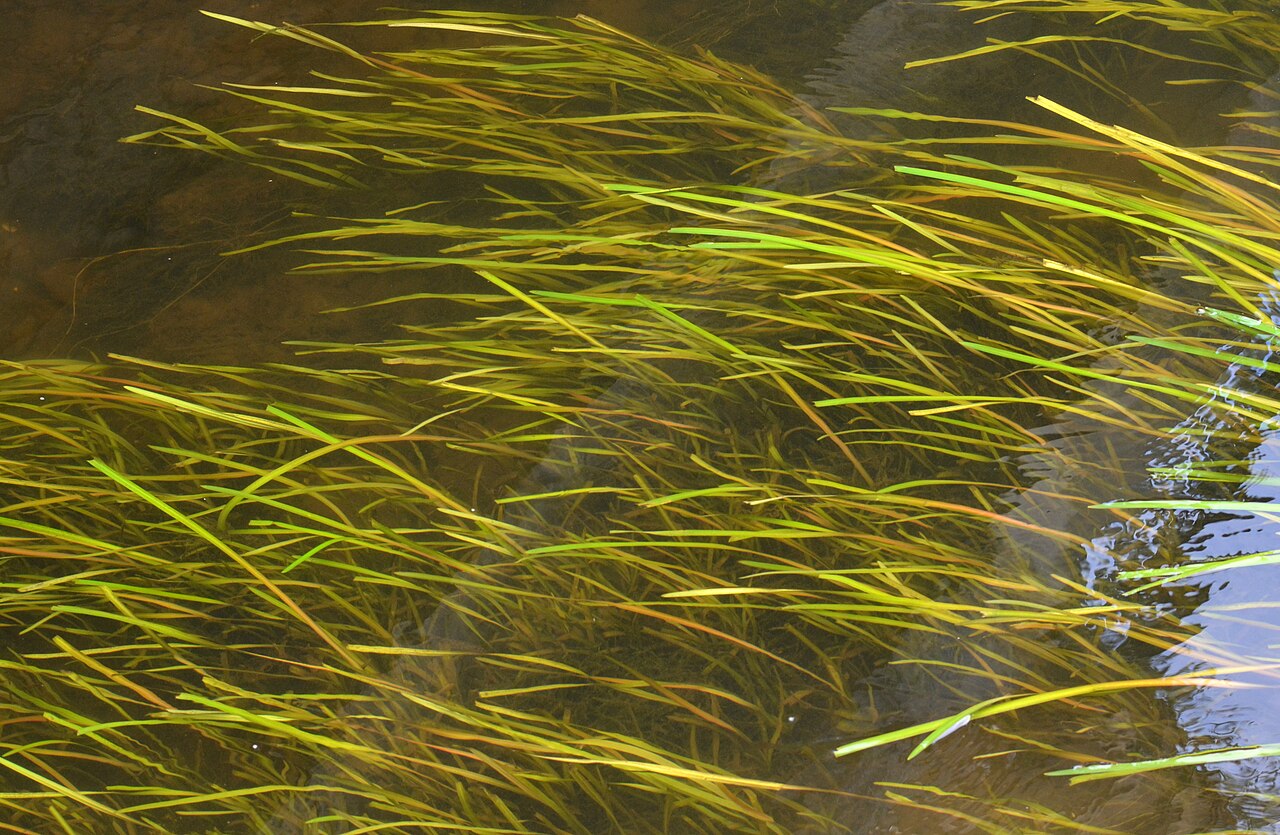
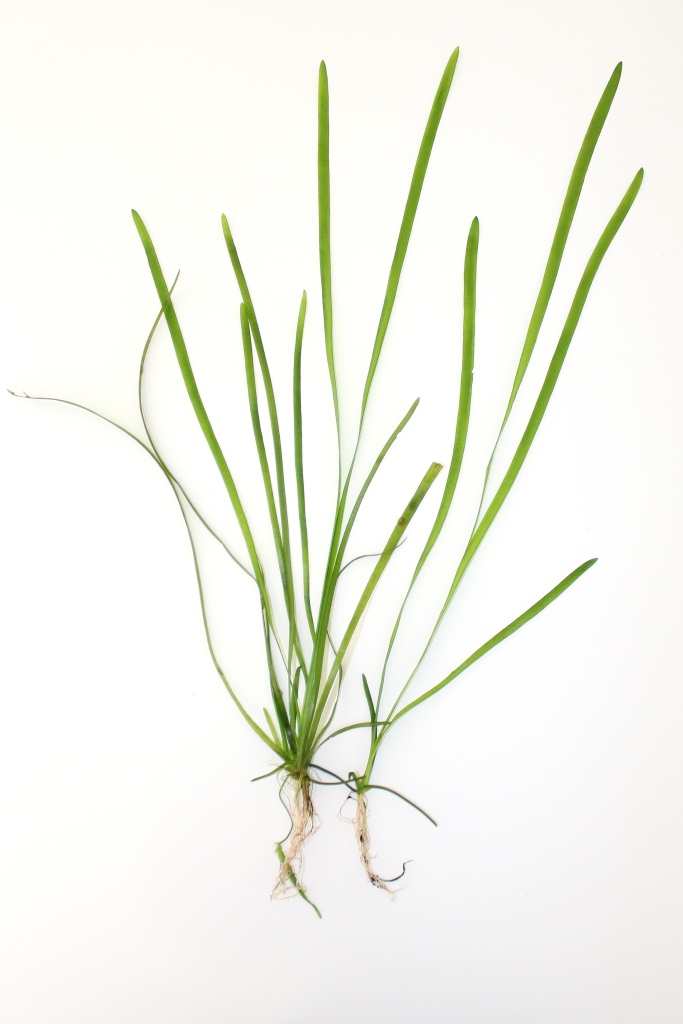
Overview
Vallisneria spiralis is a fully aquatic plant of the frogbit family (Hydrocharitaceae), the type species of its genus and one of the best-known aquarium plants. It is a classic beginner's plant: hardy, fast-growing and quick to spread, it soon forms a dense green curtain in the background.
Several species are sold simply as "vallisneria". According to English Wikipedia, V. spiralis is a medium-sized plant with leaves 30–60 cm long, while the largest vallisnerias are usually sold as Vallisneria gigantea regardless of their true identity: most of them are actually V. americana, and some giant plants are also sold as V. spiralis. Since the revision of the genus (Lowden, 1982) V. gigantea and V. asiatica are treated as synonyms of V. americana; Tropica sells them as Vallisneria 'Gigantea' and V. americana 'Natans'.
Appearance
A rosette of narrow, ribbon-like leaves arising from a short creeping rhizome. The leaves are linear, about 1 cm wide (up to 12 mm according to Russian Wikipedia), blunt-tipped and finely serrated near the tip, with 3–5 longitudinal veins and fainter cross-bands. In the aquarium they are usually 30–60 cm long; sources give a maximum of 80 cm to 1 m. On reaching the surface they float along it.
Colour ranges from pale green to reddish (under strong light). The roots are white or yellowish, up to 10 cm long. Leaves may be straight or corkscrew-twisted; according to Tetra the twisting depends on conditions, while the form f. tortifolia has tightly coiled leaves 15–20 cm long.
Care
- Placement: background, corners and along the side glass; plant in groups.
- Substrate: the roots are delicate, so sand or rounded gravel of 3–6 mm, 3–4 cm deep, works well; some mulm is beneficial. According to English Wikipedia it is not fussy and will grow in plain gravel if an iron-rich fertiliser is added periodically.
- Light: moderate to strong according to Tetra, 8–12 hours a day; with too little light the leaves turn yellow and stretch. English Wikipedia says it does best under bright light but also grows under moderate light, only more slowly; Tropica rates the light demand of 'Tiger' as low.
- CO2: not needed, although extra carbon improves growth. According to Tropica it does best in harder water rich in carbonates, which it uses as a carbon source.
- Temperature: 20–28 °C (Tetra); Russian Wikipedia gives 24–28 °C.
- Water: pH 6–7.5, total hardness up to 15 °dH, KH 5–12 (Russian Wikipedia); Tetra gives pH 6.5–7.5 and GH 5–12. Prefers neutral to alkaline water and dislikes very acidic conditions; tolerates slightly brackish water (specific gravity up to 1.003). Change about 20% of the water weekly.
- Trimming: do not cut the leaves — cut ends turn yellow and rot. Thin out dense stands by removing whole plants and surplus runners.
- Caution: sensitive to copper (algicides, snail treatments, copper-sulfate medications), rust in the water and the antibiotic Bicillin-5.
Difficulty: easy — one of the best plants for beginners (Tropica: Easy).
Fertilizing
It needs no special feeding but responds well to liquid fertiliser containing potassium and iron. A mulm-rich or nutrient substrate speeds up growth; on a poor substrate English Wikipedia recommends adding an iron-rich fertiliser to the water regularly.
Breeding
Propagates vegetatively by runners that produce daughter plants at intervals; on a nutritious substrate runners are very numerous. One plant can produce dozens of new plants a year: up to 50 according to Russian Wikipedia, 50–100 according to Tetra. A daughter plant can be cut off once it has several leaves and its own roots.
Seed reproduction practically never happens in aquariums: cultivated stock is usually of one sex, and seeds have not been observed germinating in aquaria.
Fun facts
- The name spiralis does not refer to twisted leaves but to the stalk of the female flower, which coils up after pollination and pulls the young fruit under water.
- Male flowers break off, float to the surface, and pollination takes place right on the water surface. Russian Wikipedia and Tetra describe vallisnerias as dioecious, while the English article on V. spiralis calls the species monoecious.
- The genus was described by Carl Linnaeus in 1753 and named after the Italian botanist Antonio Vallisneri.
- Nobel laureate Maurice Maeterlinck described the flowering of Vallisneria at length in "The Intelligence of the Flowers".
- Vallisneria has been tested for polishing municipal wastewater by removing nitrogen and phosphorus compounds.
- In New Zealand V. spiralis is an "unwanted organism" and may not be sold.