Plants
Amazon sword
Echinodorus grisebachii
Origin: Central and South America and Cuba: Brazil, Bolivia, Colombia, Peru, Ecuador, Venezuela, Suriname, French Guiana, Costa Rica, Honduras and Nicaragua. It grows on floodplains, in marshy areas and palm swamps, and along rivers and streams where the water level changes considerably through the year.
Also known as: Echinodorus grisebachii; Aquarius grisebachii; synonyms: Echinodorus amazonicus, Echinodorus bleherae ("E. bleheri"), E. parviflorus, E. eglandulosus, E. heikobleheri; trade names: E. grisebachii 'Bleherae', 'Paniculatus'; old misapplied name E. brevipedicellatus
Fact sheet
- Height
- 50 cm
- Temperature
- 20–28 °C
- pH
- 6–7.5
- Hardness GH
- 8–15 °dH
- Lighting
- Low
- CO₂
- Not needed
- Growth rate
- Medium
- Placement
- Midground, Background
Photos
Overview
"Amazon sword" is the aquarium name for a large rosette-forming sword plant of the water-plantain family (Alismataceae) — one of the most popular and hardy aquarium plants. The name comes from the taxon Echinodorus amazonicus, described by Karel Rataj in 1970; English Wikipedia notes that other plants are also sold as Amazon sword.
Older aquarium literature treated E. amazonicus, E. bleherae and E. parviflorus as separate species. Today they are all regarded as synonyms of a single species, Echinodorus grisebachii, which was moved to the genus Aquarius in 2018 (Aquarius grisebachii). Tropica sells the plant as Echinodorus grisebachii 'Bleherae' (formerly also as 'Paniculatus'), so information on "Amazon sword" and E. bleheri is combined here.
Appearance
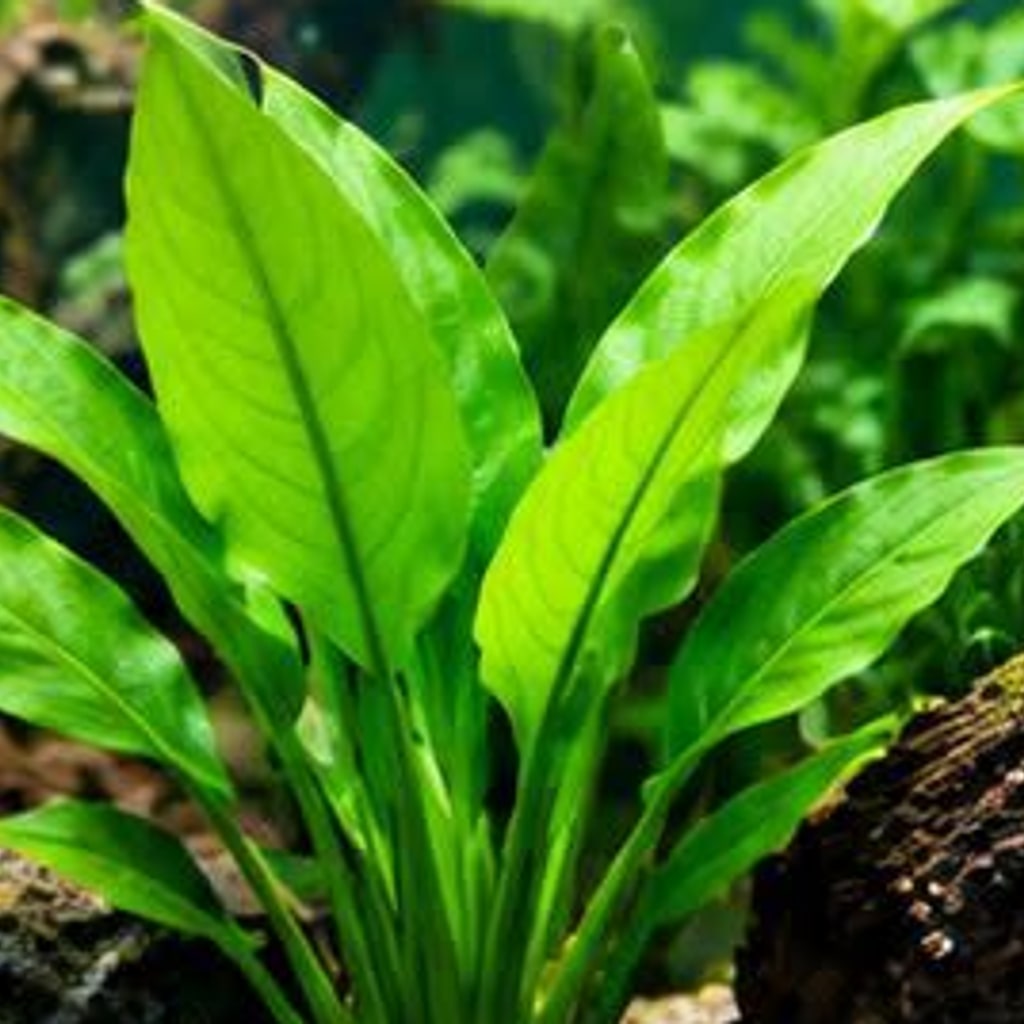
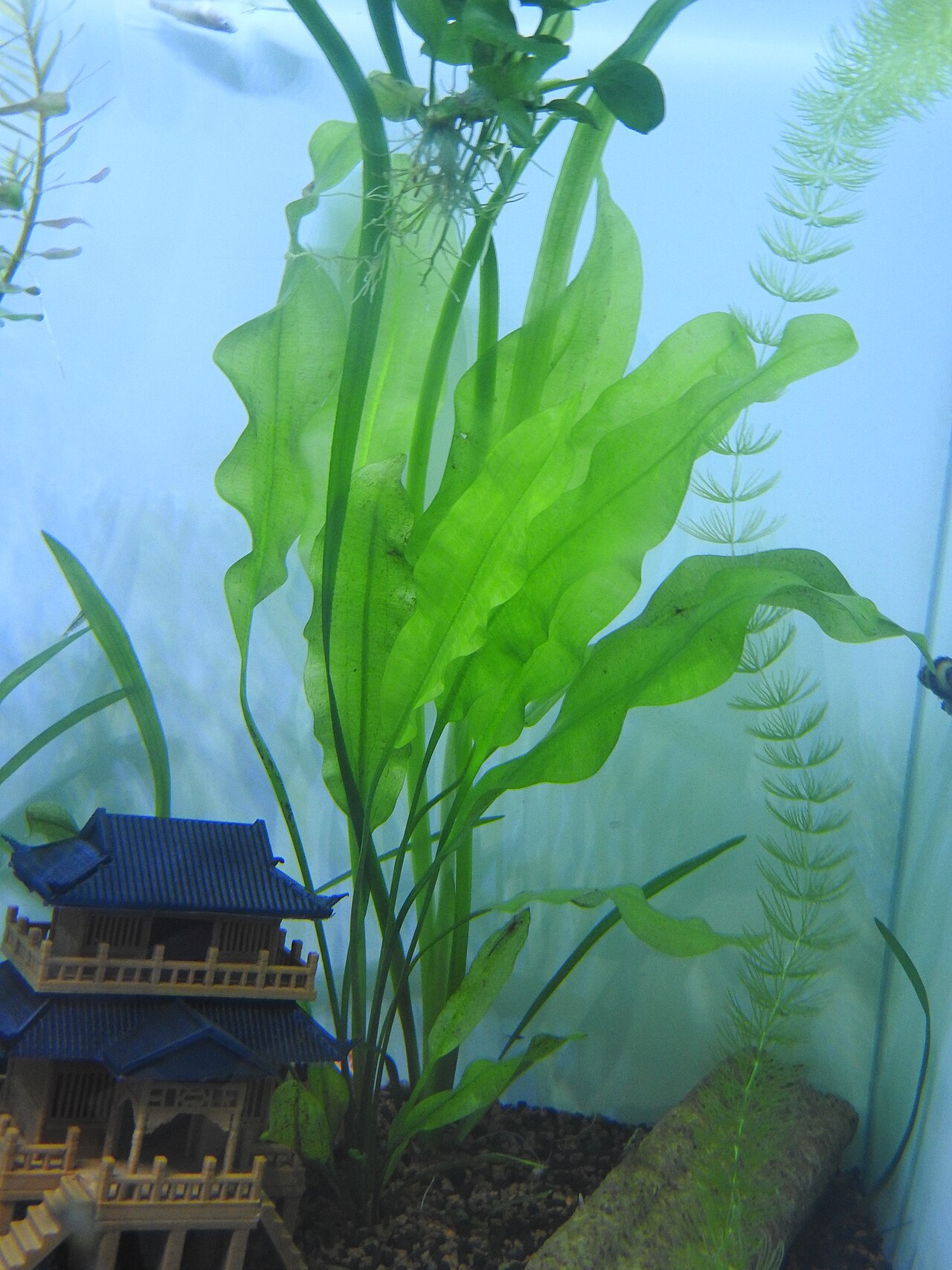
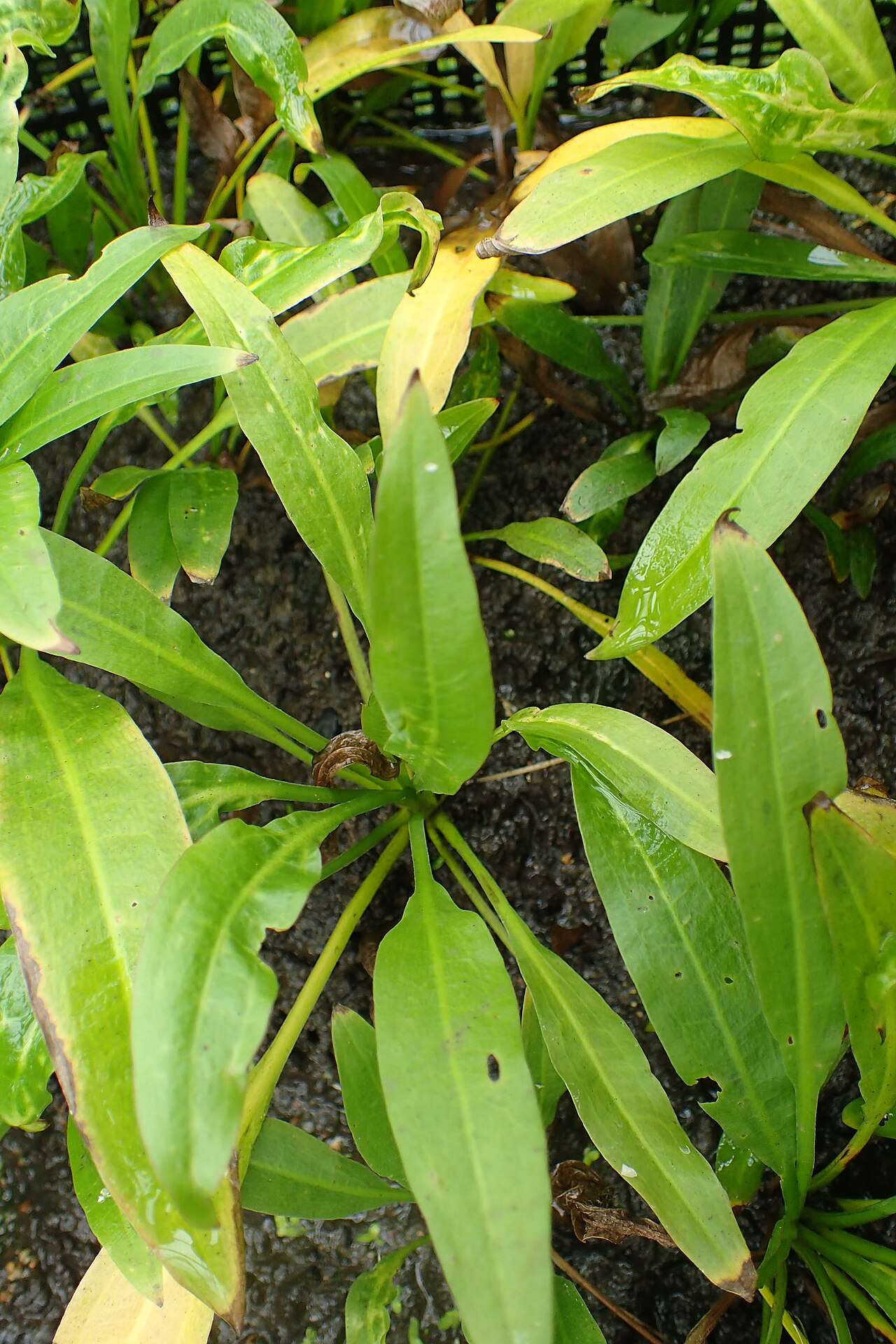
A stemless plant whose leaves arise almost from one point on a thick rhizome, forming a dense rosette. The leaves are lanceolate or narrowly oval, pointed, sometimes with a wavy margin, with clearly visible longitudinal veins; the petioles are flattened and triangular. The blade reaches 30–35 cm in length and about 4 cm in width; according to English Wikipedia, submersed leaves including the petiole are 40–60 cm long.
Colour ranges from light green in young leaves to deep dark green. In the aquarium the plant is 20–50 cm tall according to Tropica, about 35–40 cm according to Tetra and 40–50 cm according to Russian Wikipedia (for E. bleheri); it spreads 30–50 cm wide. Emersed leaves differ from submersed ones.
Care
- Placement: a solitary centrepiece or midground/background plant; best in tanks of 100 litres or more. A large plant heavily shades everything beneath it, so other plants should not be placed in its shadow.
- Substrate: about 5–7 cm deep with a long-lasting nutrient base layer under the main substrate; Russian Wikipedia recommends fine to medium gravel with some clay and peat, well mulmed. Keep the crown above the substrate when planting; very long roots can be trimmed to about 2 cm.
- Light: according to Tropica it does well even in poorly lit aquariums, as it grows towards the light; moderate or bright light gives better colour and growth. Photoperiod 8–12 hours (Tetra); Russian Wikipedia advises at least 8, ideally 10–12 hours.
- CO2: not required (Tropica: low); extra carbon is useful under bright light.
- Temperature: 20–28 °C across sources (Tetra 20–24 °C, Russian Wikipedia 20–28 °C); at 20–22 °C growth slows noticeably.
- Water: pH 6.0–7.5, GH 8–15 (Tetra); according to Russian Wikipedia hardness may range from very soft to fairly hard, pH 6.5–7.5, and the plant tolerates pH down to 5.5. Change 20–30% of the water weekly.
- Trimming: remove old, damaged and yellowing leaves at the base one at a time; do not cut many healthy leaves at once. Tropica notes that pruning keeps the plant from depriving plants below it of light.
- Acclimatisation: nursery plants are often grown emersed; after planting the old emersed leaves may gradually die off — remove them as new submersed leaves appear.
Difficulty: easy — a hardy plant suitable for beginners (Tropica: Easy).
Fertilizing
The sword takes most of its nutrition from the substrate through its strong roots, so a deep substrate and a long-lasting nutrient base layer are important; in a mature tank the roots also use organic matter that builds up in the substrate. Tropica notes that a nutritious substrate promotes growth. A complete liquid fertiliser with micronutrients is added as well.
Breeding
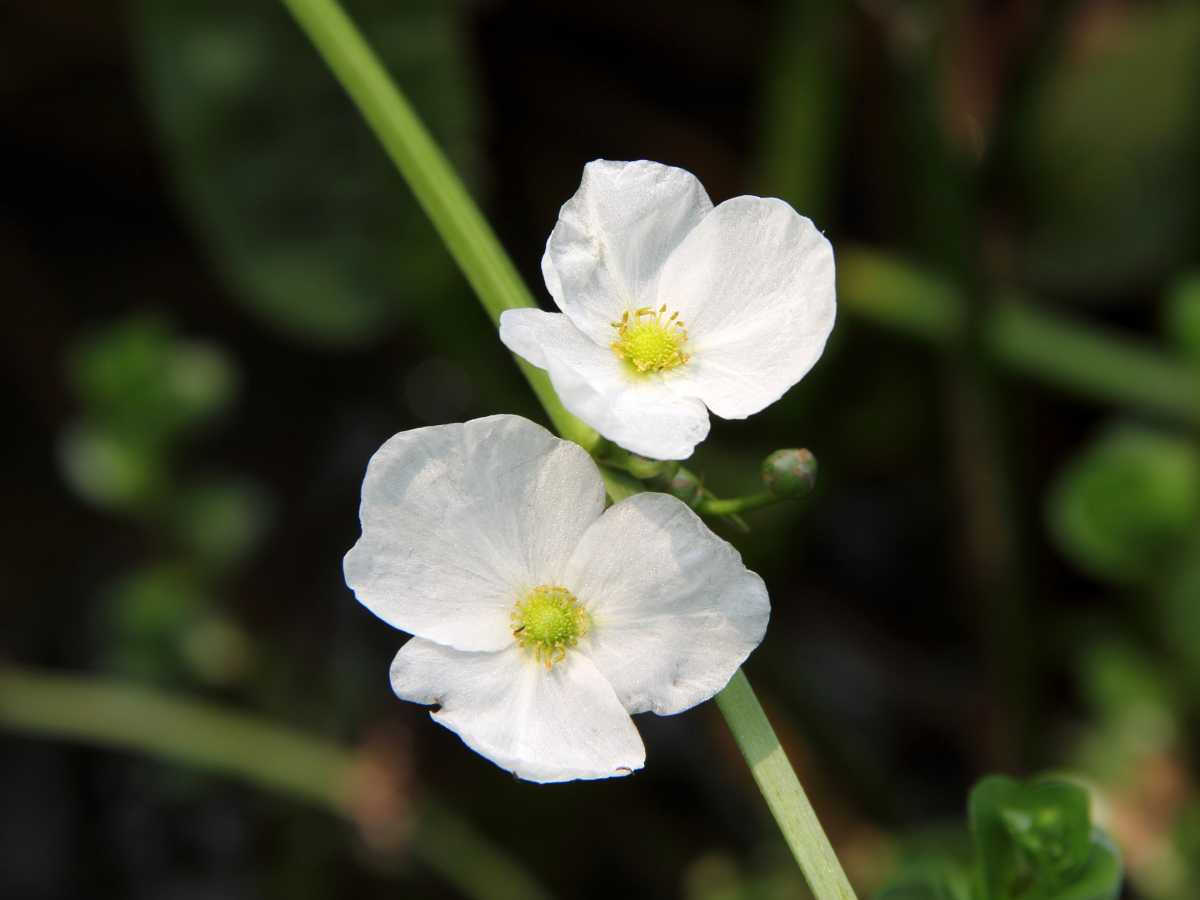
In the aquarium it propagates vegetatively by daughter plants that form on the flower stalk: when the inflorescence develops under water, small plantlets appear instead of flowers. Separate a plantlet once it has 3–4 leaves and its own roots, and plant it shallowly with the crown above the substrate (a small stone can hold it in place at first). If a stalk with small plantlets breaks off, press it onto the substrate under shallow water in bright light until the plantlets root.
Sword plants can also be propagated by dividing the rhizome. Grown emersed in humid air, they usually flower and set seed readily.
Fun facts
- The name Echinodorus comes from Greek words for "rough husk" and "leather bottle", referring to the prickly fruit heads of some species.
- The epithet grisebachii honours the German plant geographer August Grisebach.
- Sword plants hybridise easily, and many "species" in aquarium books turned out to be forms, hybrids or synonyms; according to POWO, the genus Echinodorus now contains only one species, E. berteroi.
- According to Russian Wikipedia, the plant produces 2–3 new leaves a month in the aquarium.
- According to Russian Wikipedia, at high temperatures E. bleheri needs rest periods of 1.5–2 months twice a year with lowered temperature.