Plants
Java fern
Leptochilus pteropus
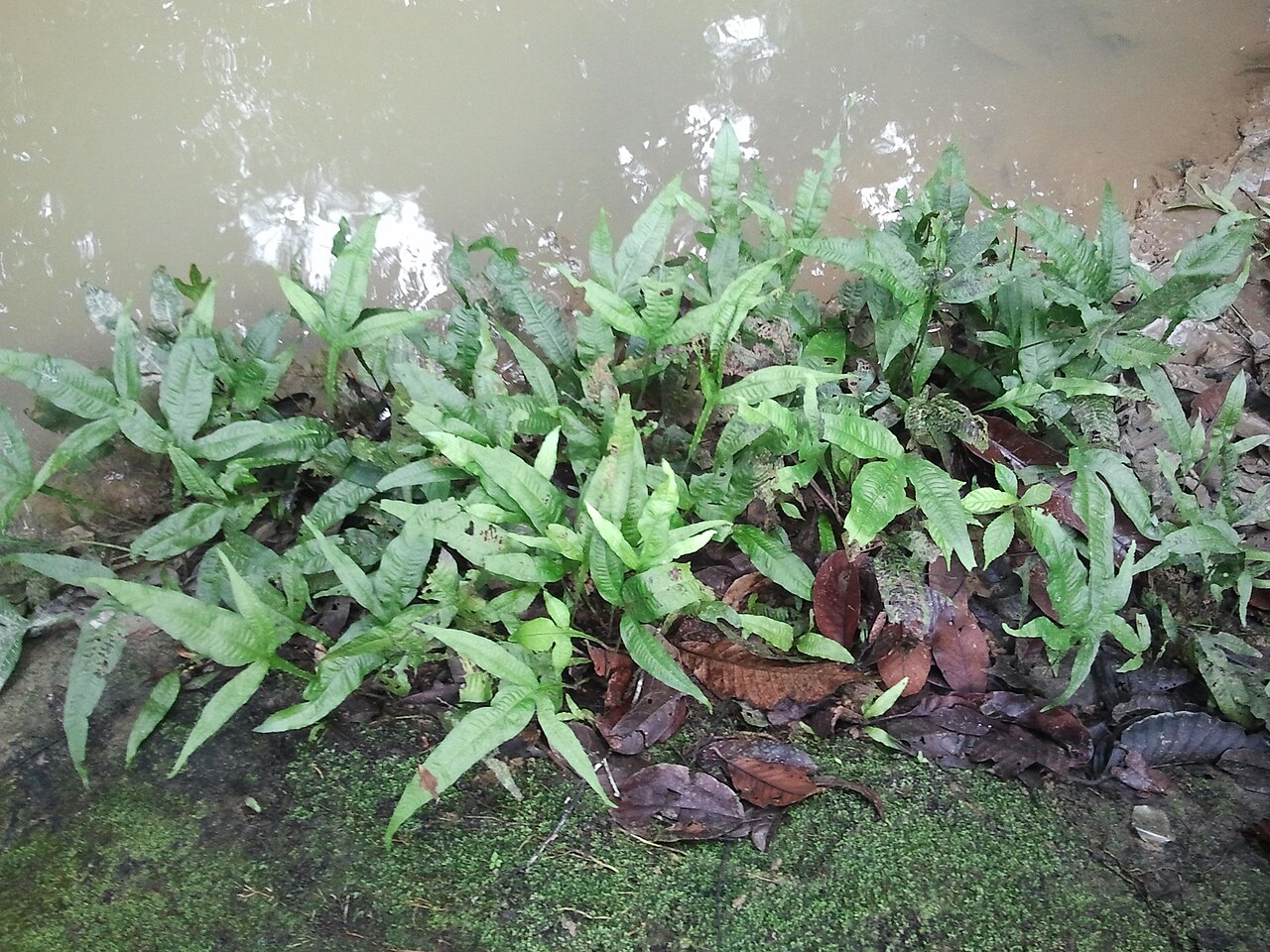
Origin: Tropical and subtropical South-East Asia. According to English Wikipedia — mainly Malaysia, Thailand, north-eastern India and parts of South China; Tetra adds the island of Java. In the wild it grows fully or partially submerged, attached to riparian roots and rocks; according to Tetra, even in fast-flowing rivers and on the slopes of waterfalls.
Also known as: Leptochilus pteropus (current name) Microsorum pteropus (synonym, trade name) Thai fern (Russian trade name)
Fact sheet
- Height
- 30 cm
- Temperature
- 23–26 °C
- pH
- 6.5–7.5
- Hardness GH
- 5–20 °dH
- Lighting
- Low
- CO₂
- Not needed
- Growth rate
- Slow
- Placement
- On wood or rock, Midground
Varieties
Photos
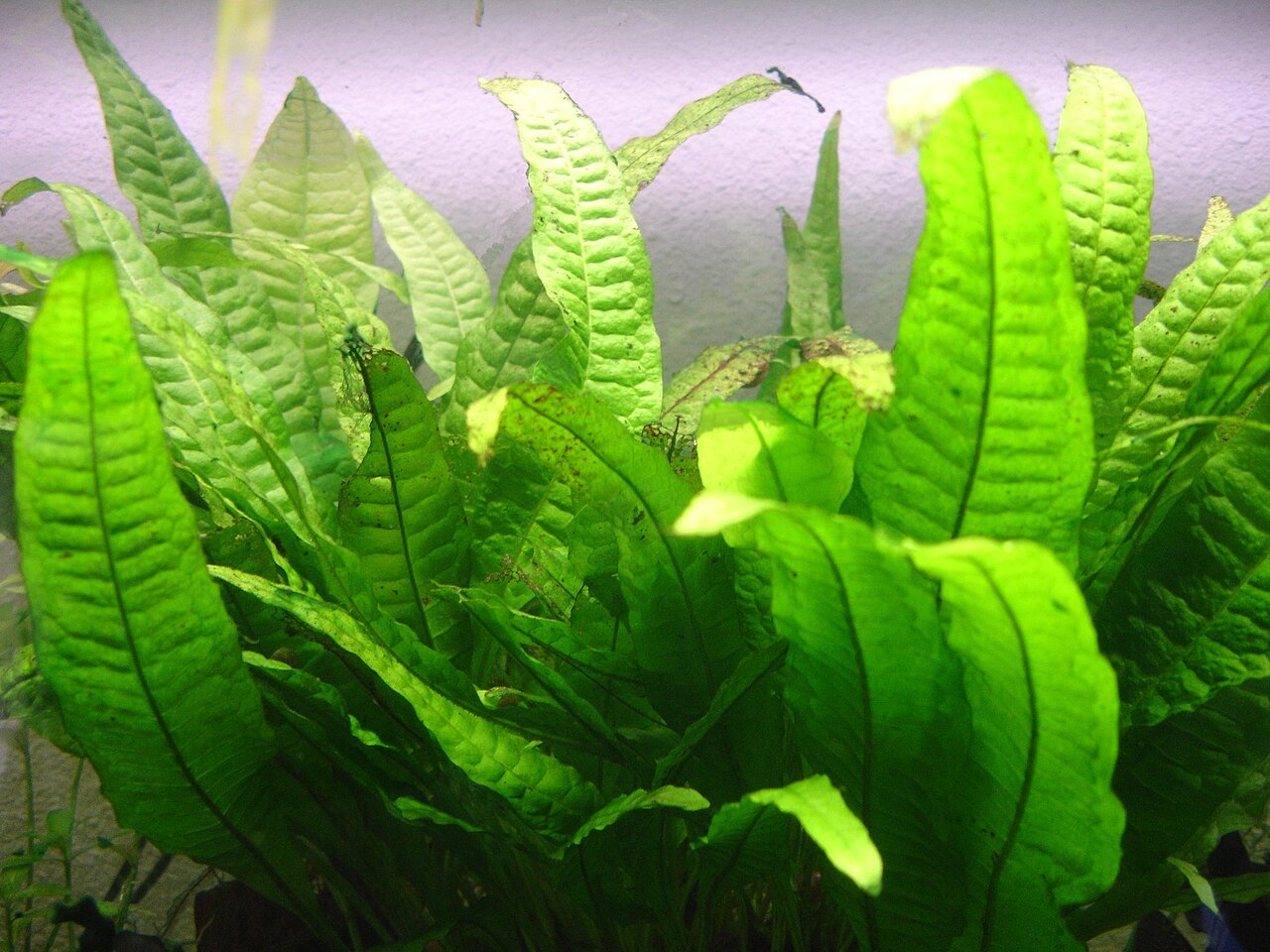
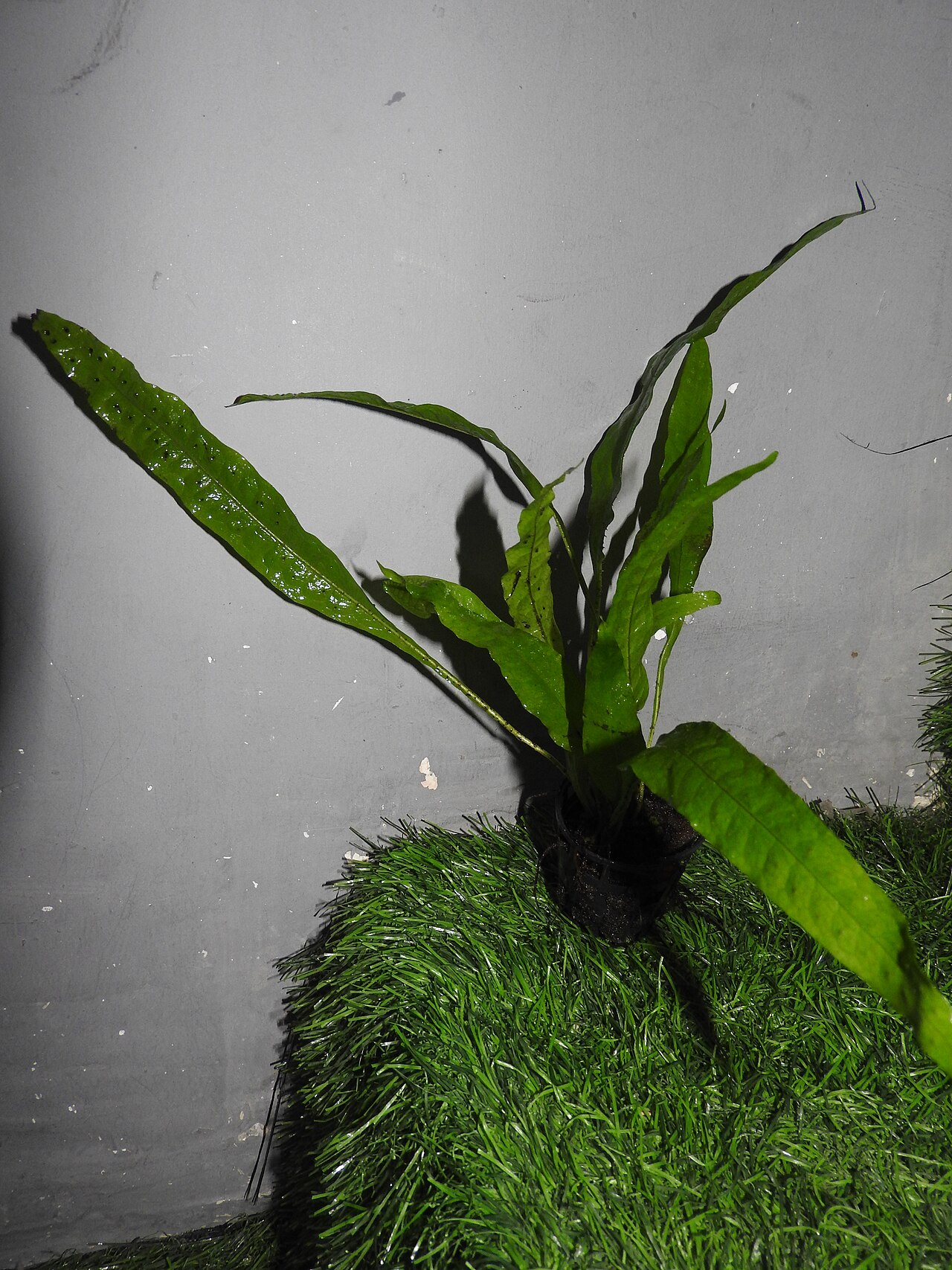
Overview
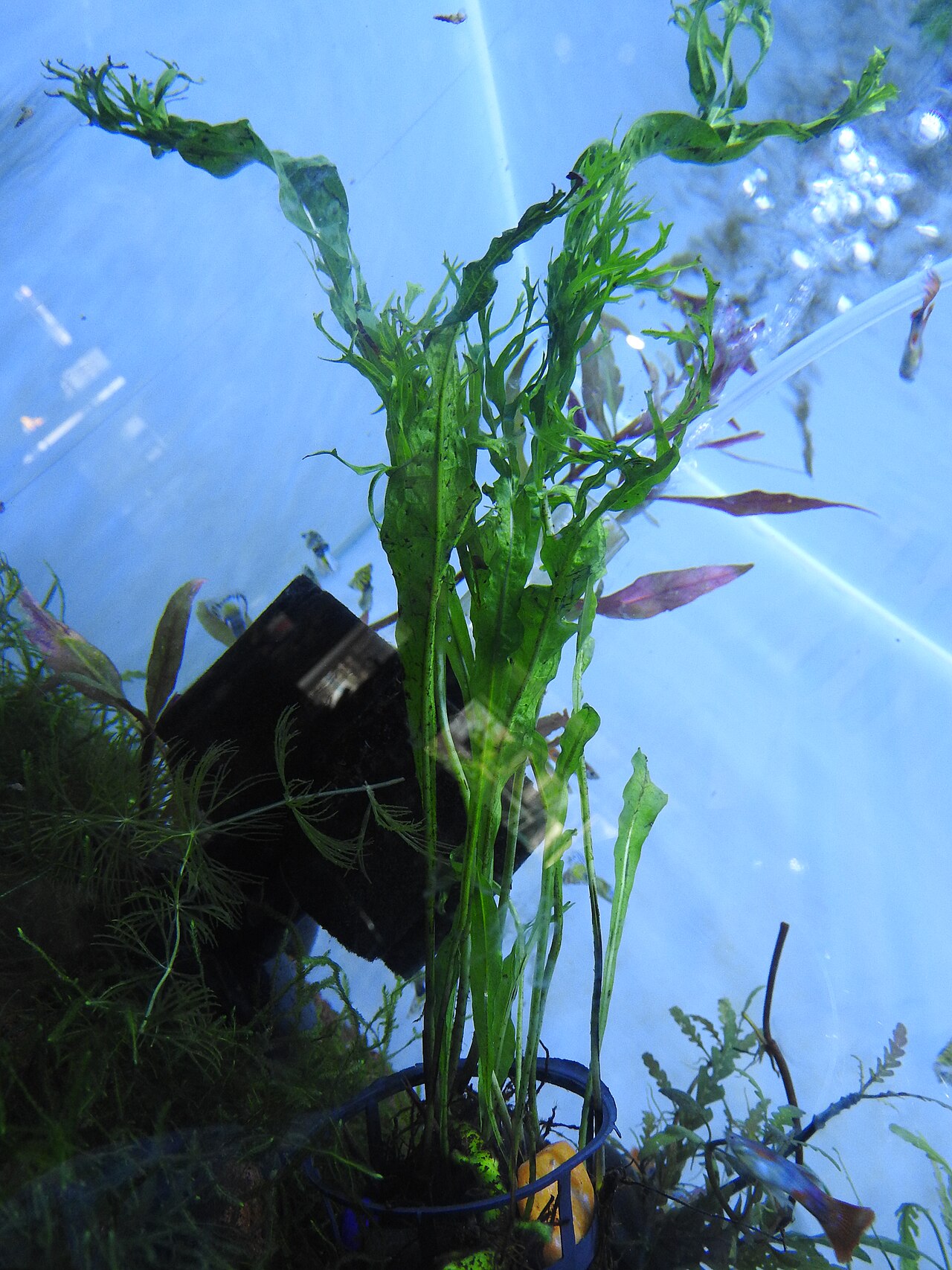
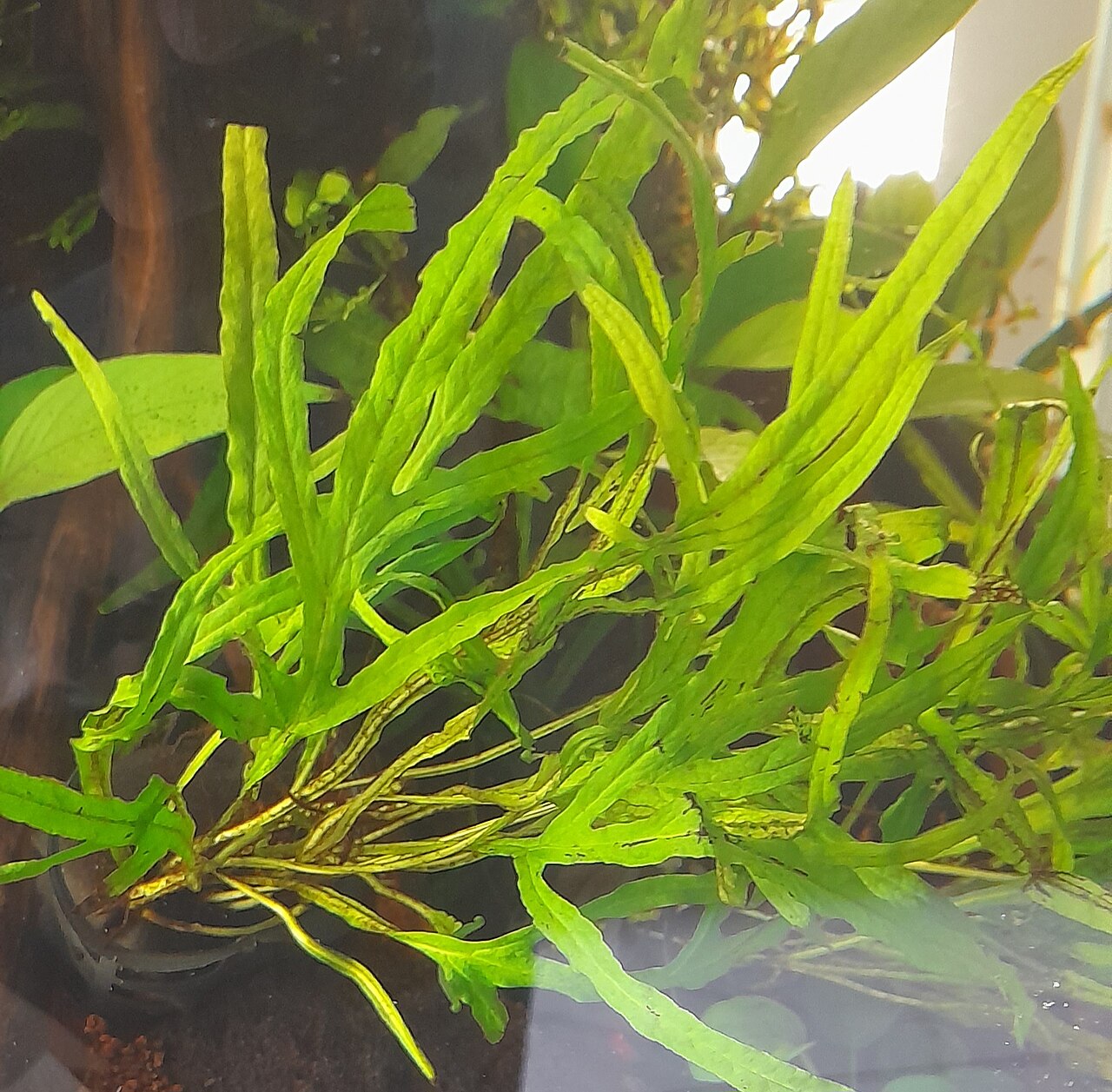
Java fern is an aquatic or semi-aquatic fern of the family Polypodiaceae and one of the most popular plants in the aquarium hobby. It is highly variable, with geographic varieties and cultivars that differ in leaf size, texture and shape.
It is an epiphyte: it is tied to rock or driftwood rather than planted in the substrate. The fern is hardy, grows in dim or bright light, without CO2 and slowly, so it rarely needs trimming. Herbivorous fish generally leave it alone.
Appearance
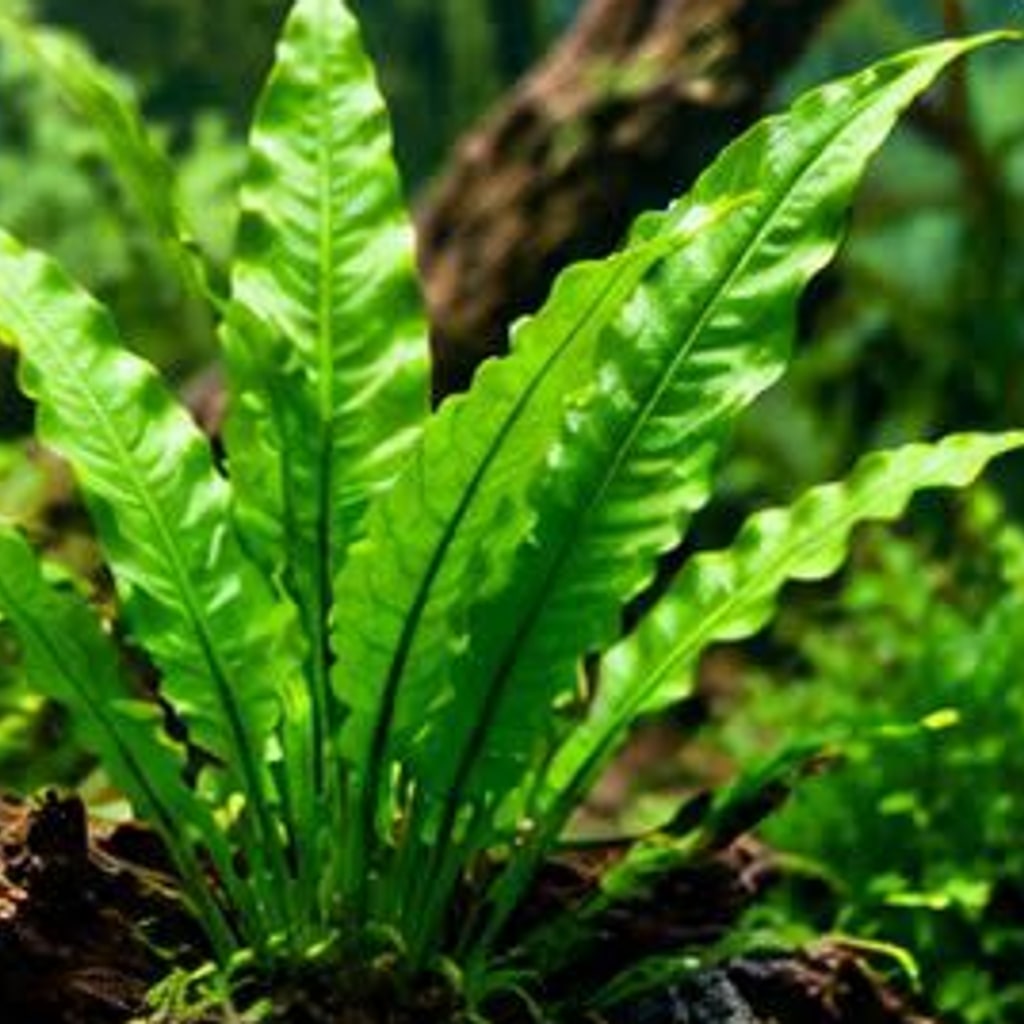
A long horizontal rhizome with small roots carries broad lanceolate leaves, olive to dark green, with slightly wavy margins. Leaves are 15–30 cm long; the plant is 15–30 cm tall (Tropica).
Round dark spots on the underside of the leaves are sori (sporangia) where spores mature — not a sign of disease. In suitable conditions it forms dense thickets.
Care
- Placement: suits tropical tanks of almost any size; best in the midground or along the sides, large rosettes can be a focal point.
- Planting: tie the rhizome to rock or driftwood with fishing line or cotton thread, or glue it, until it takes hold. Do not bury the rhizome in the substrate — it will rot; substrate type does not matter.
- Light: grows in almost any light and tolerates shade; best growth in moderate to strong light. Photoperiod 8–12 hours.
- CO2: not needed; liquid carbon (e.g. Tetra CO2 Plus) helps but is optional.
- Temperature: 23–26 °C.
- Water: pH 6.5–7.5, hardness 5–20 °dH; can be grown in tap water.
- Maintenance: dislikes frequent water changes — 20% every 7–14 days is enough. Frequent trimming is not needed.
Difficulty: a very easy, hardy plant (Tropica: "Easy"), suitable for beginners.
Fertilizing
Roots are weak, so the fern takes most nutrients through its leaves. Liquid fertilisers containing potassium and iron (e.g. Tetra PlantaMin) are important.
According to English Wikipedia, it grows better with higher fish loads.
Breeding
- Rhizome division: cut sections with 2–3 leaves from the mother plant and attach them elsewhere.
- Plantlets on leaves: small plantlets with their own roots form on the tips and margins of mature leaves. They can be carefully removed and tied to wood; if the mother leaf dies first, the plantlet floats away until it attaches somewhere new.
Fun facts
- The dark dots under the leaves are sporangia, not a disease, as many believe.
- Java fern entered the hobby a little over 50 years ago (Tetra).
- Why fish avoid eating it is not established: perhaps its tough leaves or bitter compounds in the leaf cells.
- According to English Wikipedia, it is more snail-resistant than many plants.