Plants
Java moss
Taxiphyllum barbieri
Origin: South-East Asia. According to English Wikipedia, Taxiphyllum barbieri has been recorded in the wild only in Vietnam (it was described from Vinh); it grows in humid riparian areas. Tetra (under the name Vesicularia dubyana) lists Java, Malaysia, the Philippines, India, Indonesia and Burma, where the moss covers soil and rocks along rivers, lakes and swamps and climbs tree trunks.
Also known as: Taxiphyllum barbieri Isopterygium barbieri (original name) Bogor moss Vesicularia dubyana — a different species also sold as "Java moss"
Fact sheet
- Height
- 10 cm
- Temperature
- 20–30 °C
- pH
- 6–7.5
- Hardness GH
- 2–15 °dH
- Lighting
- Low
- CO₂
- Not needed
- Growth rate
- Medium
- Placement
- On wood or rock, Foreground
Photos
Overview
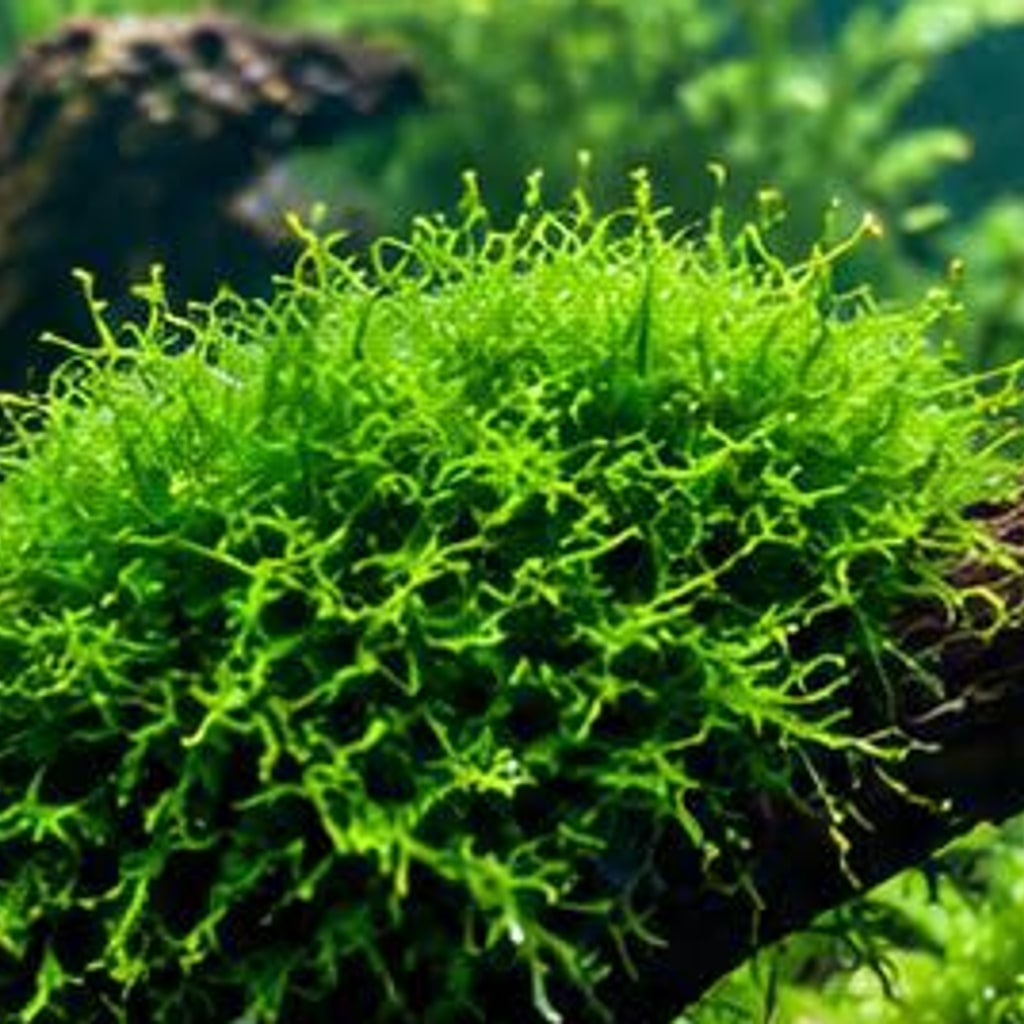
Java moss is one of the most common mosses in the aquarium trade. It is undemanding, accepts almost any water and light, attaches to rocks, roots and driftwood and needs no substrate.
It is used to cover wood and stones, to make carpets and "tree crowns". In breeding and fry tanks it gives cover to young fish and a spawning medium, and shrimp graze microorganisms and detritus from it.
Two similar species are sold as "Java moss" — Taxiphyllum barbieri and Vesicularia dubyana — and they are hard to tell apart. V. dubyana was the first to be called Java moss, but T. barbieri has since become far more common in the trade. Russian Wikipedia and Tetra describe Java moss under the name Vesicularia dubyana.
Appearance
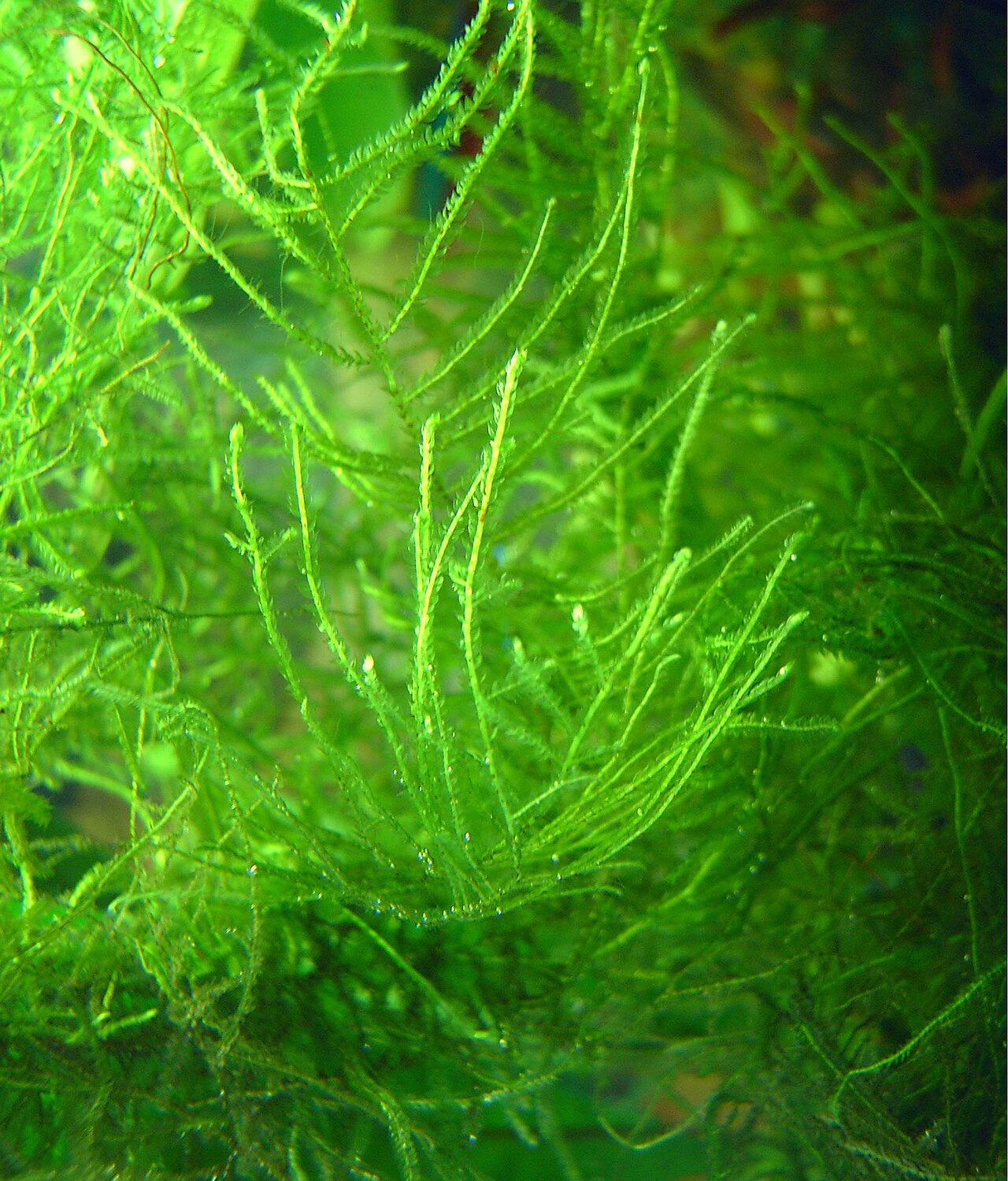
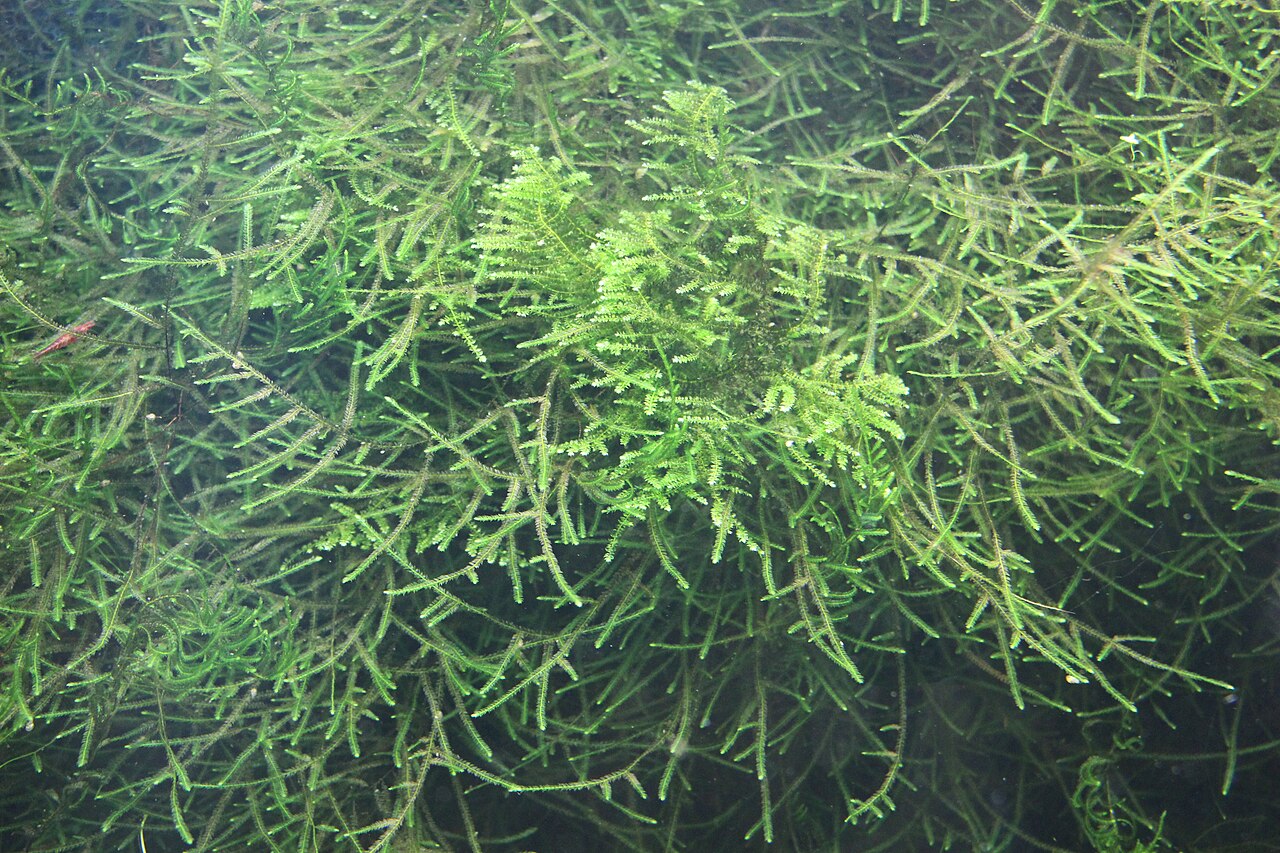
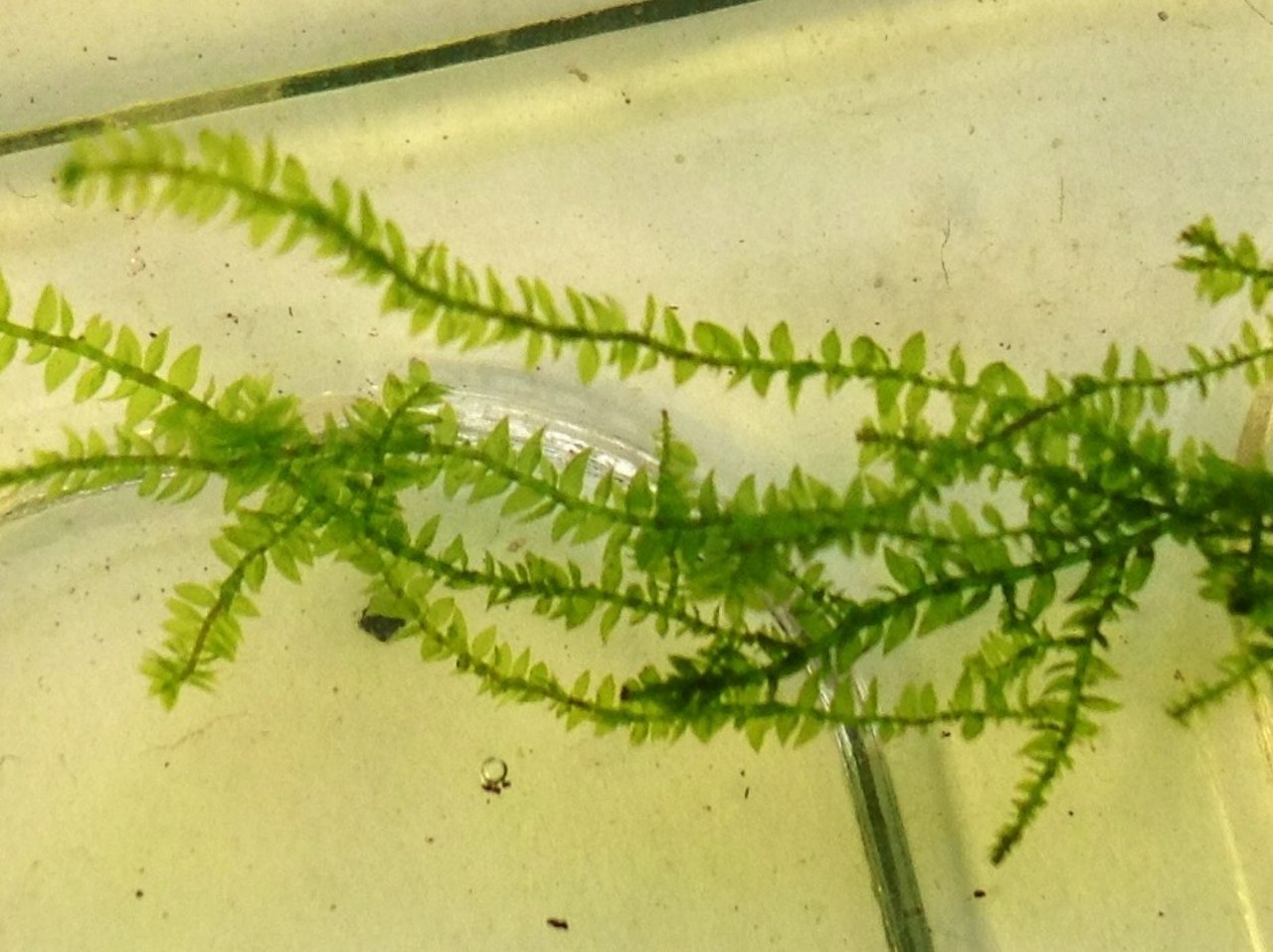
Loose cushions of irregularly branched stems. The leaves are two-ranked, flat, pointed and serrated, no longer than 2 mm, light to darker green depending on age. It clings to surfaces with rhizoids — there are no roots.
According to Tetra, stems reach 17 cm; according to Tropica, the moss forms a layer 3–10 cm thick. The plant is dioecious and perennial.
Care
- Placement: on driftwood, rocks, or a mesh on the bottom or back wall; according to English Wikipedia it makes a good foreground plant and can form a moss carpet.
- Planting: not planted in the substrate. Tie pieces with cotton thread or fishing line until the rhizoids take hold; cotton rots away or disappears under the moss.
- Light: undemanding (Tropica: "Low"), but for lush growth and rooting Tetra recommends bright light and at least 8 hours a day; without light growth stops.
- CO2: optional; adding CO2 (e.g. Tetra CO2 Plus) speeds up growth.
- Temperature: 20–30 °C (English Wikipedia), best at 22–27 °C (Tetra); survives outside this range but hardly grows in cold water.
- Water: pH 6.0–7.5, hardness 2–15° (Tetra); Russian Wikipedia gives pH 5.8–8.0. Tolerates even weakly brackish water.
- Cleanliness: the key requirement is water free of suspended particles. Deposits on the leaves clog the pores and block feeding, so good filtration is needed; remove affected sprigs promptly.
- Trimming: if growth becomes too luxuriant, trim with scissors.
Difficulty: a very easy plant (Tropica: "Easy").
Fertilizing
It has no roots and takes nutrients only through its leaves, directly from the water. To help it settle faster or build a layout quicker, Tetra suggests adding a little liquid fertiliser (e.g. Tetra PlantaPro Macro or Micro).
Breeding
- Division: split a large healthy colony into pieces and tie them in place with thread. Increasing light after replanting helps.
- Stray fragments: a sprig left after trimming can start a new colony in an unexpected spot.
- For the first 1–2 weeks the moss barely grows while it roots; an even carpet on a mesh takes about 1–2 months.
- Spore capsules rarely form in cultivation.
Fun facts
- The species was first described as Isopterygium barbieri from Vinh, Vietnam.
- T. barbieri reached European aquarists in 1968 and was at first misidentified as Glossadelphus zollingeri.
- Vesicularia dubyana reached aquarists back in 1933 and is named after botanist Jean Étienne Duby.
- Java moss is also suitable for terrestrial cultivation in vivariums.