Fish
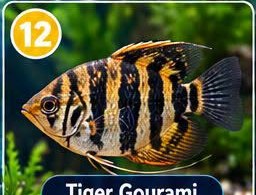
Tiger Gourami
Trichogaster tigrinus
Origin: Южная и Юго-Восточная Азия: Индия, Пакистан, Бангладеш, Мьянма, Таиланд, Малайский полуостров
Also known as: Полосатый гурами, Гурами фасциата, Colisa fasciata
Fact sheet
- Size
- 12 cm
- Lifespan
- 6 years
- Minimum tank size
- 80 L
- Temperature
- 24–28 °C
- pH
- 6–7.5
- Temperament
- Semi-aggressive
- Social behavior
- In pairs
- Swimming zone
- Middle, Top
- Diet
- Omnivore
Varieties
Overview
The Banded Gourami, also called Tiger Gourami or Striped Gourami, is a tropical labyrinth fish native to a broad range spanning Bangladesh, eastern and northeastern India, Nepal, upper Myanmar, southern China, and Pakistan. It inhabits a wide variety of slow-moving and still freshwater habitats including estuaries, ponds, rivers, ditches, lakes, and rice paddies, often in densely vegetated areas with minimal water movement. Described by Bloch and Schneider in 1801, it is the type species for the genus Trichogaster, though it was long classified under the synonym Colisa fasciata. Originally valued primarily as a food fish in its native range, it has become a regular feature of the ornamental fish trade, being exported to markets in Germany, Japan, the USA, and much of Southeast Asia. It is the largest species in the small Trichogaster grouping, reaching up to 10-12 cm in males, and is notable for the male's stunning orange-and-blue banded coloration. Despite some decline in wild populations due to anthropogenic pressures, it maintains a Least Concern IUCN status and is easily bred in captivity.
Appearance
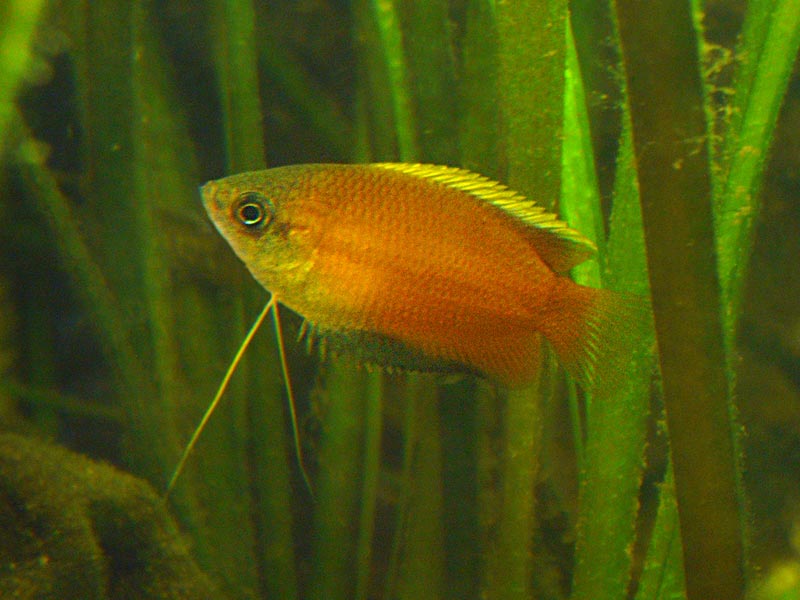
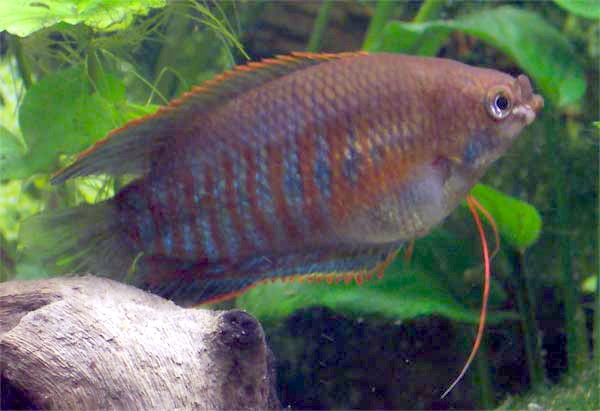
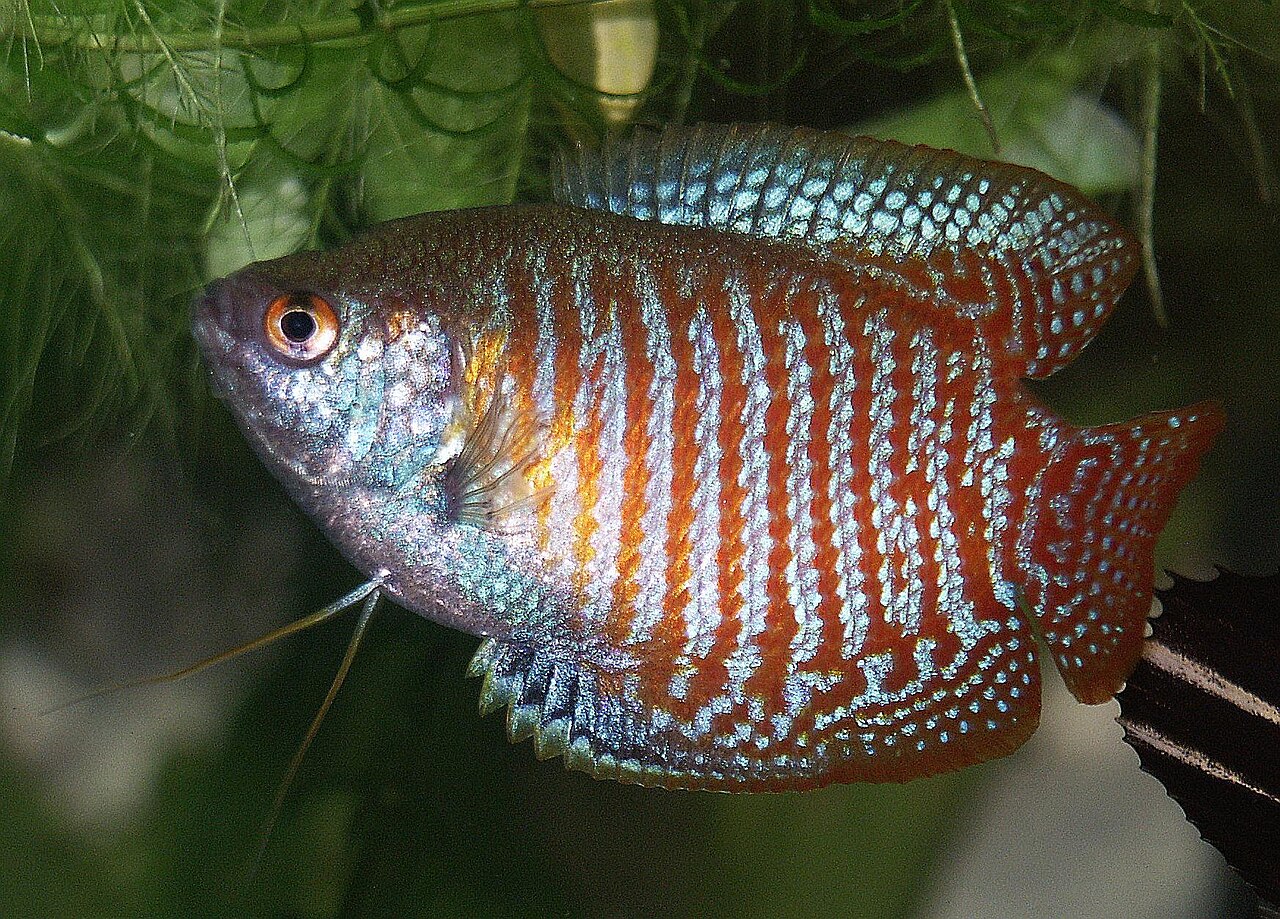
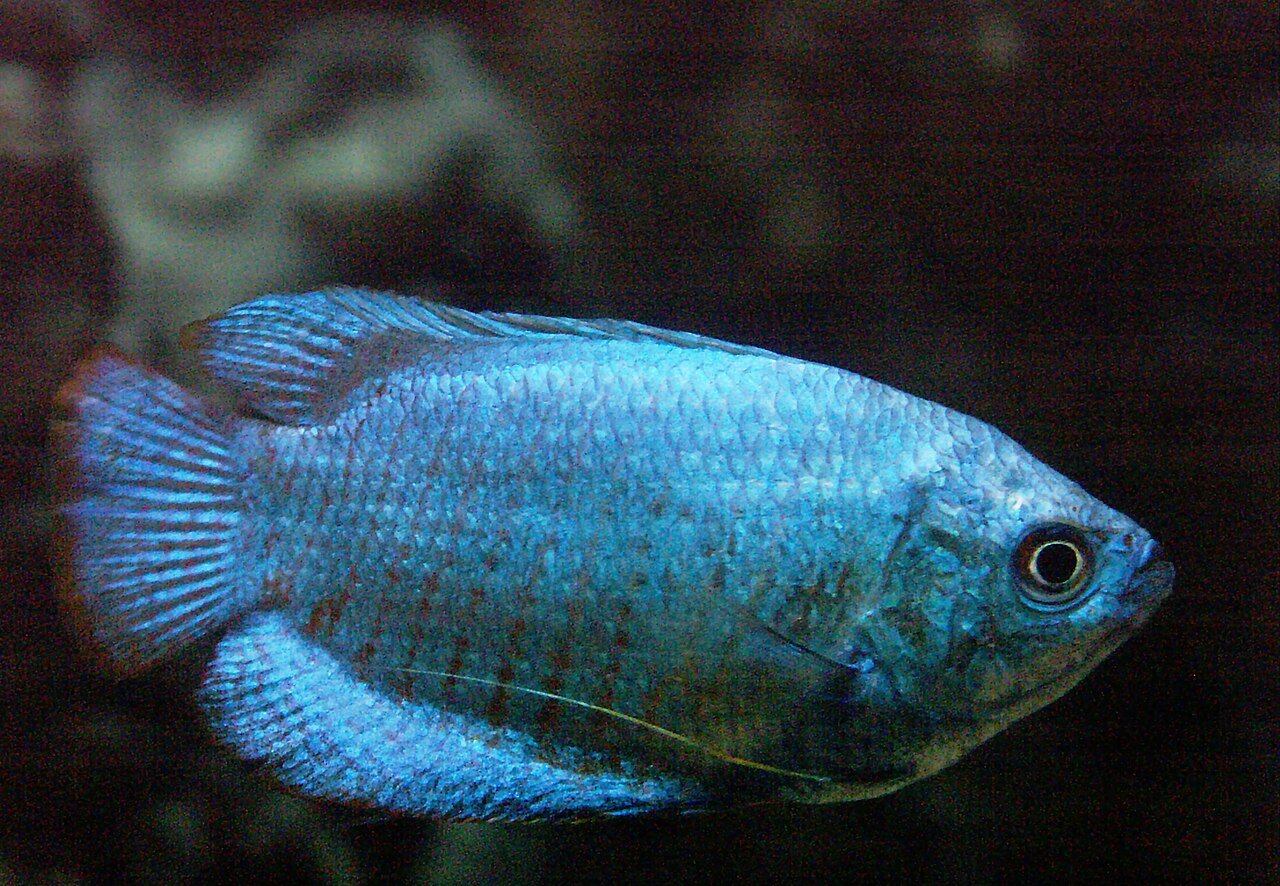
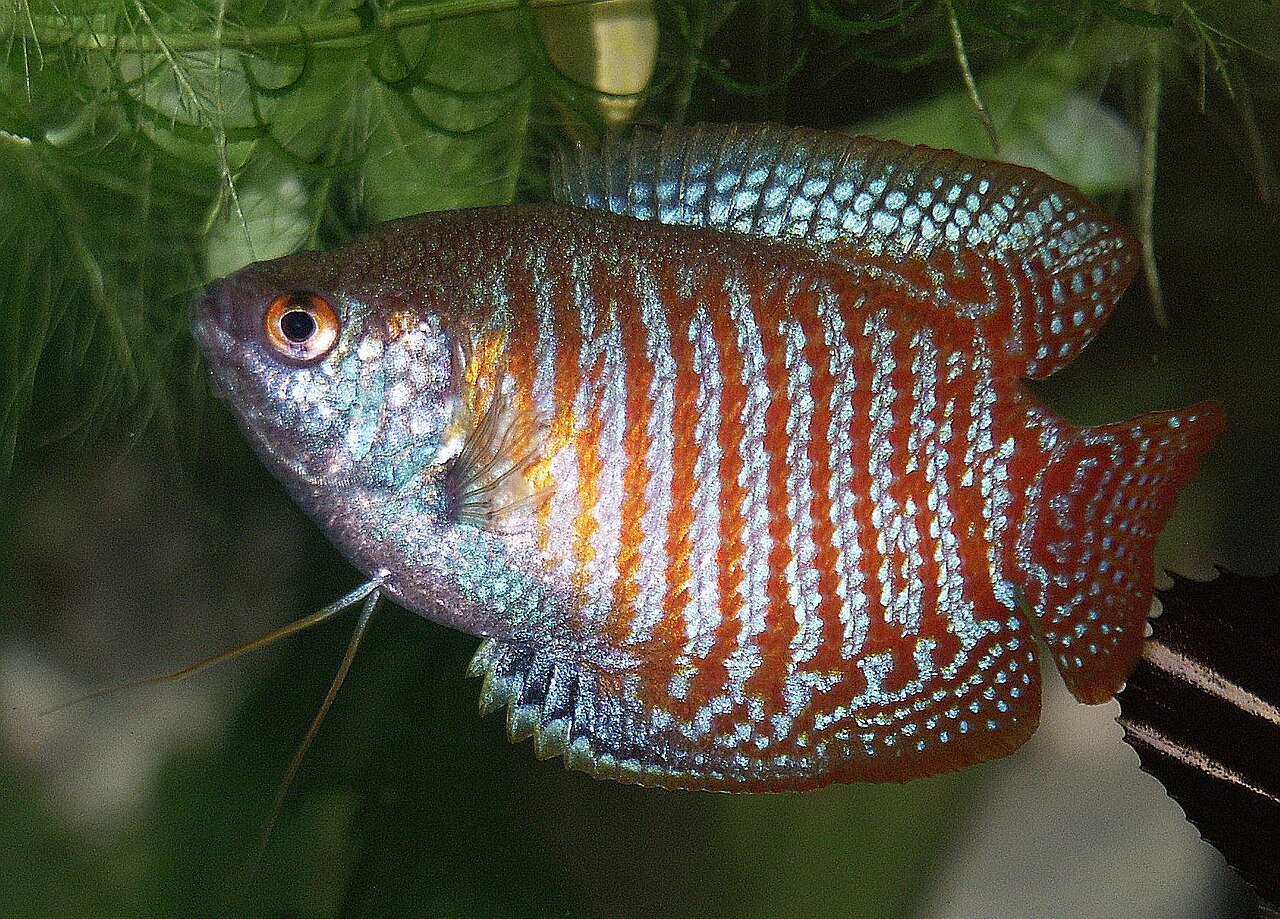
The Banded Gourami has an elongated, strongly laterally compressed body with a small, slightly protrusible upward-tilted mouth, reaching a maximum standard length of approximately 10 cm for males and 6-8 cm for females. Its most striking feature is the oblique striping pattern: alternating orange (or reddish) and bluish-green bars run diagonally from the dorsal surface downward and backward toward the anal fin area. Males are considerably more vibrant than females, displaying intensely colored bars and developing distinctly pointed dorsal and anal fins when sexually mature, while females retain a more rounded, duller coloration. The long, filamentous pelvic fins characteristic of gouramis — used as tactile sensory organs — are present in both sexes. Overall, the male's coloration gives the fish a jewel-like appearance reminiscent of the banded pattern that inspired the common names 'tiger gourami' and 'banded gourami' in various markets.
Care
A pair of Banded Gouramis can comfortably inhabit an aquarium of around 75 x 30 x 30 cm (approximately 70 liters), though larger tanks are preferable for groups or a species display. Water temperature should be maintained between 21-28°C, with a pH of 6.0-7.5 and hardness of 5-15 dGH, reflecting the varied soft-to-moderately-hard waters of their natural range. The aquarium should be densely planted with floating vegetation to diffuse surface light and provide refuge, complemented by driftwood and dark substrate that mimics the tannin-stained rivers and shaded ponds they often inhabit. Water movement should be gentle to minimal, as strong currents stress this species, and the tank must be tightly covered since labyrinth fish need access to warm, humid air above the water surface for proper labyrinth organ function. A lifespan of approximately four years can be expected under good captive conditions.
Feeding
Banded Gouramis are unfussy omnivores that accept a wide range of foods in captivity, including quality dried flake and pellet foods, live or frozen foods such as bloodworm, daphnia, and brine shrimp, and occasional vegetable matter. Their long, coiled intestine is indicative of an omnivorous digestive strategy adapted to processing both plant and animal material. In the wild they feed on insects, small crustaceans, algae, and plant detritus found among dense vegetation. Regular supplementation with live and frozen foods noticeably enhances male coloration and breeds them into prime condition.
Compatibility
The Banded Gourami is described as somewhat shy but quite hardy and generally adapts well to a peaceful community aquarium. It coexists well with similarly sized, non-aggressive species such as rasboras, smaller danios, hillstream loaches, and peaceful catfish like Corydoras. However, it should not be kept with the closely related Thick-lipped Gourami (Trichogaster labiosa), as the two species are capable of hybridizing and producing offspring commonly sold in the trade that may not represent either pure species. Males can become territorial and aggressive toward each other and toward other labyrinth fish, particularly during spawning, so providing ample visual barriers and space is important.
Breeding
Like all members of the suborder Anabantoidei, the Banded Gourami is a bubble nest builder in which the male constructs a floating nest of mucus-coated air bubbles, often incorporating plant material and debris for structural support. A spawning tank with shallow water (15-20 cm depth), floating plants, and a tight cover to maintain warm, humid air is recommended, and a seasonal breeding cycle with three phases — pre-spawning (January-March), spawning (April-August), and post-spawning (September-December) — is observed in wild fish, though captive fish may breed year-round under stable conditions. The male performs an elaborate courtship display, wrapping the female and fertilizing the released eggs, which he then collects and deposits in the bubble nest under his active guard. A typical spawn produces 500-1,000 eggs that hatch within 24-36 hours; fry require infusoria or commercial liquid fry food initially, transitioning to brine shrimp nauplii and microworms as they develop. The male should be removed once the fry are free-swimming to prevent predation.
Fun facts
Like all labyrinth fish (Anabantoidei), the Banded Gourami possesses a labyrinthine suprabranchial chamber — a modified gill structure that functions as an accessory air-breathing organ, allowing it to breathe atmospheric oxygen directly and survive in low-oxygen waters that would suffocate most other fish. This adaptation means the fish will paradoxically drown if denied access to the water surface, as the labyrinth organ becomes the primary respiratory organ in adulthood. Sexual maturity is reached at about one year of age, and the species reaches its maximum size and coloration potential within 18 months under good feeding and care.