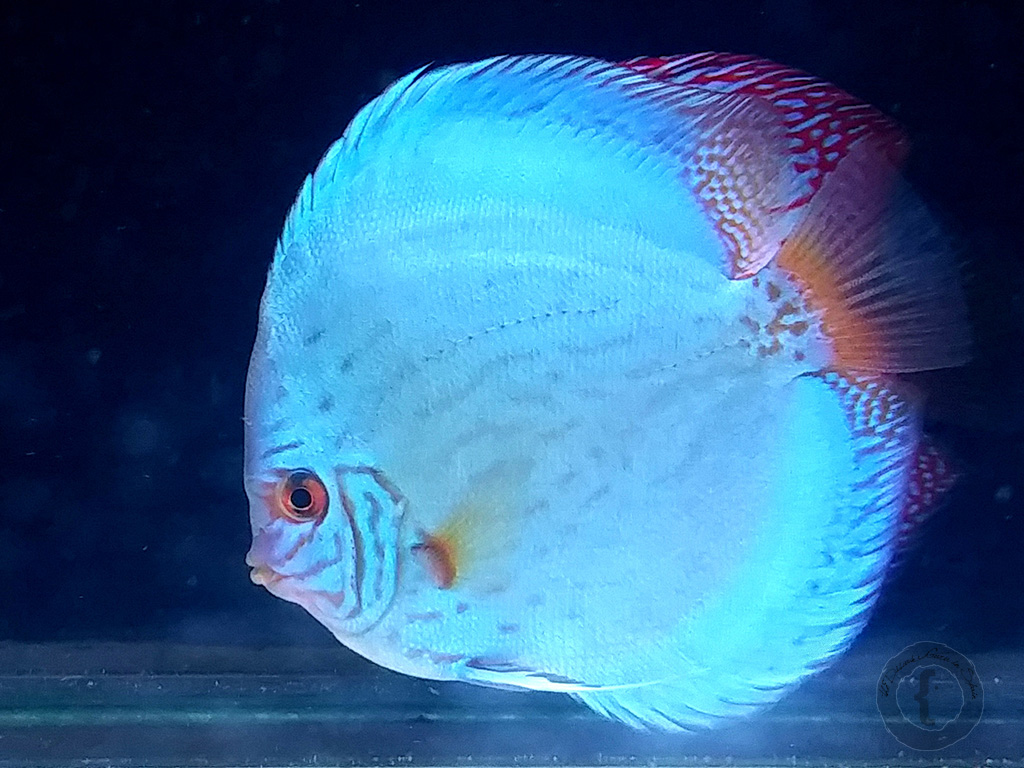
Turquoise Discus
Symphysodon discus
Origin: Бассейн реки Амазонки, Бразилия (реки Риу-Негру, Амазонас, Укаяли)
Also known as: Рыба-диск, Дискус Хекеля, Голубой дискус
Fact sheet
- Size
- 20 cm
- Lifespan
- 10 years
- Minimum tank size
- 250 L
- Temperature
- 26–31 °C
- pH
- 5–7
- Temperament
- Peaceful
- Social behavior
- Schooling
- Swimming zone
- Middle
- Diet
- Omnivore
Overview
One of the earliest and most popular captive-bred color strains, featuring an intense blue-green (turquoise) horizontal striping pattern that covers most of the body. Developed from selective breeding programs starting in the 1960s–70s. Many sub-strains exist including 'Red Turquoise,' 'Brilliant Turquoise,' and 'Royal Blue Turquoise,' each with differing degrees of coverage and contrast.
Appearance
Shared with the species: Discus
Discus possess a distinctively laterally compressed, circular body that gives the genus its common name, with the body depth nearly equal to the body length. Wild specimens display sides patterned in interlocking shades of green, red, brown, and blue, with nine dark vertical bars that can intensify during stress or social signaling. Adults typically measure 12–15 cm (5–6 inches) in nature, though captive fish with optimum nutrition occasionally reach 20–23 cm (8–9 inches) and weigh up to 250 grams. Sexual dimorphism is subtle—males and females look very similar, though experienced breeders identify males by a slightly more rounded, convex forehead and females by a more pointed genital papilla that becomes visible close to spawning time. Selective breeding over decades has produced hundreds of captive color forms far more vivid and varied than wild fish, from uniform cobalt blue to blood-red, golden, and intricately patterned snakeskin varieties.
Care
Shared with the species: Discus
Discus are widely considered among the most demanding freshwater aquarium fish, earning their 'advanced keeper' reputation through strict requirements for water quality and stability. They require a fully established aquarium of at least 200 liters (55 gallons) in a tall format, with warm water maintained consistently at 28–31°C (82–88°F)—significantly higher than standard tropical fish requirements. Water must be soft and slightly acidic (pH 6.0–6.8), and large, frequent water changes of 30–50% weekly are non-negotiable to prevent the nitrate accumulation that causes chronic stress and disease in this species. The aquarium should be decorated with driftwood and dense plants such as Amazon Swords and Vallisneria, with open central swimming areas; subdued lighting using floating plants reduces stress. Discus are highly social and must be kept in groups of at least 5–7 individuals, as isolation or small groups lead to bullying directed at subordinate fish.
Feeding
Shared with the species: Discus
In the wild, discus are omnivores that feed primarily on algae, detritus, plant material, and small invertebrates found in Amazon floodwaters, with seasonal supplementation of aquatic insects and crustaceans. In captivity, the cornerstone of discus nutrition is a high-quality beef heart or seafood paste blend, which has been refined over decades of hobbyist breeding and supplies the high protein needed for growth and condition. This is supplemented with frozen or freeze-dried bloodworms, brine shrimp, and high-quality cichlid pellets. Adults should be fed 2–3 times per day, with careful attention to removing uneaten food within minutes, as discus are particularly sensitive to the ammonia spikes caused by food decomposition. Wild-caught specimens, particularly Heckel Discus, may initially refuse prepared foods entirely and require live or frozen offering for weeks before accepting other foods.
Compatibility
Shared with the species: Discus
Discus are peaceful and somewhat timid cichlids that are best kept in a species-dedicated aquarium or with carefully chosen tankmates capable of tolerating discus water conditions. Classic and proven tankmates include Cardinal Tetras (Paracheirodon axelrodi) and Rummynose Tetras, both native to the same Amazonian waters and fully comfortable at discus temperatures, as well as small Corydoras catfish and Apistogramma dwarf cichlids. Avoid any boisterous, nippy, or large predatory species—the discus's timid nature and long, flowing fins make it vulnerable to harassment, and stress rapidly leads to disease. Discus are highly social within their own species and the group hierarchy is dynamic; a group of 5–8 allows excess aggression to disperse across multiple individuals rather than focusing on one subordinate fish. Most standard tropical community fish are unsuitable tankmates due to the temperature mismatch: discus temperatures of 29–31°C are too warm for neon tetras, guppies, and most common community species.
Breeding
Shared with the species: Discus
Discus form lifelong monogamous pairs with strong mutual recognition, and experienced breeders often start groups of 6–10 juveniles and allow natural pairing to occur as the fish mature. Both partners clean and defend a flat spawning substrate—typically a broad Amazon Sword leaf, a piece of slate, or a ceramic cone placed in the aquarium specifically for this purpose—before the female deposits 100–300 adhesive eggs in neat rows, which the male fertilizes in immediate passes. Both parents guard the clutch intensively, taking turns fanning the eggs with their fins for oxygenation and removing any infertile white eggs to prevent fungal spread. Eggs hatch in approximately 48–60 hours; the wriggling larvae are attached to the substrate by sticky threads and tended carefully by the parents, who move them to fresh clean spots on the substrate several times per day. For the first 2–4 weeks of life, fry feed on a nutritive skin-mucus secretion ('discus milk') produced by both parents—a unique form of parental care among cichlids that parallels mammalian nursing and makes discus breeding one of the most fascinating spectacles in freshwater fish keeping.
Fun facts
Shared with the species: Discus
Discus secrete a protein-rich skin mucus to nourish their newly hatched fry—one of only a handful of fish species known to produce any form of nutritive secretion for offspring, a behavior more commonly associated with mammals. Wild discus can live up to 10 years, and well-kept captive specimens have been reported to reach 12–15 years, making a healthy adult discus a significant long-term commitment. The discus hobby has given rise to a multi-million dollar selective breeding industry, primarily centered in Southeast Asia (particularly Singapore and Malaysia), which produces the hundreds of named color varieties available in the trade today.