Fish
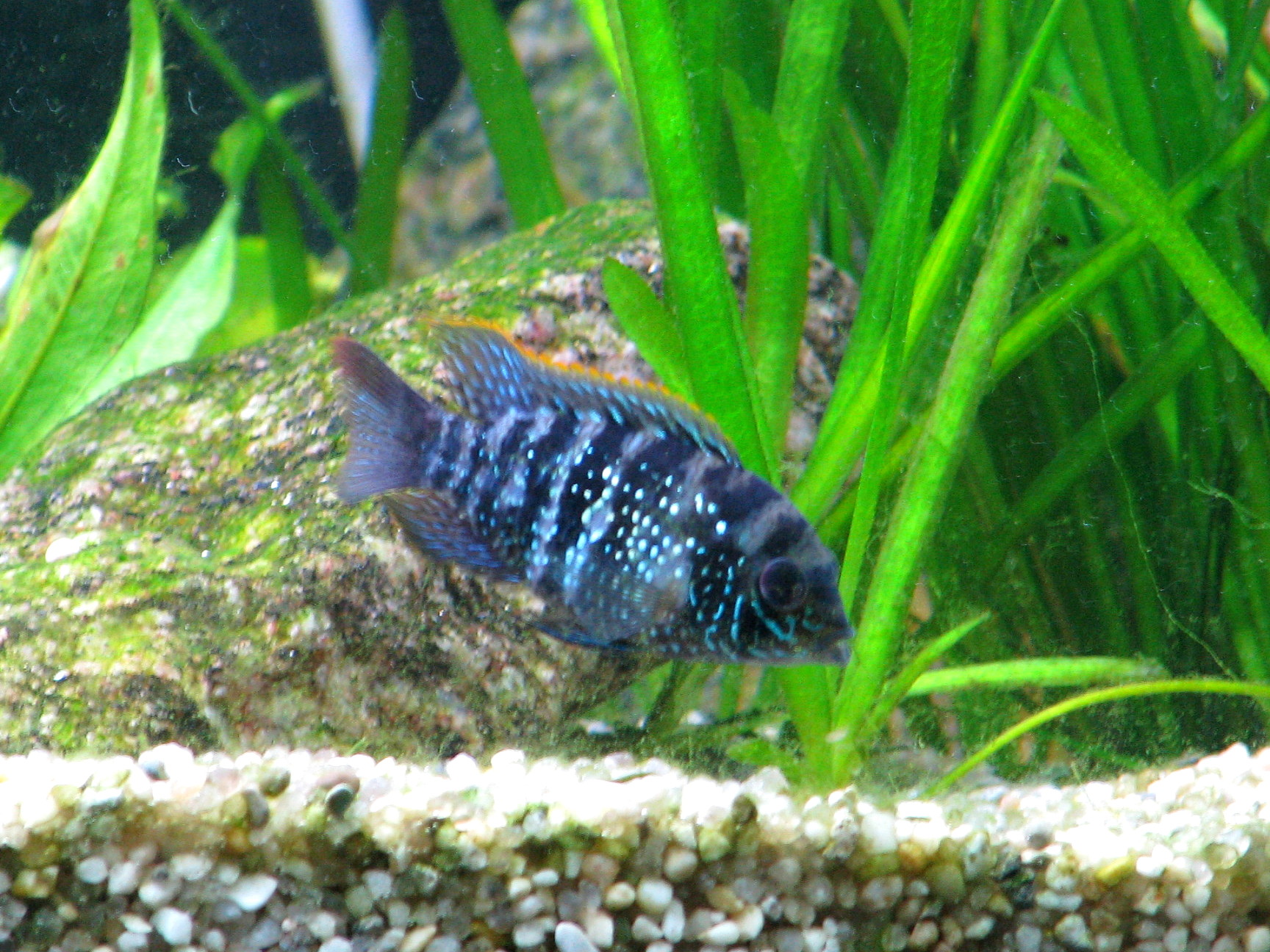
Electric Blue Acara
Andinoacara pulcher
Origin: Orinoco River basin, northern Venezuela and Trinidad
Also known as: EBA, Blue Acara, Andinoacara pulcher
Fact sheet
- Size
- 20 cm
- Lifespan
- 10 years
- Minimum tank size
- 150 L
- Temperature
- 22–28 °C
- pH
- 6.5–7.5
- Hardness GH
- 5–15 °dH
- Temperament
- Semi-aggressive
- Social behavior
- In pairs
- Swimming zone
- Middle, Bottom
- Diet
- Omnivore
- Jumps out
- No
- Eats plants
- No
Varieties
Overview
The Electric Blue Acara (Andinoacara pulcher) is a stunning South American cichlid renowned for its brilliant metallic-blue iridescent coloration. Native to slow-moving rivers, streams, and lagoons of the Orinoco drainage in Venezuela and Trinidad. First described by Günther in 1862; the 'Electric Blue' trade name emerged in the 2000s through selective breeding, possibly involving hybridization with closely related species. One of the most beginner-friendly cichlids, combining remarkable beauty with a relatively peaceful disposition.
Appearance
Moderately deep oval body reaching 12–16 cm in males. Base coloration is intensely iridescent blue-turquoise that shifts with mood and lighting. Males develop pointed dorsal and anal fins; mature specimens may show a slight nuchal hump.
Care
Tank minimum 150 L (200 L recommended for a pair). Temperature 22–28°C, pH 6.5–7.5, moderate hardness. Soft substrate for digging, driftwood, plants, and flat stones for spawning. Weekly 25–30% water changes.
Feeding
Omnivore: high-quality cichlid pellets, flakes, frozen/live bloodworms, brine shrimp, daphnia.
Compatibility
Moderately peaceful outside spawning season. Suitable tankmates: large tetras, danios, corydoras, other peaceful cichlids. Breeding pairs become territorial.
Breeding
Open substrate spawner. Female lays 150–300 eggs on cleaned flat stone; both parents guard eggs. Hatch in 48–60 h; fry free-swimming in 5–7 days.
Fun facts
The brilliant blue coloration is produced by iridophores — structural color cells that create metallic sheen rather than pigment. Captive 'Electric Blue' form may involve hybridization.