Fish
Texas Cichlid
Herichthys cyanoguttatus
Origin: Southern Texas (USA) and northeastern Mexico: Rio Grande and Nueces river systems
Also known as: Pearl Cichlid, Rio Grande Cichlid, Herichthys cyanoguttatus
Fact sheet
- Size
- 30 cm
- Lifespan
- 15 years
- Minimum tank size
- 350 L
- Temperature
- 20–28 °C
- pH
- 6.5–8
- Hardness GH
- 5–20 °dH
- Temperament
- Aggressive
- Social behavior
- In pairs
- Swimming zone
- Bottom, Middle
- Diet
- Omnivore
- Jumps out
- No
- Eats plants
- Yes
Varieties
Overview
The Texas Cichlid (Herichthys cyanoguttatus) holds the distinction of being the only cichlid native to the United States. Described by Baird and Girard in 1854, it inhabits slow to moderately flowing rivers, streams, and associated ponds and reservoirs. Known for iridescent turquoise-green pearlescent spotting on a dark background. A large, intelligent, and highly aggressive fish requiring experienced keepers. Has spread throughout Texas via irrigation canals.
Appearance
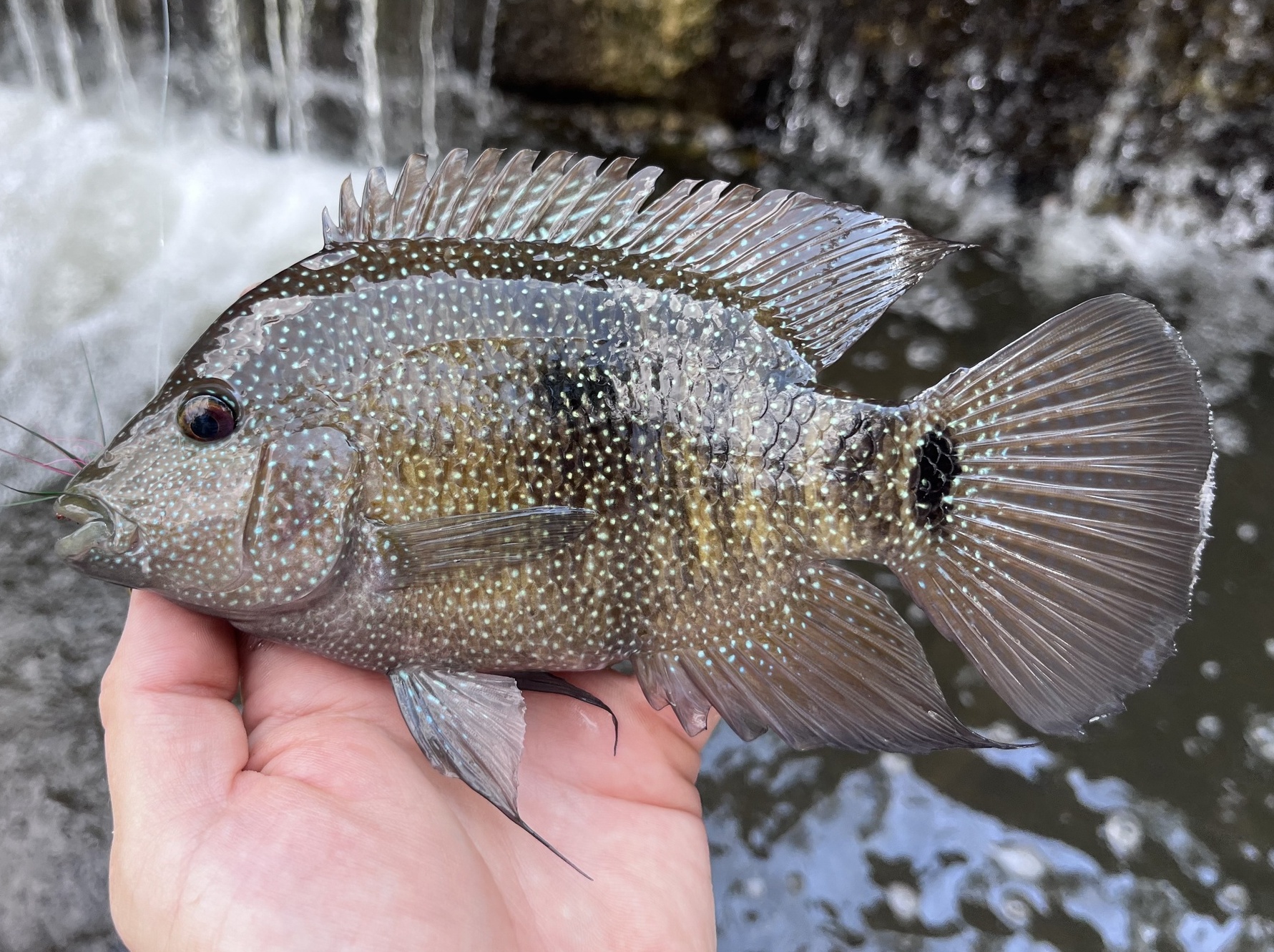
Reaches up to 30 cm. Deep, robust body with large head. Dark green-gray body densely covered in small turquoise-white iridescent spots ('pearls'). Mature males develop a pronounced nuchal hump and intensified coloration.
Care
Tank minimum 450 L; pair needs 600+ L. Temperature 20–26°C, pH 6.5–8.0. Heavy-duty filtration. Coarse or bare substrate — they excavate everything. Robust rock and driftwood décor only.
Feeding
Carnivore-omnivore: large sinking cichlid pellets, frozen/live earthworms, prawns, feeder fish (caution). Will accept most large foods.
Compatibility
Highly aggressive. Best kept as a mated pair in a species-only tank, or with other large, similarly aggressive cichlids. Not with smaller fish.
Breeding
Large flat surface spawner; pair cleans area vigorously. Female deposits 500–1,000+ eggs. Both parents are intensely protective, attacking anything near the spawn.
Fun facts
The only cichlid endemic to the United States. Invasive populations established in several US states and internationally. Can hybridize with related Herichthys species. Named cyanoguttatus: 'blue-spotted.'