
Fish
Peacock Cichlid
Aulonocara nyassae
Origin: Lake Malawi, Africa — sandy/rocky transition zones, species-specific to different shore locations
Also known as: Aulonocara, Lake Malawi Peacock, Peacock Bass (misnomer)
Fact sheet
- Size
- 15 cm
- Lifespan
- 8 years
- Minimum tank size
- 200 L
- Temperature
- 22–28 °C
- pH
- 7.5–8.5
- Hardness GH
- 10–20 °dH
- Temperament
- Semi-aggressive
- Social behavior
- Harem
- Swimming zone
- Middle, Bottom
- Diet
- Omnivore
- Jumps out
- No
- Eats plants
- No
Varieties
Overview
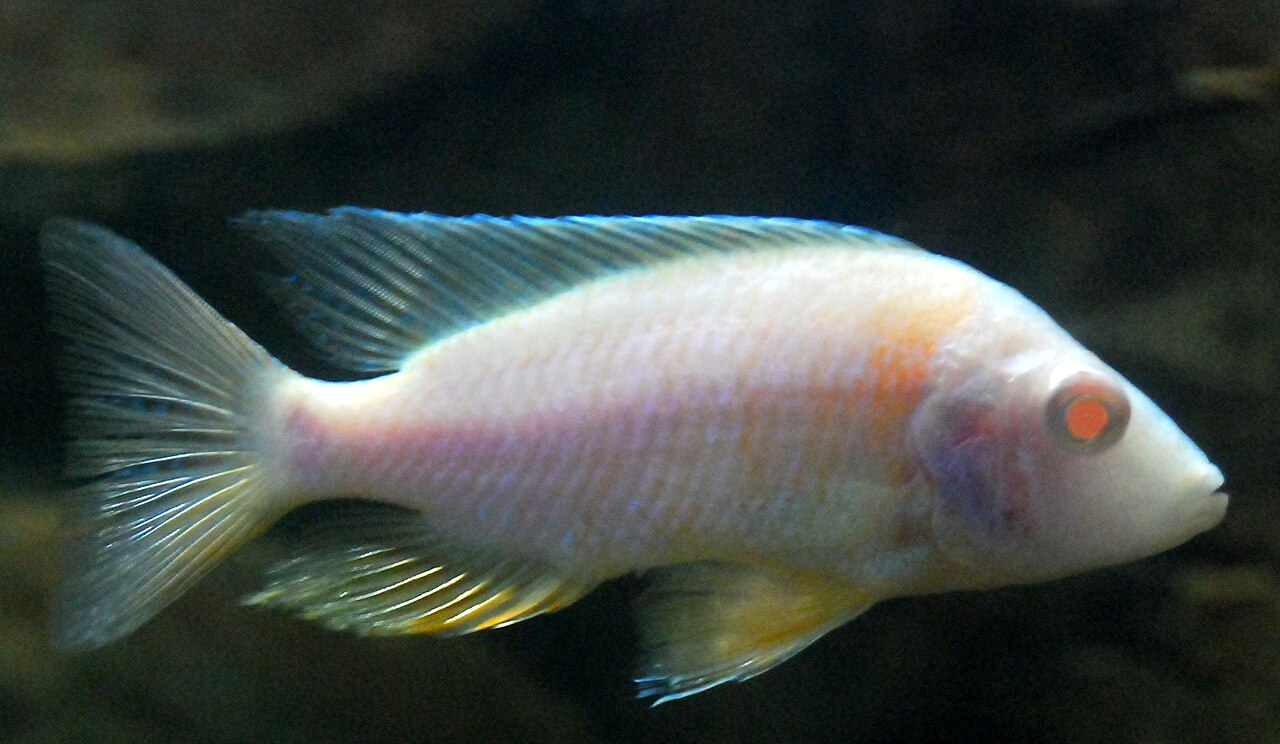
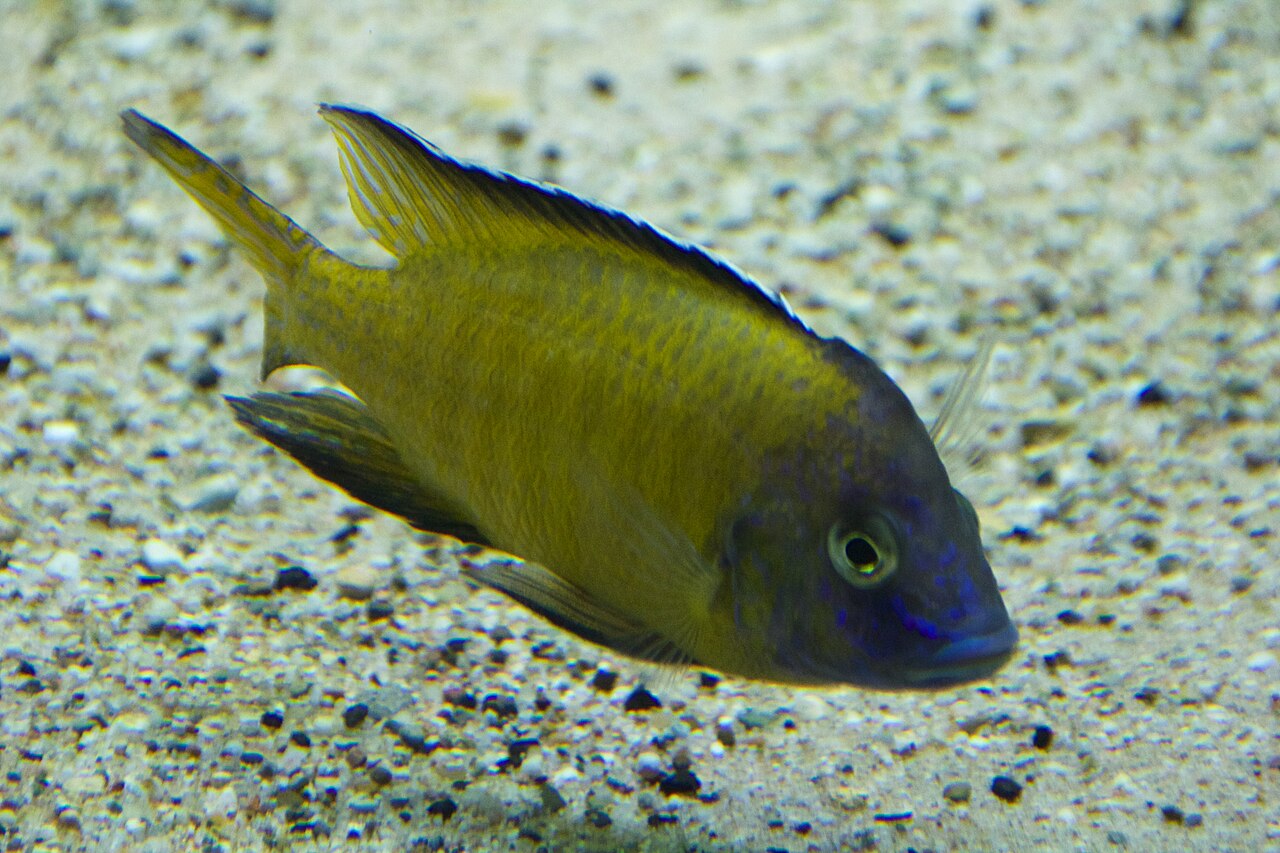
Peacock cichlids (Aulonocara spp.) comprise a genus of over 22 described species, some of the most brilliantly colored freshwater fish available in the aquarium hobby. Native exclusively to Lake Malawi, they occupy transitional zones between rocky mbuna habitat and open sandy areas. Males of most species display stunning metallic coloration: blue-violet, orange-yellow, red, or bicolor. Females are cryptically brown-gray. Among the more peaceful of Malawi cichlids, making them popular with intermediate keepers.
Appearance
Elongated, moderately deep body reaching 10–15 cm. Small, slightly downturned mouth evolved for sieving sand. Males: brilliant metallic coloration varying by species — blue, yellow, orange, red, or multicolor with metallic shimmer. Females: plain brown/gray camouflage pattern.
Care
Malawi cichlid setup 200+ L. Temperature 24–28°C, pH 7.8–8.5, GH 10+. Fine sand substrate essential — they sift it for food. Rockwork for shelter plus open sandy areas. Keep one male Aulonocara species per tank.
Feeding
Omnivore: sifts invertebrates from sand in the wild. Tank diet: quality cichlid pellets, frozen/live bloodworm, brine shrimp, cyclops, daphnia. Avoid high vegetable diets (they are more carnivorous than mbuna).
Compatibility
Moderately aggressive. Best with other moderate Malawi haplochromides (not mbuna). Multiple male Aulonocara of different species can coexist in large tanks.
Breeding
Maternal mouthbrooder. Male displays bright colors to attract female; she deposits eggs and picks them up immediately. Broods 20–40 eggs for 21–28 days. Fry are released large and independent.
Fun facts
Aulonocara detect invertebrates buried in sand via enlarged sensory pores (neuromasts) on the lower jaw — a unique feeding adaptation. The name 'peacock' refers to the spectacular tail-spread-like display of males.