Fish
Convict Cichlid
Amatitlania nigrofasciata
Origin: Central America: Guatemala, Honduras, El Salvador, Nicaragua, Costa Rica, Panama
Also known as: Zebra Cichlid, Amatitlania nigrofasciata, Archocentrus nigrofasciatus
Fact sheet
- Size
- 15 cm
- Lifespan
- 10 years
- Minimum tank size
- 120 L
- Temperature
- 20–28 °C
- pH
- 6.5–8
- Hardness GH
- 5–20 °dH
- Temperament
- Semi-aggressive
- Social behavior
- In pairs
- Swimming zone
- Middle, Bottom
- Diet
- Omnivore
- Jumps out
- No
- Eats plants
- Yes
Varieties
Overview
The Convict Cichlid (Amatitlania nigrofasciata) is a small, hardy, and highly aggressive cichlid from Central American rivers, named for its distinctive black-and-white vertical stripes reminiscent of a prisoner's uniform. Described by Günther in 1867. One of the easiest cichlids to keep and breed, often recommended for cichlid beginners. Introduced as invasive in Australia, Japan, parts of the USA, and elsewhere.
Appearance
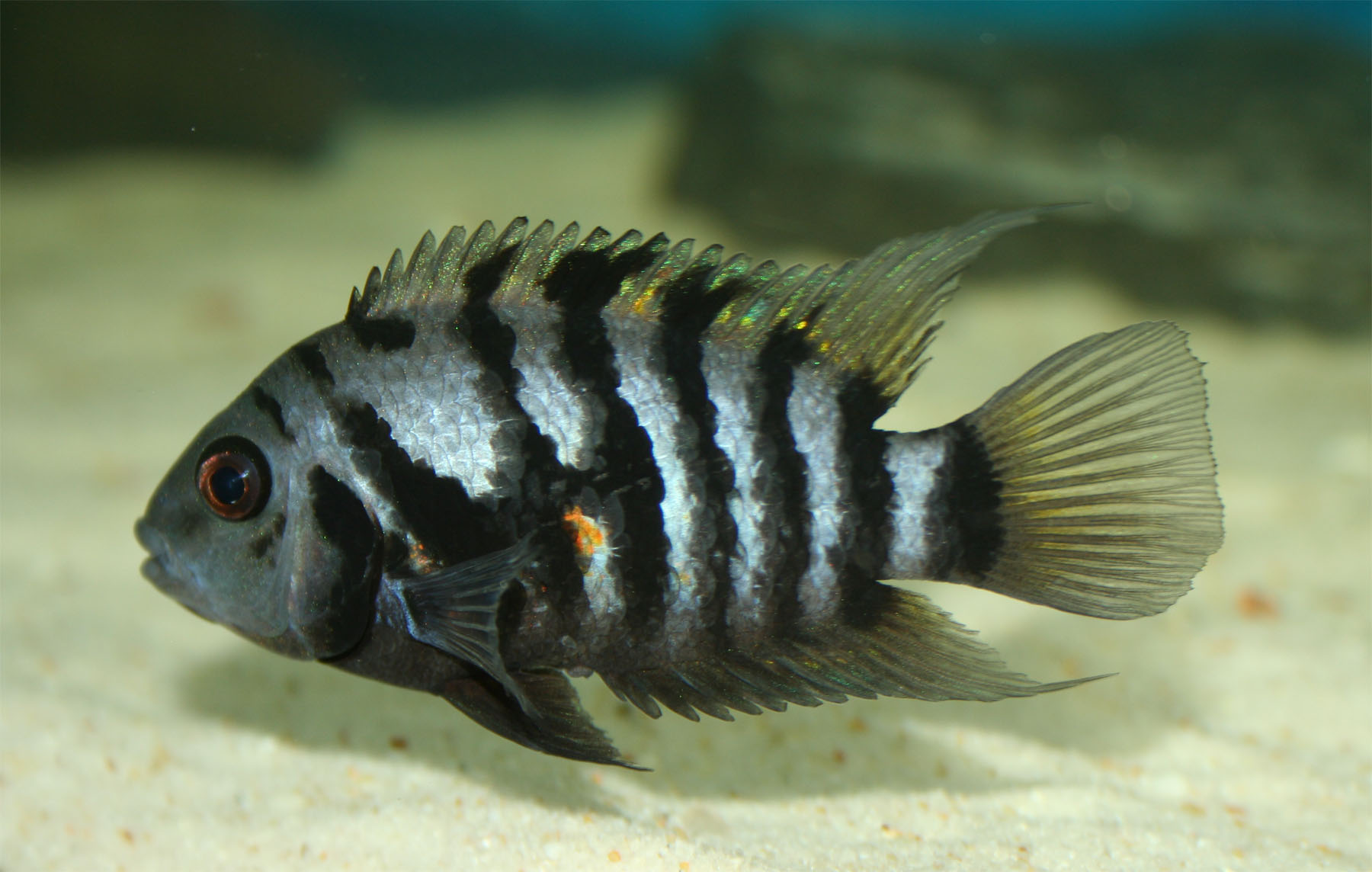
Males to 15 cm, females slightly smaller. 8–9 bold black vertical bars on a gray-white base. During spawning, females develop a vivid orange-pink belly patch. Mature males develop a small nuchal hump.
Care
Tank 120+ L. Temperature 20–29°C, pH 6.5–8.0. Highly tolerant of varying water conditions. Cave structures essential for breeding and shelter. Dense rockwork.
Feeding
Omnivore: virtually any food accepted — pellets, flakes, frozen/live bloodworm, brine shrimp, earthworms. One of the least fussy cichlids to feed.
Compatibility
Aggressive, especially during spawning. Best kept as a mated pair in a species tank, or with large robust cichlids that can hold their own. Will attack and kill smaller fish near their spawn.
Breeding
One of the easiest cichlids to breed. Cave spawner — female deposits 100–300 eggs inside a cave, flat stone, or flowerpot. Both parents guard intensely and aggressively. Fry free-swimming in 3–5 days; parents continue to protect for several weeks.
Fun facts
Convicts form long-term pair bonds with highly coordinated biparental care. Extensively studied in behavioral science for aggression and parental investment. Invasive in Australia, Japan, and USA. Lifespan 8–10 years.