Fish
Kribensis
Pelvicachromis pulcher
Origin: Southern Nigeria and Cameroon: Niger Delta coastal rivers and Kienke/Mungo river systems
Also known as: Krib, Rainbow Krib, Purple Cichlid, Pelvicachromis pulcher
Fact sheet
- Size
- 10 cm
- Lifespan
- 8 years
- Minimum tank size
- 80 L
- Temperature
- 24–28 °C
- pH
- 6–7.5
- Hardness GH
- 5–15 °dH
- Temperament
- Semi-aggressive
- Social behavior
- In pairs
- Swimming zone
- Bottom
- Diet
- Omnivore
- Jumps out
- No
- Eats plants
- No
Varieties
Overview
Kribensis (Pelvicachromis pulcher) is a small, colorful West African dwarf cichlid and one of the most beginner-friendly cichlids for community tanks. Described by Boulenger in 1901. Inhabits slow rivers and streams with warm, soft, slightly acidic water and dense vegetation in the Niger Delta region. Remarkable for the female's breeding coloration — vivid magenta-purple belly — making her arguably more colorful than the male during spawning, a rarity among fish.
Appearance
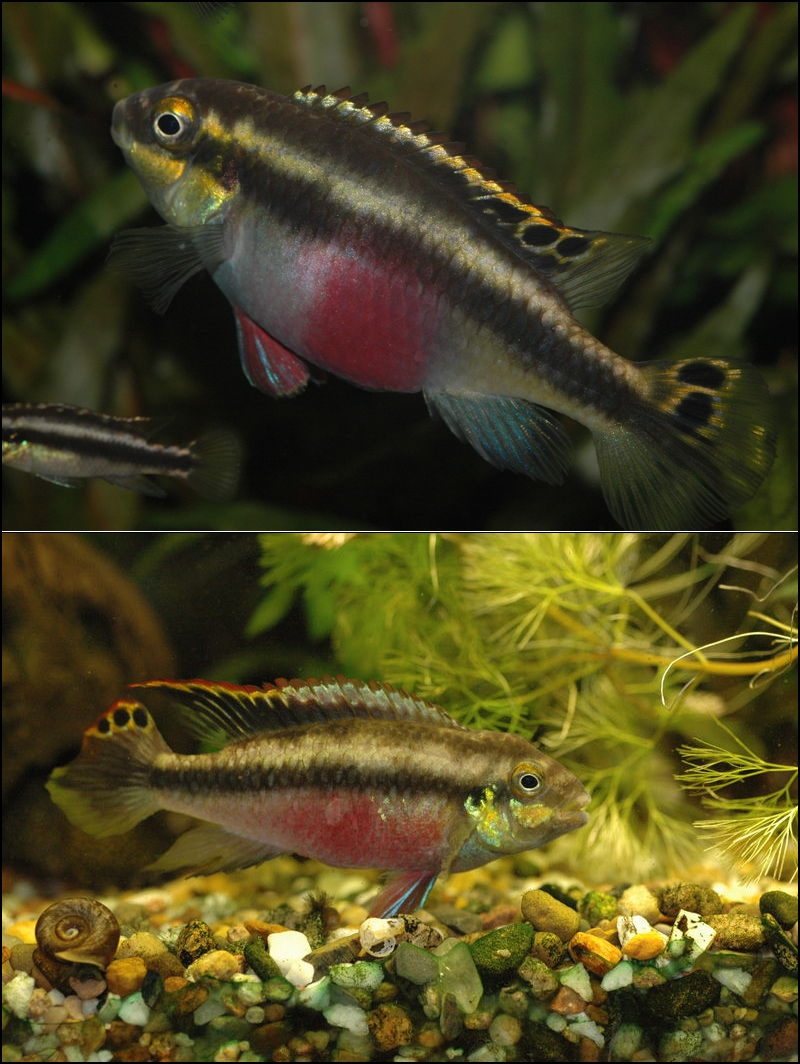
Males reach 10 cm; females slightly smaller and deeper-bodied. Males: yellowish-olive with blue iridescence on flanks. Females: plain base color transformed by a striking magenta-purple and yellow belly during breeding condition.
Care
Tank 100–120 L minimum. Temperature 24–28°C, pH 5.5–7.2 (soft, slightly acidic water preferred). Dense planting, coconut shell caves, smooth rocks. Dark fine substrate, gentle filtration.
Feeding
Omnivore: small invertebrates and algae in the wild. Tank: small pellets, flake, frozen bloodworm, brine shrimp, daphnia.
Compatibility
Peaceful outside spawning season. Excellent community fish with small tetras, rasboras, danios, corydoras. Breeding pairs defend cave territory aggressively.
Breeding
Cave spawner. Female deposits 50–300 eggs in a sealed cave and becomes intensely protective, chasing even the male away from the entrance. Fry emerge 4–5 days after hatching; parents guard for several weeks.
Fun facts
Water pH influences offspring sex ratio: acidic water (pH < 7) produces more females; alkaline water (pH > 7) more males. Females are brighter than males during breeding — an unusual reversal of typical sexual dichromatism in fish.