Fish
Plumed Lyretail
Aphyosemion filamentosum
Origin: West Africa: southwestern Nigeria, western Cameroon, and Togo; shaded, slow-moving forest streams and small ponds
Also known as: Togo lyretail, Filament killifish, Plumed aphyosemion
Fact sheet
- Size
- 5 cm
- Lifespan
- 3 years
- Minimum tank size
- 40 L
- Temperature
- 20–25 °C
- pH
- 6–7
- Hardness GH
- 2–10 °dH
- Temperament
- Peaceful
- Social behavior
- In pairs
- Swimming zone
- Middle, Top
- Diet
- Carnivore
- Jumps out
- Yes
- Eats plants
- No
Varieties
Overview
Aphyosemion filamentosum, the plumed lyretail, is an elegant killifish of the family Nothobranchiidae, celebrated for the elongated filamentous rays on its fins that give the species its name (from Latin filamentum, meaning thread). The species inhabits shaded, slow-flowing forest streams and small ponds with soft, acidic water in West Africa. As an annual killifish, its lifespan is comparatively short — 2–3 years. Successful husbandry requires attention to water chemistry and provision of a suitable peat substrate for spawning. Relatively uncommon in the aquarium trade, it is prized for its unusual beauty. The species is best suited to experienced aquarists willing to provide specialised conditions.
Appearance
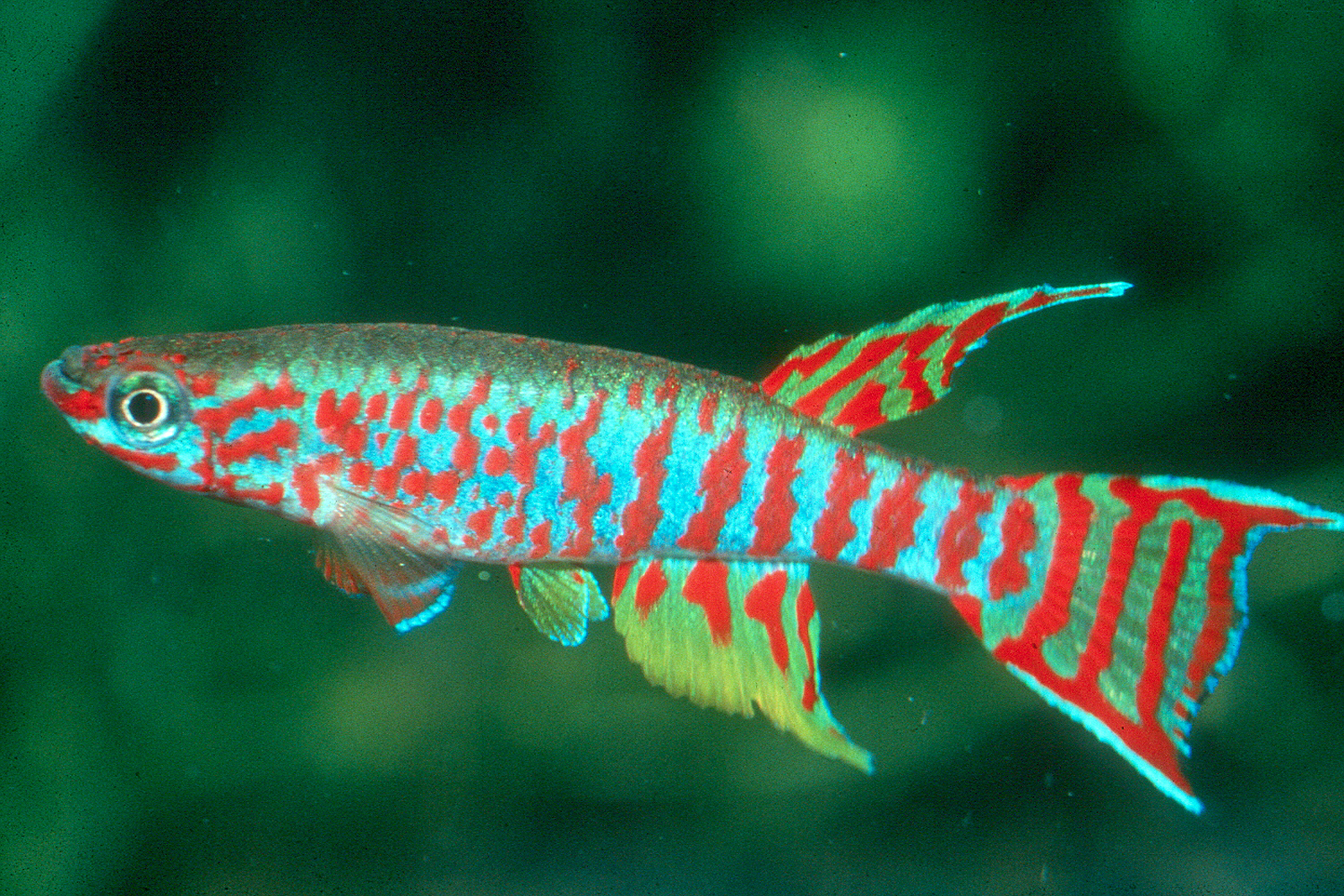
Males reach up to 6 cm in length. The body is blue-violet to blue-green with numerous red spots across the body and on the dorsal and caudal fins. A characteristic red stripe runs along the lower lobe of the caudal fin and the anal fin. The hallmark of this species is the elongated filamentous fin rays that give the fish an exceptionally ornamental appearance. Females are smaller and modestly coloured — brownish with rounded fins lacking filamentous extensions.
Care
A 40–60 litre tank with a peat or fine-sand substrate is recommended. Water parameters: pH 5.5–6.8, hardness 1–6 dGH, temperature 20–24°C (68–75°F). Gentle filtration — a sponge filter or slow-flow system — is essential. The tank should be densely planted with fine-leaved plants and have subdued lighting to minimise stress. Regular water changes of 20–25% weekly are required. A secure lid is a must, as the fish are prone to jumping.
Feeding
Feeds on live and frozen foods — bloodworm, daphnia, brine shrimp, tubifex, and artemia nauplii. Acclimatisation to dry foods is possible with patience but live food is always preferred. Feed in small portions twice daily, avoiding overfeeding. A varied diet is necessary to maintain health, vibrant colouration, and successful reproduction.
Compatibility
A peaceful, shy species best suited to a species-only tank. If kept in a community, only small, calm fish of similar size and temperament are appropriate. Incompatible with active, boisterous, or large fish that cause stress. Coexists well with dwarf shrimp and other small, peaceful nano tank inhabitants.
Breeding
A substrate-spawning killifish that buries its eggs in peat or soft substrate. For breeding, use a peat substrate or dedicated spawning containers with moist peat. Incubation takes 4–8 weeks with the peat stored in a slightly moist condition. Fry hatch small and accept infusoria and brine shrimp nauplii as first foods. Growth is somewhat slower than in surface-spawning aphyosemions.
Fun facts
The elongated fin filaments give this fish exceptional ornamental appeal, and the name filamentosum derives from the Latin word for 'thread'. As an annual fish, A. filamentosum survives seasonal drought in the wild as buried eggs in drying substrate. The species has been found in several geographically isolated populations that form chromosomal races with different chromosome numbers.