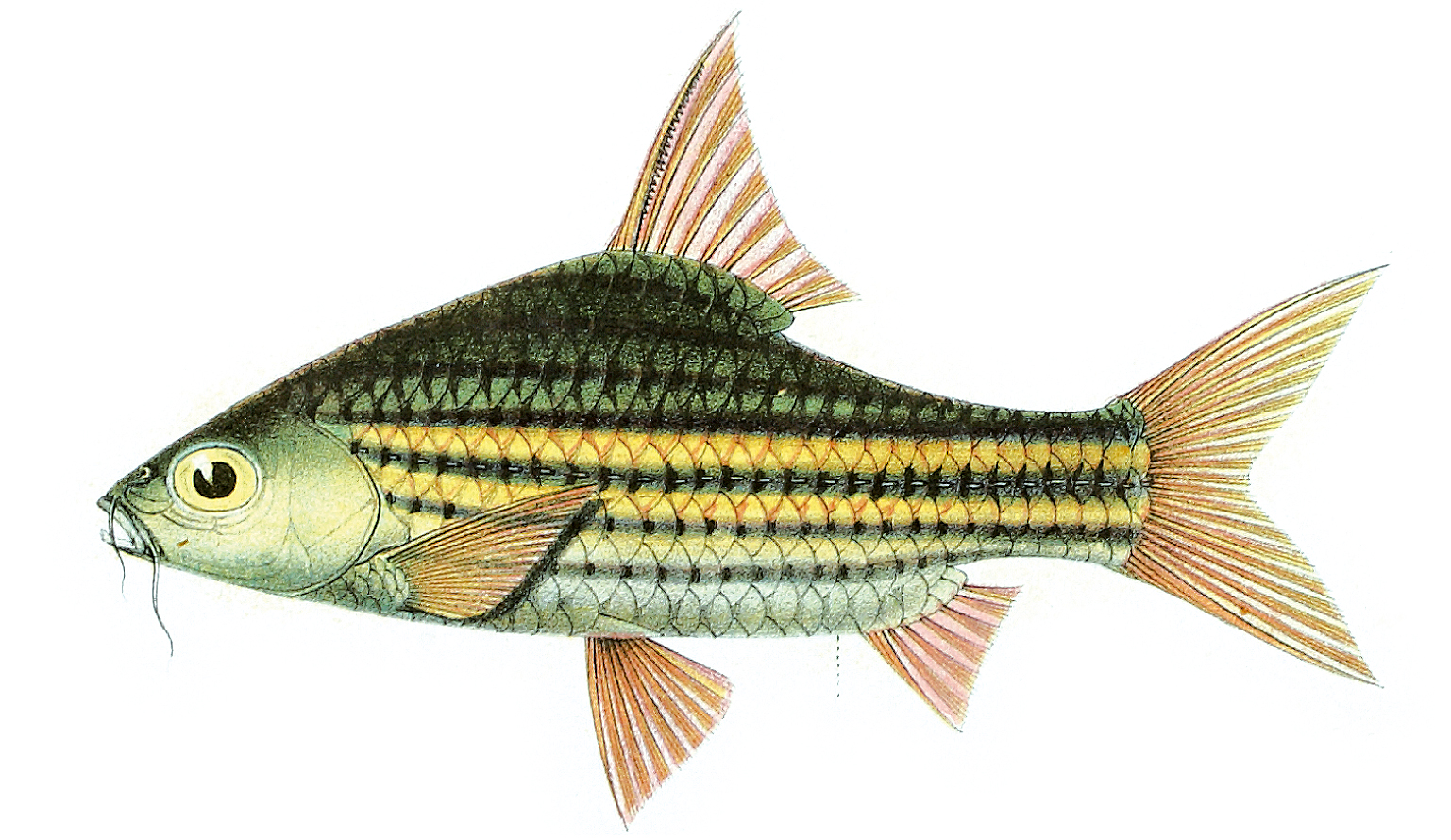
Fish
Four-line Barb
Desmopuntius johorensis
Origin: Southern Thailand, Peninsular Malaysia, Singapore, and the islands of Sumatra and Borneo. Inhabits peat swamps and blackwater streams characterized by acidic, soft, tannin-stained water.
Also known as: Striped barb, Johor barb, Four-bar barb
Fact sheet
- Size
- 12 cm
- Lifespan
- 5 years
- Minimum tank size
- 120 L
- Temperature
- 22–28 °C
- pH
- 6–7.5
- Hardness GH
- 2–12 °dH
- Temperament
- Peaceful
- Social behavior
- Schooling
- Swimming zone
- Middle
- Diet
- Omnivore
- Jumps out
- Yes
- Eats plants
- No
Varieties
Overview
The four-line barb is an active and attractive freshwater cyprinid native to the blackwater habitats of Southeast Asia. One of its most fascinating traits is a dramatic colour metamorphosis: juveniles display four distinct dark vertical bars that transform into five or six broad horizontal stripes as the fish matures around 30–40 mm in length. Adults reach approximately 10 cm in standard length and adapt reasonably well to aquarium conditions. The species looks most impressive in groups of eight or more, where males compete with one another in colourful displays. Despite its beauty and hardiness, it remains uncommon in the hobby due to limited export from its specialized peat-swamp habitat. The natural habitat is under severe pressure from drainage and conversion for agriculture.
Appearance
The body is elongated and moderately laterally compressed, silver-beige overall with the characteristic stripe pattern. Juveniles bear four bold dark-brown vertical bars that progressively transition into five to six broad horizontal lateral stripes as the fish grows. Fins are translucent with a slight yellowish tint; males develop more intense pigmentation in breeding condition. Females are noticeably deeper-bodied and larger than the slimmer, more vividly coloured males.
Care
A minimum tank footprint of 120 × 45 cm (approximately 240 L) is required. Water should be soft and slightly acidic: pH 5.0–7.0, temperature 20–25°C, hardness 1–10 dGH. A blackwater aquascape with a dark substrate, driftwood roots, leaf litter, and subdued lighting best replicates the natural environment. Weekly partial water changes of 20–25% are essential. Moderate filtration without strong current is preferred.
Feeding
An omnivore that thrives on small live and frozen foods such as bloodworm, daphnia, and artemia. Also readily accepts quality dried flakes and granules containing plant or algal matter. Dietary variety positively influences colouration and vitality. Feed twice daily in small portions to prevent water pollution.
Compatibility
A peaceful schooling species best kept in groups of at least eight to ten individuals, which reduces stress and encourages natural behaviour. Suitable tankmates include other peaceful cyprinids of similar size, small loaches, and tranquil characins. The species poses no threat to its neighbours.
Breeding
Fine-leaved plants or a mesh screen bottom are used so eggs fall away from the adults, which will consume them if given the chance. The female scatters eggs that the male fertilises immediately; parents should be removed after spawning. Eggs hatch in 24–36 hours at 26°C, with fry becoming free-swimming in three to four days. Starter food is infusoria, progressing to baby brine shrimp and micro-daphnia. Sexual maturity is reached at six to eight months.
Fun facts
The fish undergoes a dramatic colour transformation: juveniles are vertically barred while adults display horizontal lateral stripes. This species is restricted to peat swamp ecosystems — unique and rapidly disappearing habitats in Borneo and Sumatra. Males engage in vivid display behaviour within a group, competing for female attention and prime territory.