Fish
Orange-finned Loach (Botia Modesta)
Yasuhikotakia modesta
Origin: Southeast Asia — Mekong, Chao Phraya, and Mae Klong river drainages: Thailand, Cambodia, Laos, Vietnam
Also known as: Redtail Botia, Blue Botia, Yasuhikotakia modesta, Botia modesta
Fact sheet
- Size
- 25 cm
- Lifespan
- 10 years
- Minimum tank size
- 250 L
- Temperature
- 23–30 °C
- pH
- 6–7.5
- Hardness GH
- 5–15 °dH
- Temperament
- Semi-aggressive
- Social behavior
- Schooling
- Swimming zone
- Bottom
- Diet
- Omnivore
- Jumps out
- No
- Eats plants
- No
Varieties
Overview
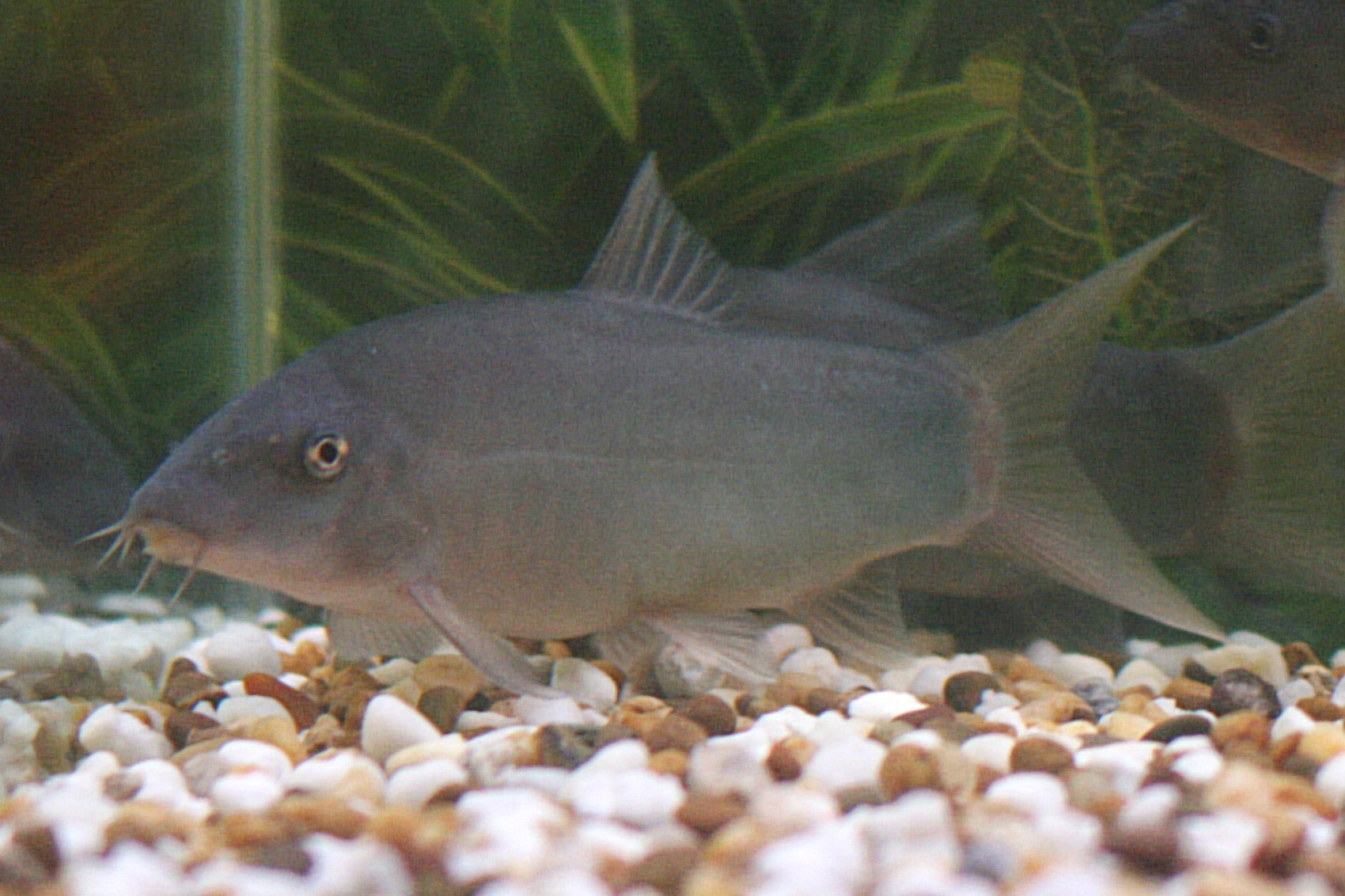
Yasuhikotakia modesta (Orange-finned Loach) is a large, striking botiid fish well known in the aquarium trade. The species is distributed across the Mekong, Chao Phraya, and Mae Klong river systems of Southeast Asia. The fish is notable for its unusual colour combination: a dove-blue to slate-grey body contrasting with bright orange to red fins. Growing to 25 cm, it requires a large aquarium. It is an active, aggressive species that needs group keeping and abundant hiding places to reduce intraspecific conflict. Despite its size, the species is well represented in the trade and relatively straightforward to care for. Lifespan in captivity frequently exceeds 10 years.
Appearance
The body is elongated and torpedo-shaped, reaching up to 25 cm. Base body colouration ranges from bluish-grey to slate-blue, with intensity varying between individuals and populations. Fin colour ranges from yellowish-orange to deep red depending on the fish's origin and condition. The inferior mouth bears three pairs of barbels. Sharp suborbital spines are present. Juveniles are paler than adults.
Care
Due to its large size, a tank of at least 200–250 litres is required for a small group. Strong filtration and weekly water changes of 30–40% are essential. Substrate should be fine sand with abundant hiding places: caves, driftwood, and large stones. Water parameters: temperature 22–28 °C, pH 6.5–7.5, hardness up to 12 dGH. A tightly fitting lid is essential. Never introduce to a biologically immature tank. The species is less tolerant of high nitrate levels than many other aquarium fish.
Feeding
Omnivorous with a strong preference for protein-rich foods. Quality sinking pellets and catfish tablets are a good staple. Frozen foods including bloodworm, Artemia, Mysis shrimp, and chopped prawn are eagerly accepted. An effective snail eater. Vegetable supplements (blanched cucumber, courgette) are also taken. Appetite is large so portion control is important to avoid overfeeding.
Compatibility
Suitable only for aquaria with other large, robust species. Incompatible with small fish and delicate long-finned varieties. Good tankmates include large barbs, giant danios, labeo, and other large loaches. A clear hierarchy develops within the group, accompanied by chasing — a minimum of 5–6 specimens and plentiful cover are therefore essential.
Breeding
Breeding in home aquaria has not been documented. Commercial production in Southeast Asian fish farms uses hormonal stimulation — without it spawning is very unlikely. In nature, spawning appears to be triggered by the rainy season and changing hydrological conditions. No parental care of the eggs or fry is displayed.
Fun facts
The body colour of Y. modesta varies from dove-grey to intense blue depending on the population and region of origin, a feature that sometimes confuses hobbyists. The species is among the longest-lived botiid loaches, reaching 10–15 years in captivity under good conditions.