Fish
Dwarf Chain Loach
Ambastaia sidthimunki
Origin: Mae Klong river basin in western Thailand and the Ataran drainage along the Thailand–Myanmar border
Also known as: Sid, Chipmunk Loach, Dwarf Botia, Chain Loach, Panda Loach
Fact sheet
- Size
- 6 cm
- Lifespan
- 8 years
- Minimum tank size
- 80 L
- Temperature
- 24–30 °C
- pH
- 6–7.5
- Hardness GH
- 5–15 °dH
- Temperament
- Peaceful
- Social behavior
- Schooling
- Group size
- 6+ individuals
- Swimming zone
- Bottom, Middle
- Diet
- Omnivore
- Jumps out
- No
- Eats plants
- No
Varieties
Overview
The Dwarf Chain Loach (Ambastaia sidthimunki) is one of the smallest members of the family Botiidae, reaching only 6 cm in length. Native to fast-flowing streams in western Thailand and the Myanmar border region, it is listed as Endangered on the IUCN Red List and was largely unavailable in the aquarium trade for many years. Previously classified in the genera Botia and Yasuhikotakia, it was placed in the genus Ambastaia following a 2012 revision. In the aquarium this species is highly social and displays fascinating complex behaviours including audible clicking sounds, dominance hierarchies, and the characteristic 'loachy dance.' Unlike many loach species, it often swims in mid-water rather than staying on the bottom, making it particularly engaging to observe.
Appearance
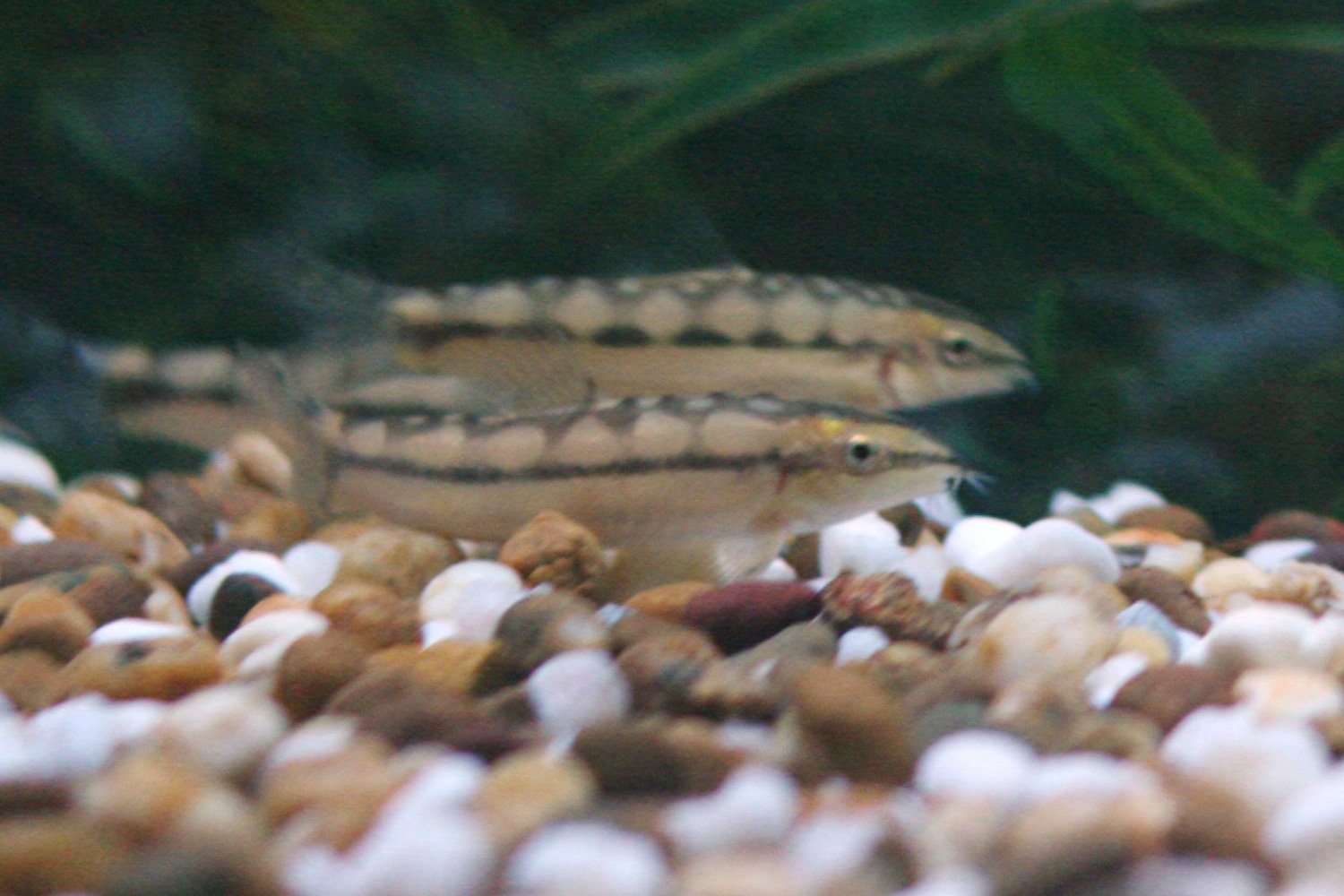
The body is elongated with a whitish-to-yellowish background colour. A black midlateral stripe and a middorsal stripe run along the length of the body, connected by numerous transverse vertical bars that produce the characteristic 'chain' pattern giving the fish its common name. The belly region is paler. Males typically develop slightly elongated snouts with noticeably fleshy, thickened lips, while females are fuller-bodied.
Care
A minimum aquarium base of 80×30 cm (~72 litres) is recommended, with larger setups preferable for groups. The substrate should be fine sand or smooth gravel, with plenty of decor including smooth rocks, driftwood, and live plants to provide hiding spots. Well-oxygenated water with moderate flow is essential, and a tightly fitting lid is mandatory as this species is a known jumper. Ideal water parameters: 20–30 °C, pH 5.5–7.5, hardness 1–12 dGH. Weekly 30–50 % water changes are strongly recommended.
Feeding
Dwarf Chain Loaches are largely unfussy feeders. They readily accept quality sinking dried foods, frozen chironomid larvae, Tubifex worms, Daphnia, and brine shrimp. Vegetables such as cucumber slices or blanched spinach can be offered occasionally. They are bold feeders that often rise into mid-water to intercept food before it reaches the bottom.
Compatibility
Best kept in groups of at least 5–6 individuals, preferably 10 or more — solitary specimens become withdrawn or aggressive. Generally peaceful with similarly-sized tankmates. Some reports indicate occasional fin-nipping toward long-finned or sedentary fish, so caution is advised. Ideal companions include small rasboras, danios, and other hillstream-adapted species.
Breeding
Natural spawning in aquariums is very rare and poorly documented. Commercial production relies on hormone-induced spawning. One documented home aquarium success involved a 284-litre tank with a varied diet and neutral pH. The sub-ocular spines can cause injury to nets and the handler's fingers during necessary handling.
Fun facts
The Dwarf Chain Loach is listed as Endangered on the IUCN Red List. It produces audible clicking sounds as part of its social communication. Sharp sub-ocular spines can become entangled in nets and cause injury when the fish is handled.