Fish
Stiphodon Gobies
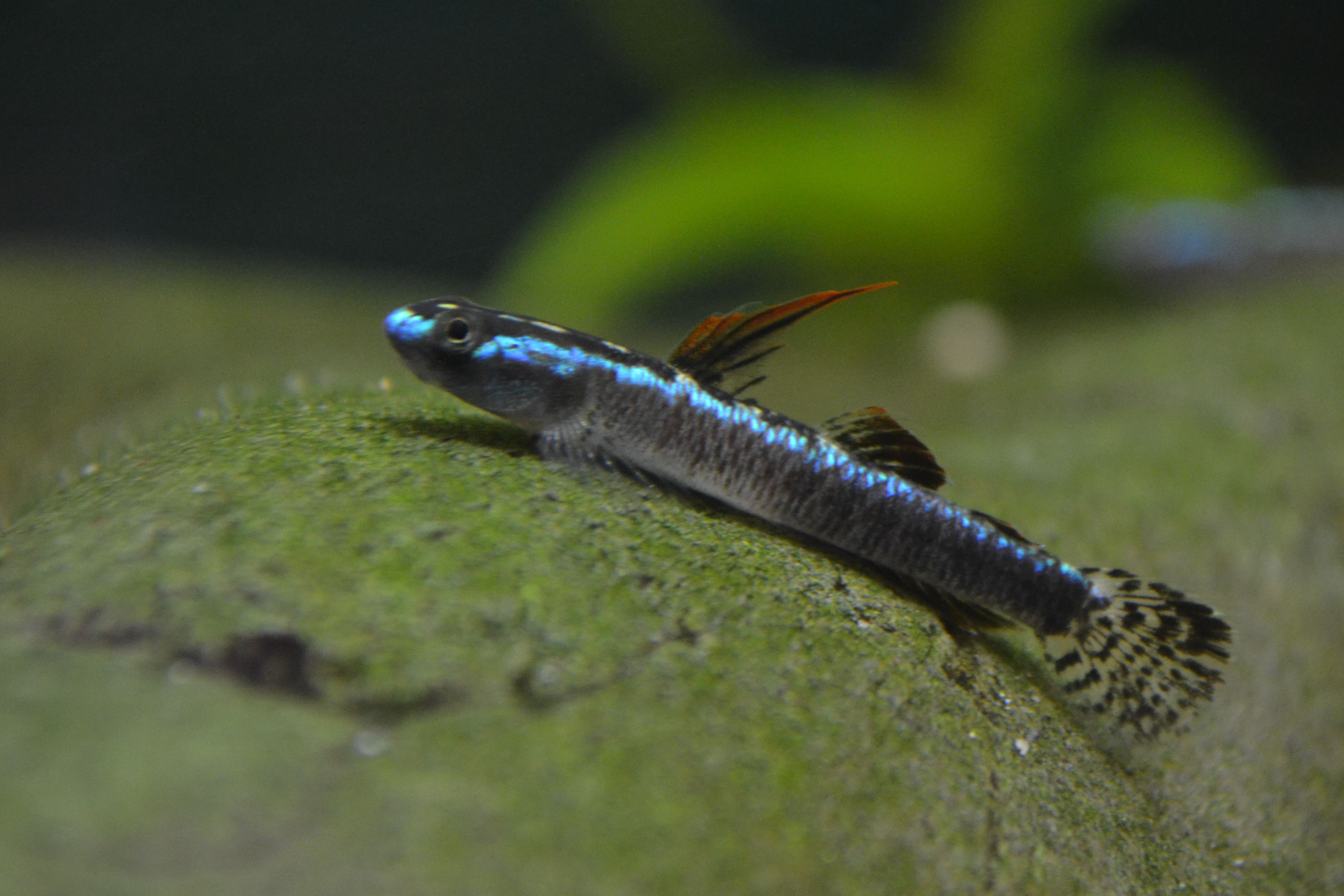
Stiphodon percnopterygionus
Origin: Fast-flowing streams and rivers across Southeast Asia, Pacific islands, and parts of East Asia
Also known as: Stream gobies, algae-eating gobies, rainbow gobies
Fact sheet
- Size
- 5 cm
- Lifespan
- 5 years
- Minimum tank size
- 60 L
- Temperature
- 22–28 °C
- pH
- 7–8
- Hardness GH
- 10–20 °dH
- Temperament
- Semi-aggressive
- Social behavior
- In pairs
- Swimming zone
- Bottom
- Diet
- Herbivore
- Jumps out
- No
- Eats plants
- No
Varieties
Overview
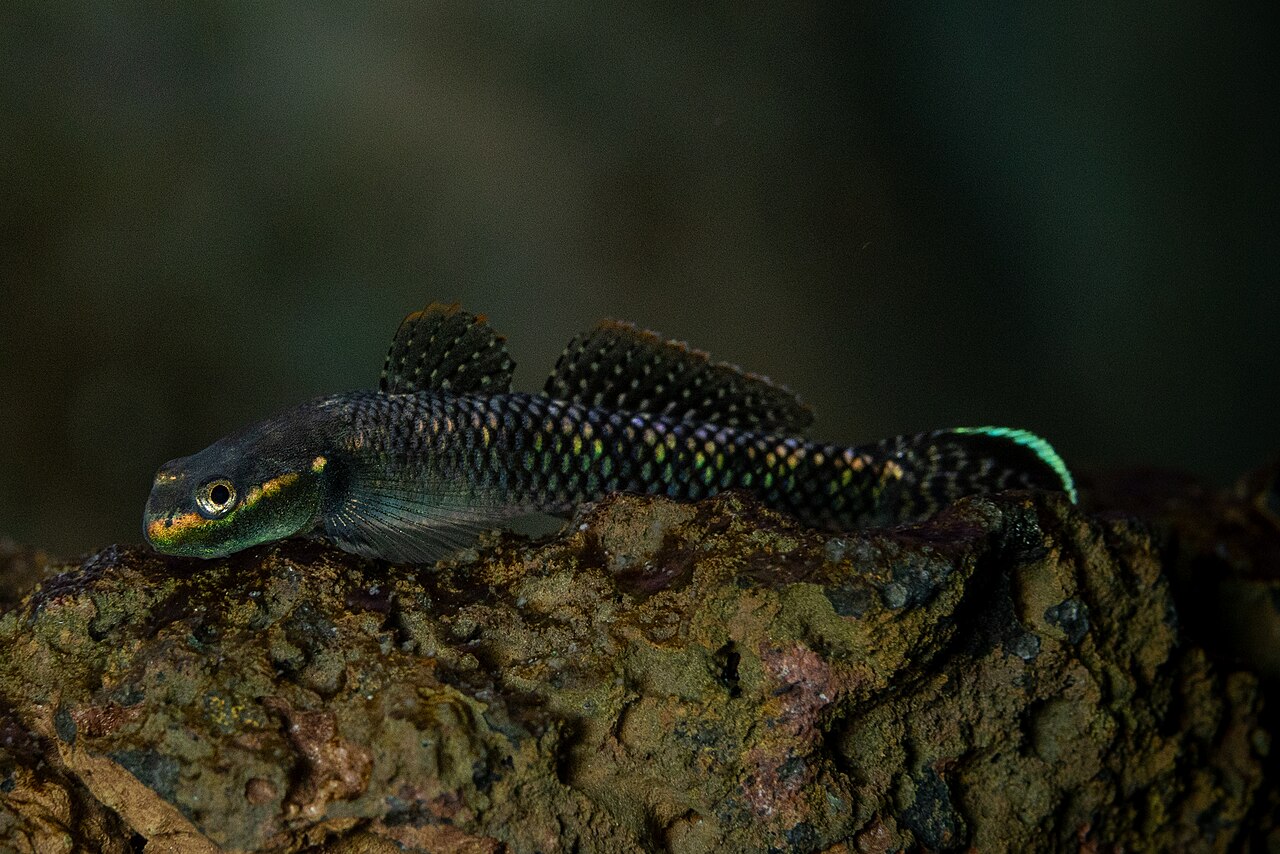
Stiphodon gobies are a genus of small, highly specialised freshwater gobies found in fast-moving streams throughout Southeast Asia and the Pacific. Males are among the most vividly coloured freshwater gobies, displaying electric blues, vivid oranges, and rainbow iridescence that rivals many reef fish. The genus contains over 30 described species, of which 5–6 are regularly available in the hobby. Unlike most aquarium gobies, Stiphodon are obligate biofilm and algae grazers that spend their lives clinging to rocks in strong current, scraping microscopic food from surfaces with their specialised suctorial disc and scraping mouthparts. All specimens in the trade are wild-caught, as larvae require a marine or brackish water phase before returning to freshwater — a mode of life known as amphidromy.
Appearance
Sexual dimorphism is extreme in this genus. Males are strikingly coloured with species-specific patterns of electric blues, vivid oranges, reds, and iridescent highlights. Females and juveniles are uniformly drab olive-brown, making species identification of non-breeding individuals very difficult. Adults reach 4–6 cm. The pelvic fins are fused into a suctorial disc, allowing the fish to cling to smooth rocks in fast current. The body is compact and cylindrical, well adapted for life in high-flow environments.
Care
A minimum 60-litre aquarium is recommended for a group of 4–6 gobies. The most critical care factor is strong water flow — 10–15 times the tank volume per hour using powerheads, river manifolds, or canister filter outputs — replicating their natural stream habitat. Substrate should be smooth rounded river rocks with sand or fine gravel between them to allow natural grazing behaviour. Water must be pristine and well-oxygenated: 22–26 °C, pH 6.5–7.5, GH 4–12 dGH, nitrates below 20 ppm. Establishing a good growth of diatoms and biofilm on rocks before introducing the fish is strongly recommended.
Feeding
Stiphodon gobies are obligate biofilm and algae grazers that scrape diatoms, soft green algae, and associated microorganisms from hard surfaces. In captivity they typically ignore flake food, pellets, and algae wafers. The primary food source must be biofilm grown on rocks and other hard surfaces in the tank. Some keepers supplement with blanched vegetables (zucchini, spinach), and certain individuals can be trained to accept small live or frozen foods such as brine shrimp or microworms. Starvation is the leading cause of death in captivity.
Compatibility
Males are territorial and compete for rock territories; maintain a ratio of 1 male to 2–3 females to minimise aggression while showcasing colour displays. Compatible with other small, peaceful stream-adapted species including Rhinogobius gobies, hillstream loaches (Sewellia, Gastromyzon), White Cloud Mountain minnows, and Otocinclus. Avoid warm-water tropical fish, large or aggressive species, competing bottom-dwellers, and most shrimp.
Breeding
Breeding in captivity is not achievable because larvae require a marine or brackish water phase (amphidromous life cycle) before returning to freshwater as juveniles. All specimens in the aquarium trade are wild-caught. Males display intensely to females through fin-flaring and colour intensification; eggs are deposited in crevices or under rocks and guarded by the male. Upon hatching, larvae drift downstream out to sea before metamorphosing and migrating back to freshwater streams.
Fun facts
All Stiphodon gobies are amphidromous — larvae must pass through a marine or brackish phase, making captive breeding impossible. Males can shift from muted to brilliant colouration almost instantaneously during territorial and spawning displays. There are over 30 described species of Stiphodon, many discovered and formally described only within the last few decades.