Fish
Bubble Eye Goldfish
Carassius auratus
Origin: China (selectively bred fancy goldfish variety)
Also known as: Bubble Eye, Water-bubble Eye, Shuipaonyan
Fact sheet
- Size
- 15 cm
- Lifespan
- 12 years
- Minimum tank size
- 150 L
- Temperature
- 15–23 °C
- pH
- 6.5–7.5
- Hardness GH
- 5–15 °dH
- Temperament
- Peaceful
- Social behavior
- Schooling
- Swimming zone
- Middle, Top
- Diet
- Omnivore
- Jumps out
- No
- Eats plants
- Yes
Overview
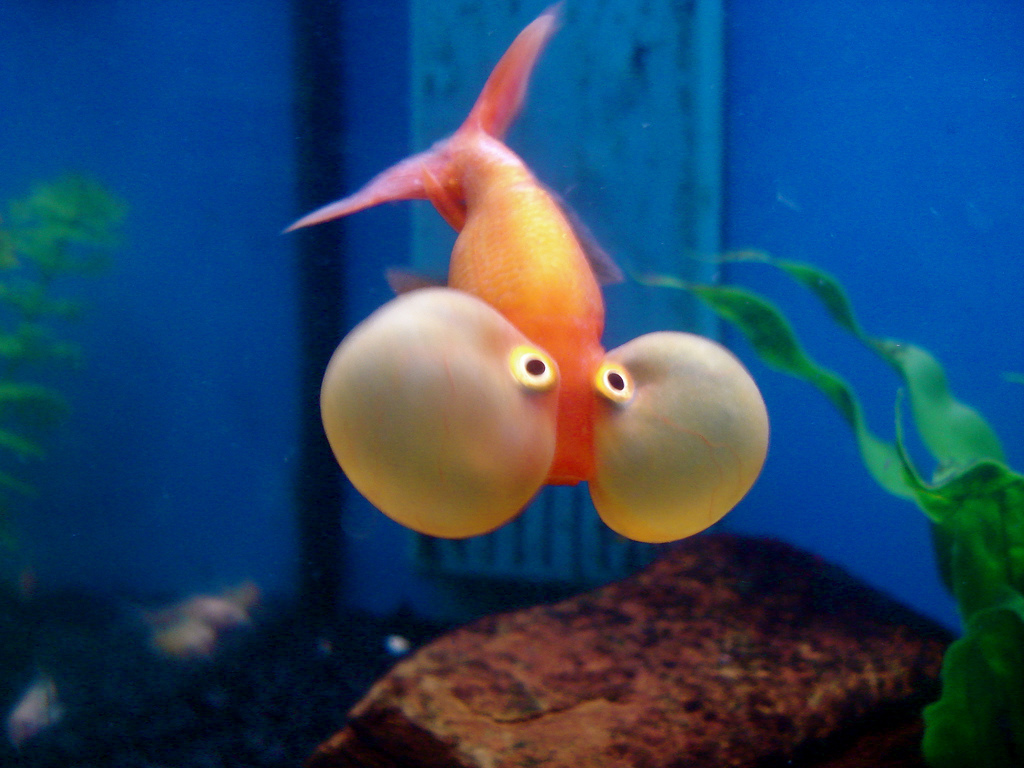
The Bubble Eye is one of the most unusual fancy goldfish varieties (Carassius auratus), developed in China centuries ago through selective breeding. Its defining feature is a pair of large, fluid-filled sacs beneath the eyes that can account for up to 25% of total body volume. The fish lacks a dorsal fin, which combined with the sacs makes its movements slow and awkward. It is among the most delicate of all aquarium fish: the sacs are easily ruptured by sharp objects or contact with aggressive tankmates, and healing can take weeks. Successful keeping requires a specially arranged aquarium free of sharp decorations, soft substrate, and only the calmest companions of similar build. Despite these demands, well-maintained specimens are a striking visual centerpiece.
Appearance
A short, egg-shaped body reaching 15–20 cm in length. The tail fin is bifurcated and often elongated and veil-like. The dorsal fin is completely absent. Each eye is underlaid by a large sac filled with lymphatic fluid that wobbles freely as the fish moves. Eyes point upward or sideways. Coloration varies widely: orange, red, black, or calico. The fluid sacs may match body color or be distinctly contrasting.
Care
A tank of at least 150 liters is recommended. Temperature 15–23°C (cold-water variety). pH 6.5–7.5, hardness 5–15 dGH. All sharp decorations, stiff plastic plants, and coarse gravel must be eliminated. Filtration should produce only gentle flow — strong currents exhaust the fish and can damage sacs. Regular water changes of 25–30% weekly are essential. Keep only with other slow-moving fancy goldfish: Veiltails, Orandas, and Ranchus.
Feeding
Omnivorous. Diet includes goldfish pellets or flakes, cooked shelled peas, blanched spinach, and leafy greens. Live and frozen foods (bloodworms, daphnia, brine shrimp) as treats. Avoid overfeeding — goldfish are prone to obesity and constipation. Feed twice daily in small portions. Sinking pellets are preferable to floating ones, as gulping surface air can cause swim bladder issues.
Compatibility
Keep exclusively with other slow, peaceful fancy goldfish varieties lacking sharp fins: Orandas, Veiltails, Ranchus, and Lionheads. Fast varieties (Comets, common goldfish) outcompete them for food and may damage the sacs. Any fin-nipping or active species is strictly contraindicated.
Breeding
Breeding is possible in the aquarium by simulating seasonal conditions. Gradually lower temperature to 12–15°C for 2–3 months, then slowly raise to 20–22°C. Males develop white breeding tubercles on the head and gill covers during the spawning season. Spawning is partial; adhesive eggs are deposited on plants and spawning mops. Remove eggs and fry from parents. Fry hatch in 4–7 days.
Fun facts
The fluid sacs do not fully regenerate after rupture, though partial healing is possible. The fish is nearly blind because the sacs obstruct its field of vision. In China, bubble-eye goldfish are considered symbols of good luck and prosperity. Some breeders surgically remove the sacs to improve quality of life — such specimens are called 'half bubble eyes'.