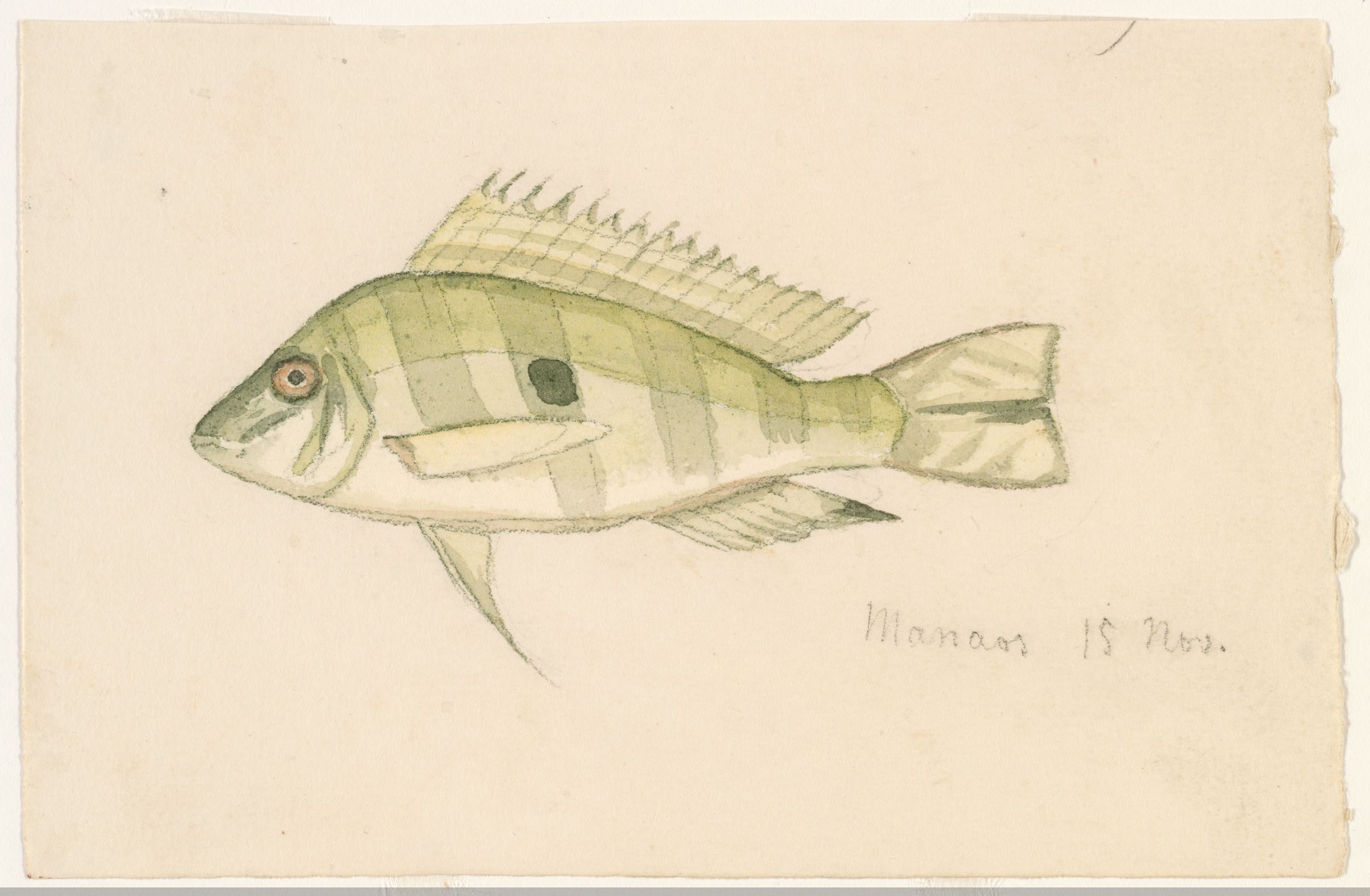
Fish
Geophagus altifrons
Geophagus altifrons
Origin: Brazil (Rio Negro, Tapajós, Xingu, Tocantins river basins — central Amazonia)
Also known as: Altifrons eartheater, high-front eartheater
Fact sheet
- Size
- 30 cm
- Lifespan
- 10 years
- Minimum tank size
- 300 L
- Temperature
- 26–30 °C
- pH
- 5.5–7
- Hardness GH
- 2–10 °dH
- Temperament
- Semi-aggressive
- Social behavior
- Harem
- Swimming zone
- Bottom, Middle
- Diet
- Omnivore
- Jumps out
- No
- Eats plants
- No
Overview
Geophagus altifrons is a large, impressive cichlid from the Amazon basin, belonging to the eartheater group — fish that sift substrate in search of food. The species inhabits large rivers of central Amazonia with soft, acidic, dark blackwater. In the wild it frequents slow, shaded rivers and lakes, often among submerged fallen trees. The name 'eartheater' describes its characteristic behavior: the fish scoops up substrate, sifts it in its mouth to extract organic particles and invertebrates, then expels the remainder through the gills. Relatively peaceful by cichlid standards, it nonetheless requires a spacious aquarium as males are territorial. Kept in harem groups or pairs.
Appearance
A deep-bodied, laterally compressed fish reaching 25–30 cm. The forehead is steep and convex — the defining characteristic (altifrons = high forehead). Coloration is silvery-blue with reddish or orange flanks; blue or green iridescent scales scatter across the body alongside several faint vertical bands. A prominent orange or red spot marks the gill cover. Fins are blue with orange margins. Males are larger than females with longer fin extensions.
Care
A tank of at least 300 liters for a group. Temperature 26–30°C, pH 5.5–7.0, hardness 2–10 dGH (soft, slightly acidic water). Fine sand substrate is mandatory for sifting behavior. Provide numerous hiding spots — driftwood and large rocks — for territory formation. Strong filtration, regular 20–30% weekly water changes. Plants are optional as the fish excavates them. Peat filtration helps maintain low pH.
Feeding
Omnivorous detritivore. In the wild it sifts substrate for diatoms, protozoans, organic particles, small invertebrates, and seeds. In the aquarium it accepts high-quality cichlid pellets, live and frozen foods (bloodworms, tubifex, brine shrimp, daphnia), and blanched vegetables. Feed 2–3 times daily. Moderate protein content is appropriate.
Compatibility
Moderately aggressive. Compatible with other large, peaceful Amazonian species: other Geophagus, large tetras (flag tetra, Congo tetra), discus (with temperature caveats), and angelfish. Males compete; a spacious tank is essential. Avoid very small fish as potential prey.
Breeding
Mouthbrooder. After spawning on a flat rock or depression in the substrate, the female (sometimes both parents) picks up the eggs and incubates them in the mouth for 10–14 days. Fry continue to take refuge in the parent's mouth when threatened. Feed fry small crustaceans and crushed flakes. In a harem setup with multiple females, regular spawning cycles are possible.
Fun facts
G. altifrons is a maternal or biparental mouthbrooder — rare among South American cichlids. Substrate sifting is a unique feeding adaptation exploiting resources unavailable to other fish. The species readily hybridizes with other Geophagus group members in the aquarium.