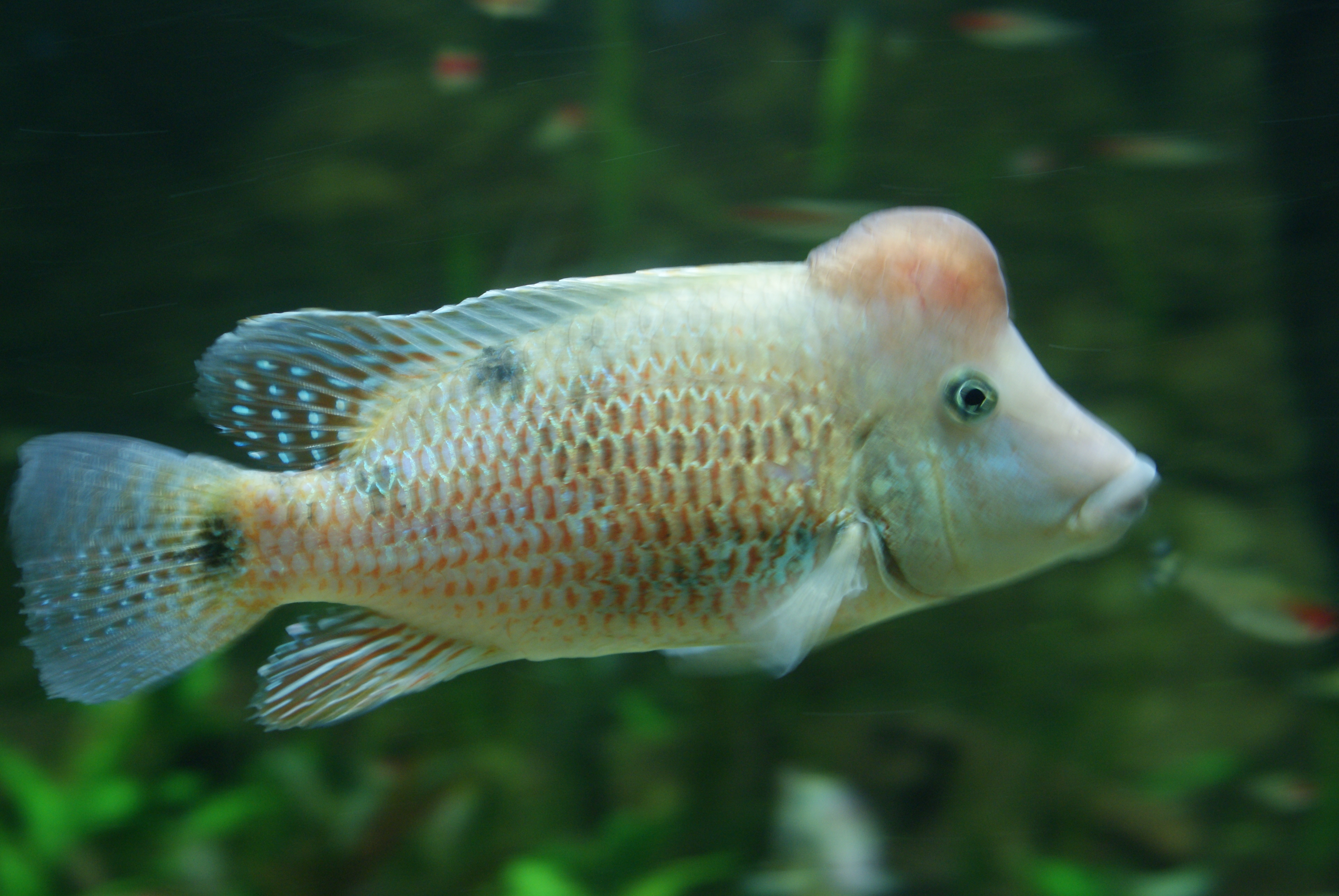
Fish
Redhump Eartheater
Geophagus steindachneri
Origin: Colombia and Venezuela (Magdalena, Orinoco basins and their tributaries)
Also known as: Redhump geophagus, Geophagus steindachneri, Redback eartheater
Fact sheet
- Size
- 20 cm
- Lifespan
- 10 years
- Minimum tank size
- 200 L
- Temperature
- 26–30 °C
- pH
- 5.5–7
- Hardness GH
- 2–10 °dH
- Temperament
- Semi-aggressive
- Social behavior
- Harem
- Swimming zone
- Bottom, Middle
- Diet
- Omnivore
- Jumps out
- No
- Eats plants
- No
Overview
Geophagus steindachneri, the Redhump Eartheater, is a striking cichlid from northern South America, popular with aquarists for the male's vivid red nuchal hump and fascinating behavior. The species inhabits rivers of Colombia and Venezuela with soft to moderately hard water. Like all eartheaters, it sifts substrate in search of food. It is a mouthbrooder: after spawning the female picks up the eggs and incubates the fry in her mouth. The species shows pronounced sexual dimorphism — males are larger and more colorful than females, with a characteristic red-orange hump on the nape. It forms polygamous harem groups in nature. One of the best Geophagus for aquarium keeping — attractive, comparatively non-aggressive, and an active mouthbrooder.
Appearance
Males reach 20–25 cm; females 12–15 cm. Body is deep and laterally compressed. The male's most notable feature is a vivid red or orange nuchal hump developing behind the nape at sexual maturity. Base coloration is silvery-blue or greyish-green with numerous iridescent blue scales. A dark lateral spot is present. Gill covers show an intricate blue pattern. Females are more subdued in color with a much smaller or absent hump.
Care
A tank of 200–250 liters for a harem (1 male, 3–5 females). Temperature 26–30°C, pH 5.5–7.0, hardness 2–10 dGH. Soft to moderately hard water. Fine sand substrate. Driftwood and rocks for female hiding spots. Strong filtration; 25–30% weekly water changes. Plants are optional but attached species (Anubias) are possible. A dark background helps maintain male coloration.
Feeding
Omnivorous. Sifts substrate for organic matter and invertebrates. In the aquarium accepts high-quality cichlid pellets, bloodworms, brine shrimp, tubifex, daphnia, and blanched vegetables. Foods containing astaxanthin and carotenoids help maintain the bright red hump color. Feed twice daily in moderate portions.
Compatibility
A comparatively peaceful Geophagus. Males may clash; keep only one male with several females per tank. Gets along well with other calm, larger fish: Congo and flag tetras, loricariids, and other mid-sized cichlids. Do not house with small fish. Incubating females need access to hiding spots.
Breeding
Mouthbrooder. Spawning occurs on a flat stone or in a depression in the substrate. After fertilization, the female picks up 20–60 large eggs and incubates them for 10–14 days. The male guards the territory. Fry are large and continue to take refuge with the mother after release. Feed with brine shrimp nauplii and finely crushed flakes. In a harem setup, spawning occurs regularly.
Fun facts
The male's red hump is not a fat deposit but a muscular thickening related to hormonal status. Its brightness varies with dominance rank, stress, and diet. One of very few Geophagus species that forms polygamous harems in natural conditions. With proper care the male's hump reaches peak brilliance at 2–3 years of age.