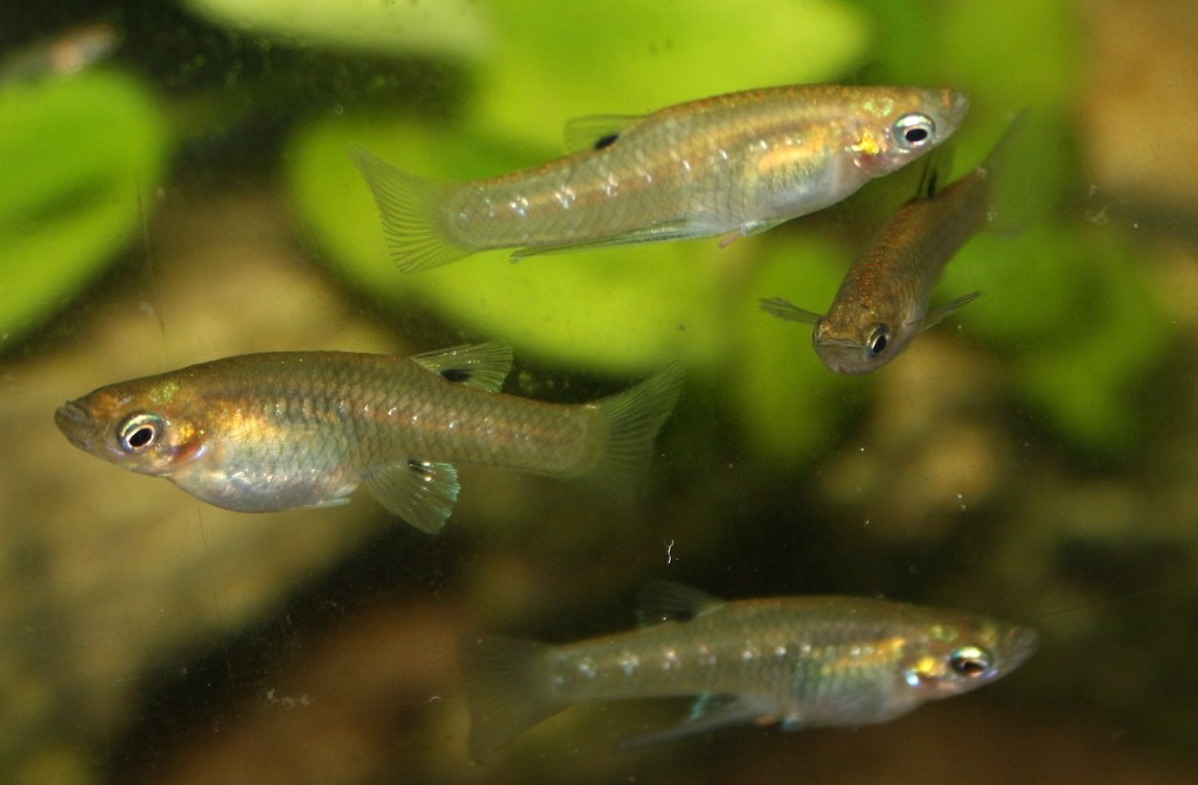
Fish
Cuban Livebearer
Girardinus metallicus
Origin: The Cuban livebearer is endemic to Cuba, inhabiting slow-moving rivers and streams in the central and western parts of the island. It prefers densely vegetated water bodies with neutral to slightly alkaline water. The genus was named in honor of American ichthyologist Charles Frédéric Girard.
Also known as: Metallic livebearer, Girardinus metallicus
Fact sheet
- Size
- 7 cm
- Lifespan
- 3 years
- Minimum tank size
- 60 L
- Temperature
- 24–28 °C
- pH
- 7–8
- Hardness GH
- 8–15 °dH
- Temperament
- Peaceful
- Social behavior
- Harem
- Swimming zone
- Middle
- Diet
- Omnivore
- Jumps out
- Yes
- Eats plants
- No
Overview
Girardinus metallicus is a livebearing fish of the family Poeciliidae, unique to Cuba. It is distinguished by its metallic scale sheen and compact body. Males are noticeably smaller than females and possess a gonopodium, a modified anal fin used for internal fertilization. The species is hardy and tolerates a wide range of water parameters, making it suitable for beginners. Keep in a ratio of one male to two or three females to reduce female harassment. Dense planting provides essential cover for females and fry. While relatively uncommon in the hobby, it is a rewarding and distinctive livebearer for collectors seeking Cuban endemics.
Appearance
The body is slender and slightly laterally compressed. Base coloration is silvery-olive with a strong metallic luster on the scales, the source of the epithet metallicus. Faint dark vertical bars mark the flanks. Females reach 6–7 cm; males only 3–4 cm. The male gonopodium is long and directed forward. Fins are translucent with a slight yellowish tinge.
Care
House in a tank of at least 60 L with temperature 24–28 °C, pH 7.0–8.0, and GH 8–15. Good filtration and regular water changes (25–30% weekly) are necessary. Dense planting provides cover. The species adapts to varied conditions but dislikes sudden temperature fluctuations.
Feeding
An omnivore. Readily accepts quality flakes and pellets, live or frozen daphnia, brine shrimp, and bloodworm. Vegetable-based food (spirulina flakes, blanched algae) supports digestive health. Feed twice daily in small amounts.
Compatibility
Peaceful; compatible with other calm livebearers such as guppies, mollies, and platies. Gets along with small tetras and danios. Males may harass females, so maintain a 1:2–3 male-to-female ratio. Avoid aggressive or large tankmates.
Breeding
A livebearer: females gestate fry for 4–6 weeks and deliver 20–50 fully formed young. Move the pregnant female to a well-planted breeding tank. Fry are relatively large and accept finely crushed flakes and baby brine shrimp nauplii from day one.
Fun facts
Girardinus metallicus is among the few livebearers endemic exclusively to Cuba. The metallic scale sheen is unusual within the Poeciliidae family. Despite being hardy, the species remains uncommon in the aquarium hobby. It was first described in 1859.