Fish
Chinese Algae Eater
Gyrinocheilus aymonieri
Origin: Despite the common name 'Chinese algae eater', this species originates from Southeast Asia — Thailand, Cambodia, Laos, and Vietnam. It inhabits fast-flowing mountain streams with rocky substrates and abundant algal growth.
Also known as: Siamese algae eater, Lemon algae eater, Gyrinocheilus aymonieri
Fact sheet
- Size
- 20 cm
- Lifespan
- 10 years
- Minimum tank size
- 200 L
- Temperature
- 25–28 °C
- pH
- 6–8
- Hardness GH
- 5–12 °dH
- Temperament
- Semi-aggressive
- Social behavior
- Solitary
- Swimming zone
- Bottom, Middle
- Diet
- Herbivore
- Jumps out
- No
- Eats plants
- No
Overview
The Chinese algae eater is a large Asian fish widely sold as an aquarium algae cleaner. Its specialized sucker mouth allows it to grip glass and decorations in strong current. Juveniles actively graze on algae, but the fish becomes increasingly territorial and aggressive as it matures, sometimes rasping the protective slime coat from other fish. In aquaria it grows to 15–20 cm. Strong filtration and aeration are essential. Adults are best kept alone. This behavioral shift frequently disappoints aquarists who purchased the species for algae control.
Appearance
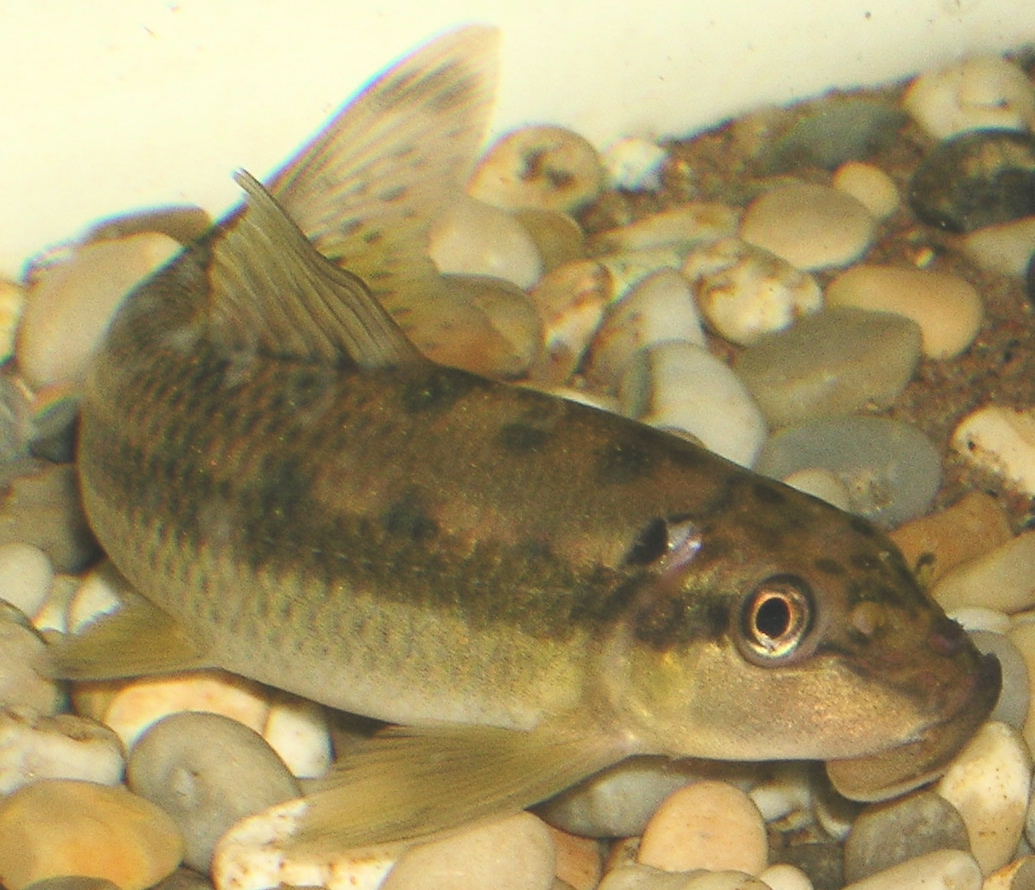
The body is elongated and torpedo-shaped, yellowish-brown with a dark broken lateral stripe. The mouth is modified into an effective sucker. Selectively bred forms include albino (golden) and marble variants. Adults in captivity reach 15–20 cm, up to 28 cm in the wild.
Care
Requires a tank of at least 200 L with powerful filtration and strong aeration. Temperature 25–28 °C, pH 6.0–8.0, GH 5–12. Provide caves, driftwood, and areas with current. Adults are territorial and best kept singly once fully grown.
Feeding
Juveniles actively graze algae and diatoms. Adults accept spirulina tablets, blanched vegetables, and frozen foods. With age, they frequently rasp the slime coats of other fish, making them unsuitable for community setups.
Compatibility
Juveniles coexist reasonably well. Adults become aggressive and territorial; discus and angelfish are particularly vulnerable. Not recommended for small tanks or with delicate species.
Breeding
Successful breeding in aquaria is extremely rare. Commercial production relies on hormonal induction. Sexual differences are subtle outside breeding season.
Fun facts
The Chinese algae eater can breathe without releasing its sucker grip via special openings in the gill covers. Despite the name, the species is not found in China. Adults frequently disappoint due to aggressive behavior despite being sold for algae control.