Fish
Kissing Gourami
Helostoma temminckii
Origin: Thailand, Malaysia, and Indonesia (Java, Sumatra, Borneo). Inhabits lakes, rivers, and canals with moderate current and abundant vegetation. Widely farmed as a food fish throughout Southeast Asia.
Also known as: Kisser fish, pink kisser; syn. Helostoma temminckii
Fact sheet
- Size
- 25 cm
- Lifespan
- 7 years
- Minimum tank size
- 200 L
- Temperature
- 22–28 °C
- pH
- 6–8
- Hardness GH
- 5–20 °dH
- Temperament
- Semi-aggressive
- Social behavior
- In pairs
- Swimming zone
- Middle
- Diet
- Omnivore
- Jumps out
- No
- Eats plants
- Yes
Overview
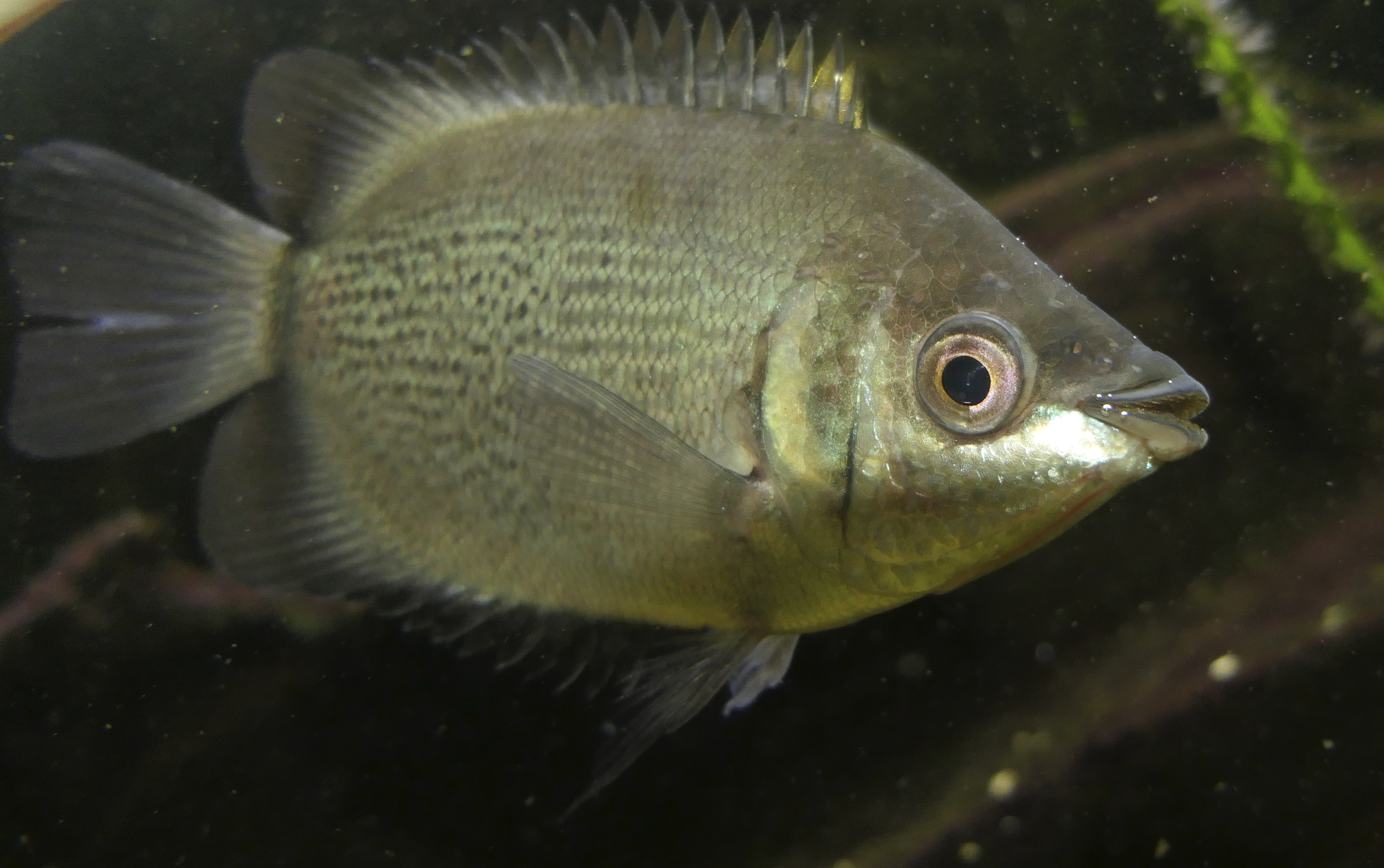
The kissing gourami is a large labyrinth fish and the sole member of the genus Helostoma. It is best known for its characteristic 'kissing' behavior — fish press their lips together in a ritual display that serves to establish hierarchy rather than express affection. The mouth is fleshy, equipped with horny teeth on the lips, which enables the fish to actively rasp algae and biofilm from any surface. In nature it reaches up to 30 cm; in the aquarium it typically grows to 15–20 cm. A pink (albino) form and a green (wild) form exist. The fish requires a spacious aquarium. Adults can be semi-aggressive and competitive toward tankmates. The species is used in aquariums as an algae cleaner, though it may damage tender plant leaves.
Appearance
The body is large, deep-bodied, moderately compressed, and egg-shaped. Two color forms exist: pink-cream (aquarium, albino) and greenish-silver (wild type). The mouth is thick-lipped, protractile, with horny denticles on the lips — an adaptation for algae grazing. Fins are rounded. Ventral fins are normal (not thread-like). Eyes are relatively small. The body is covered with fine cycloid scales.
Care
A large fish requiring a minimum aquarium volume of 200 liters. Temperature 22–28 °C, pH 6.0–8.0, GH 5–20. Tolerant of a wide range of water parameters. Moderate filtration. Hiding places and open swimming space are both necessary. The fish actively rasps algae from glass and decorations. Hard-leafed plants (anubias, cryptocorynes) fare better; delicate species may be eaten. Weekly water changes of 20–25%.
Feeding
An omnivore with a strong preference for plant matter and periphyton. Actively consumes algal growth, biofilm, and cyanobacteria. The diet should be predominantly vegetable-based: spirulina, blanched spinach, cucumber, zucchini, and specialized herbivore foods. Also accepts flakes, pellets, and live foods. Feed 2–3 times daily.
Compatibility
Adults can be semi-aggressive. Best kept with similarly sized fish. Avoid small fish that may be intimidated or harassed. Suitable tankmates include large cichlids of moderate temperament and large cyprinids. Multiple kissing gouramis coexist given sufficient space. The 'kisses' between individuals are ritual sparring matches, not expressions of affection.
Breeding
Rarely spawns in the aquarium. Spawning is pelagic — eggs (1,000–12,000) float at the surface. Parents do not guard the offspring. Breeding requires a large spawning tank, hormonal injection stimulation, or simulation of the rainy season. Larvae hatch in 24 hours; fry require live food — rotifers, infusoria.
Fun facts
The kissing gourami's 'kiss' is not affection — it is a trial of strength in which fish press their lips together in a wrestling match. The species is an important food fish in Thailand and Indonesia, farmed in large ponds. The kissing gourami is the sole species in the monotypic genus Helostoma and the family Helostomatidae.