Fish
Tinwini Danio
Danio tinwini
Origin: The Tinwini danio is endemic to northern Myanmar, living in small, clear streams of the Irrawaddy basin with soft water, moderate flow, and sand-and-gravel beds. The species was described relatively recently, in 2007.
Also known as: Gold ring danio, Danio tinwini
Fact sheet
- Size
- 3 cm
- Lifespan
- 4 years
- Minimum tank size
- 60 L
- Temperature
- 22–26 °C
- pH
- 6.5–7.5
- Hardness GH
- 2–10 °dH
- Temperament
- Peaceful
- Social behavior
- Schooling
- Group size
- 8+ individuals
- Swimming zone
- Middle
- Diet
- Omnivore
- Jumps out
- Yes
- Eats plants
- No
Overview
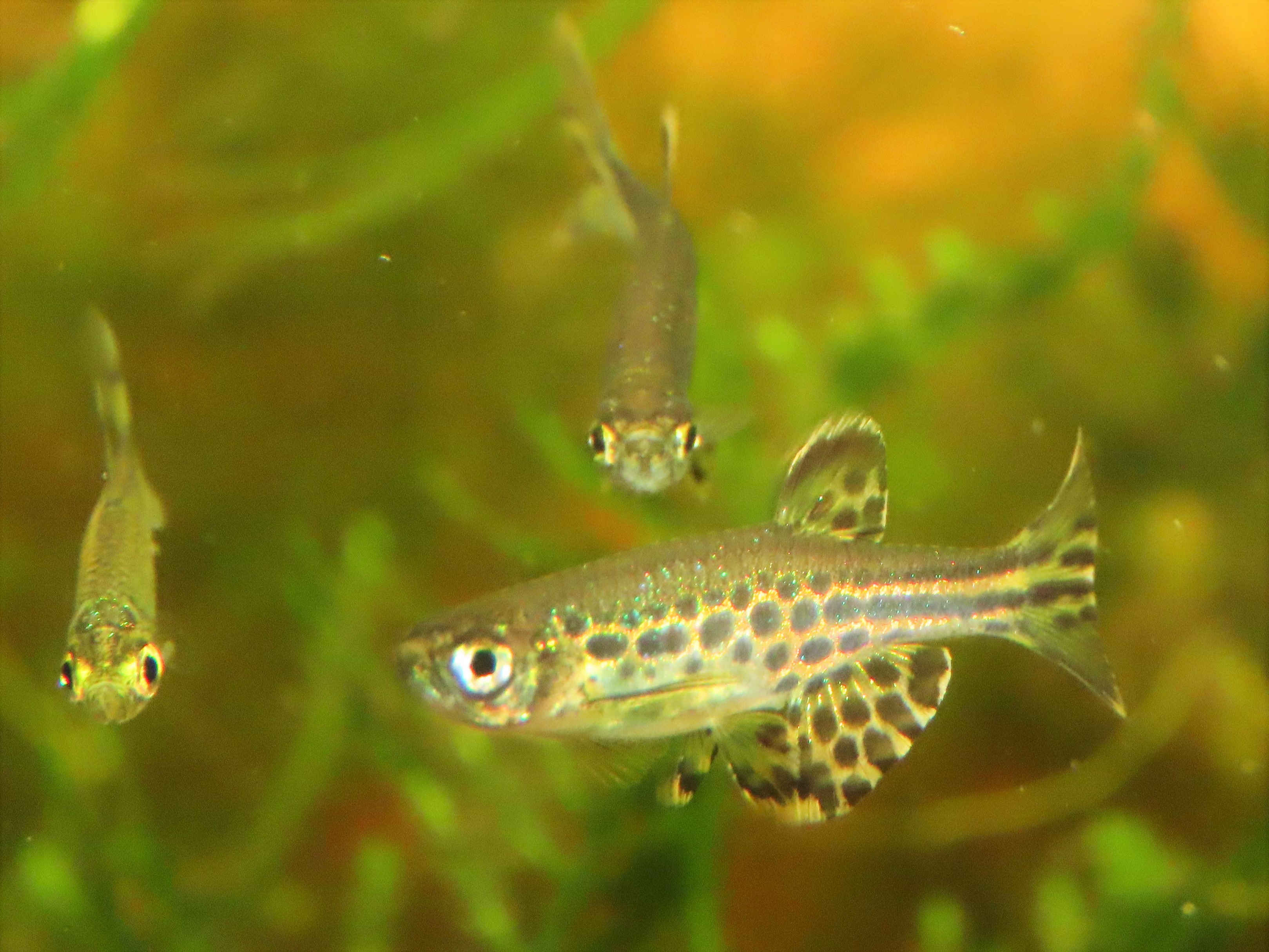
The Tinwini danio is a tiny schooling fish with an unusual pattern of dark spots and dashes on a golden ground. Calm, hardy, and small, it suits nano and small aquariums well. Like all danios it keeps a group of at least 8–10 and spends most of its time in midwater. It is a peaceful, sociable species. Its modest size and gentle nature make it superb as a shoal in a species tank.
Appearance
The body is slender, reaching about 3 cm. Broken rows of dark-blue spots and dashes run across a golden-cream ground, forming a distinctive dotted pattern. The dorsal and anal fins carry rows of dots. Males are slimmer and brighter; females are fuller. The pattern is individual and differs between fish.
Care
A tank of at least 60 L with a lid, moderate flow, and live plants. Temperature 22–26 °C, pH 6.5–7.5, hardness GH 2–10. Stable parameters, good filtration, and 25–30% weekly water changes are needed. Dark substrate and shaded areas bring out the colour.
Feeding
An omnivore with a small mouth. It takes small flakes and micro-pellets plus live or frozen cyclops, brine shrimp nauplii, micro-worm, and fine daphnia. Feed once or twice daily in small portions.
Compatibility
Very peaceful and small. Ideal for nano tanks with small rasboras, microrasboras, dwarf tetras, corydoras, and shrimp. Large or aggressive tankmates are unsuitable. Keep in shoals of 8–10 or more.
Breeding
Breeding is easy. Place a group in a spawning tank with soft water and a mesh or fine-leaved plants over the bottom. Eggs are scattered over the substrate; remove the adults after spawning. Fry hatch in 2–3 days; first foods are infusoria and brine shrimp nauplii.
Fun facts
The species is named after the Myanmar aquarist U Tin Win, who discovered the fish. Its spotting earns it the trade name 'gold ring danio'. The spot pattern is unique to each individual, like a fingerprint.