Plants
Dwarf Sweet Flag
Acorus gramineus
Origin: The dwarf sweet flag comes from East Asia — Japan, China, and Korea. In nature it grows along stream banks and in marshy spots in a damp but not fully submerged state.
Also known as: Japanese rush, Grassy-leaved sweet flag, Acorus gramineus
Fact sheet
- Height
- 25 cm
- Temperature
- 15–26 °C
- pH
- 6–7.5
- Lighting
- Low
- CO₂
- Not needed
- Growth rate
- Slow
- Placement
- Midground, Foreground
Overview
The dwarf sweet flag is a popular bog plant often sold as an aquarium plant, though it is not truly aquatic. Underwater it survives only a few months before gradually declining, so it is best used in paludariums, aqua-terrariums, and emersed culture. Grown emersed it is a hardy, slow-growing plant with stiff grass-like leaves. Compact and variegated cultivars exist. It is not recommended for long-term submerged aquarium use.
Appearance
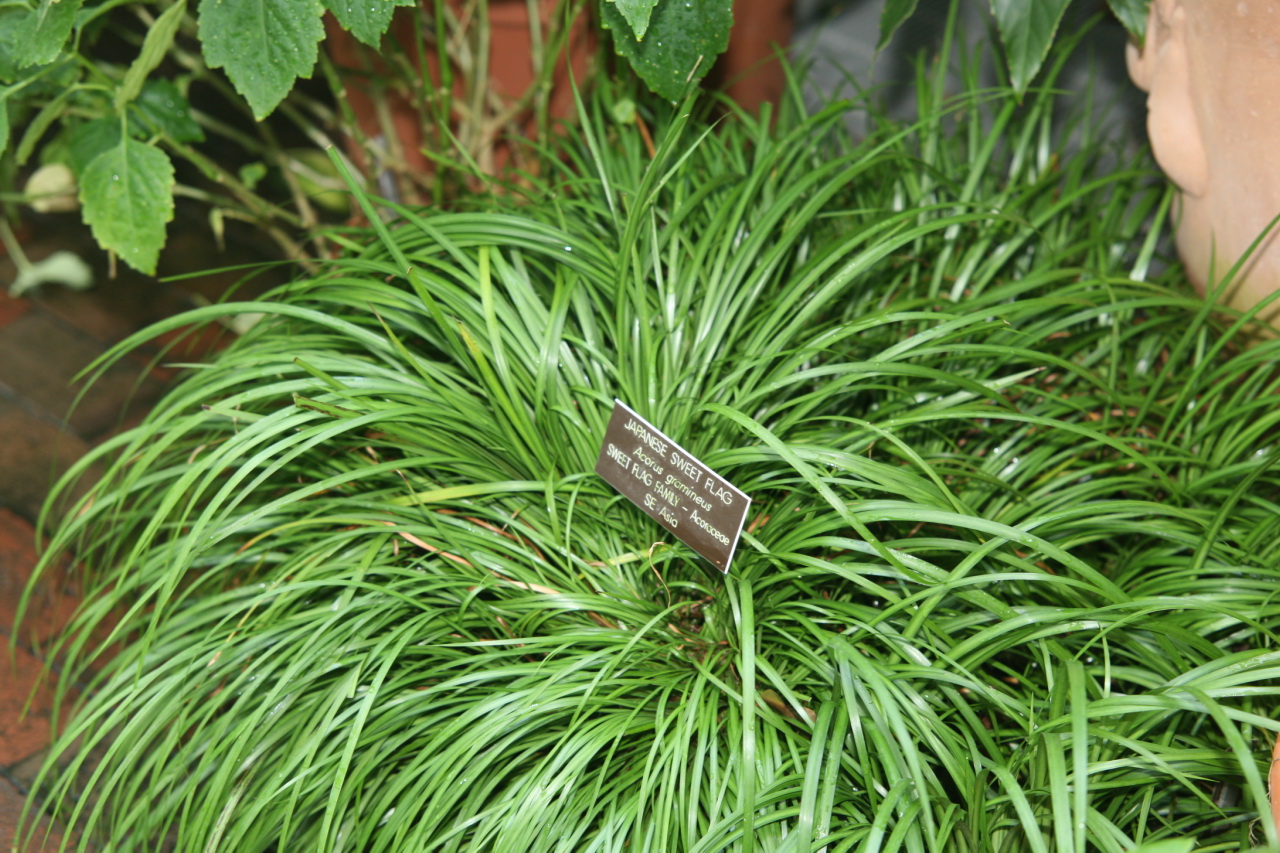
It forms dense tufts of narrow, stiff, linear leaves fanning out from a short rhizome. Height is 10–30 cm depending on the cultivar; dwarf forms of about 10 cm and variegated (white-striped) variations exist. The leaves are leathery, dark or light green. The rhizome is creeping and branching.
Care
It grows best emersed or in damp culture under moderate light. Submerged it tolerates 15–26 °C, pH 6.0–7.5, but does not last long. It prefers cool water and nutrient-rich substrate. CO2 is not required. In a paludarium it is undemanding and decorative.
Fertilizing
Root feeding is the main source: it needs nutrient-rich substrate or root tabs. Liquid fertilisers are less important. Because of its slow growth, nutrient demand is low.
Breeding
It propagates by rhizome division: the clump is split into parts with roots and leaves and planted separately. In optimal (damp) conditions it spreads into a dense turf.
Fun facts
The dwarf sweet flag is often mis-sold as a long-lived aquarium plant, though it dies underwater within a few months. The rhizome contains aromatic essential oils. In horticulture its variegated dwarf cultivars are prized for ponds and damp terrariums.