Plants
Aponogeton
Aponogeton spp.
Origin: Aponogetons are found across the Old World tropics and subtropics — Africa, Madagascar, South and Southeast Asia, and Australia. They grow in rivers, ponds, and seasonal pools, surviving drought as a tuber.
Also known as: Aponogeton spp.
Fact sheet
- Height
- 50 cm
- Temperature
- 20–28 °C
- pH
- 5.5–7.5
- Lighting
- Medium
- CO₂
- Recommended
- Growth rate
- Medium
- Placement
- Midground, Background
Overview
Aponogeton is a genus of tuberous rosette plants, many of them highly decorative, producing long, often crinkled or latticed leaves. They make striking specimen and background plants. Most species have a rest period: after active growth the tuber rests and the leaves die back — which is normal. Well-known species include the crinkled aponogeton (crispus), the stiff-leaved (rigidifolius), and the famous Madagascar lace (madagascariensis) with its lacy leaves. Difficulty depends on the species.
Appearance
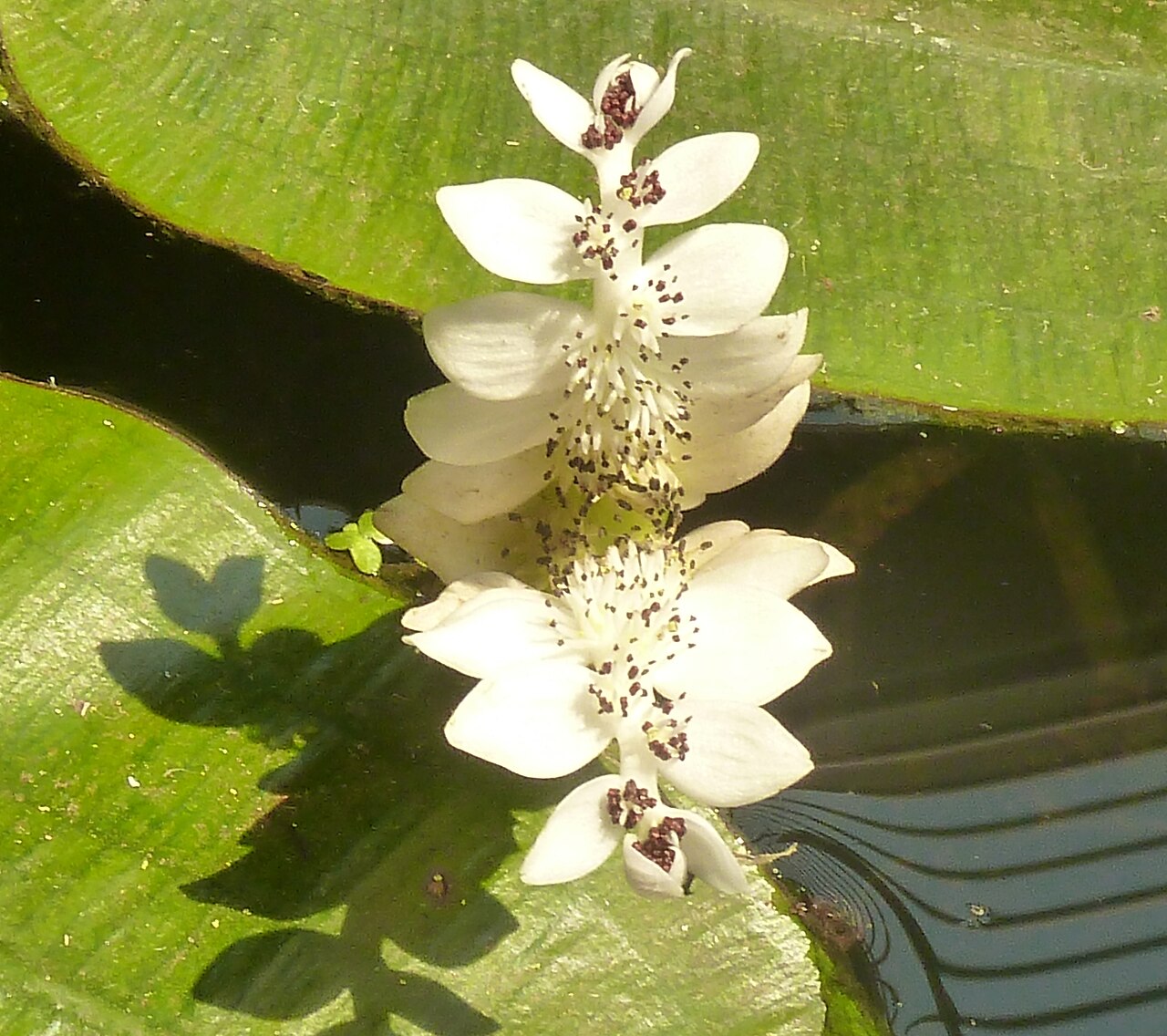
A rosette of long-petioled leaves rises toward the surface from a tuber. Leaf shape ranges from strap-like and wavy to lacy-latticed (in the Madagascar lace). Height is 30–60 cm or more. Many species send a spike-like inflorescence above the water and can set seed.
Care
They need nutrient-rich substrate for the tuber, moderate to strong light, 20–28 °C, pH 5.5–7.5. Many species benefit from CO2. For several species a rest period matters: when the leaves die back, the tuber is removed and stored cool for a few weeks.
Fertilizing
Tuberous plants with heavy root feeding: nutrient-rich substrate and root tabs are essential. Liquid fertilisers supplement the diet. A nutrient reserve is stored in the tuber.
Breeding
They propagate by seed (when flowering above water and pollinated) and, in some species, by tuber division. Seeds are sown in shallow water. The Madagascar lace is often propagated only by seed.
Fun facts
The Madagascar lace (A. madagascariensis) is unique for its lacy leaves without a blade — just the veins. The rest period is a natural part of the cycle, not a disease. The tuber lets the plant survive a water body drying out completely.