Plants
Blyxa novoguineensis
Blyxa novoguineensis
Origin: Blyxa novoguineensis comes from Southeast Asia and New Guinea, where it grows in shallows, ditches, and rice fields with soft water and bright light.
Also known as: New Guinea blyxa, Blyxa novoguineensis
Fact sheet
- Height
- 40 cm
- Temperature
- 22–28 °C
- pH
- 5.5–7.5
- Lighting
- Medium
- CO₂
- Recommended
- Growth rate
- Medium
- Placement
- Midground, Background
Overview
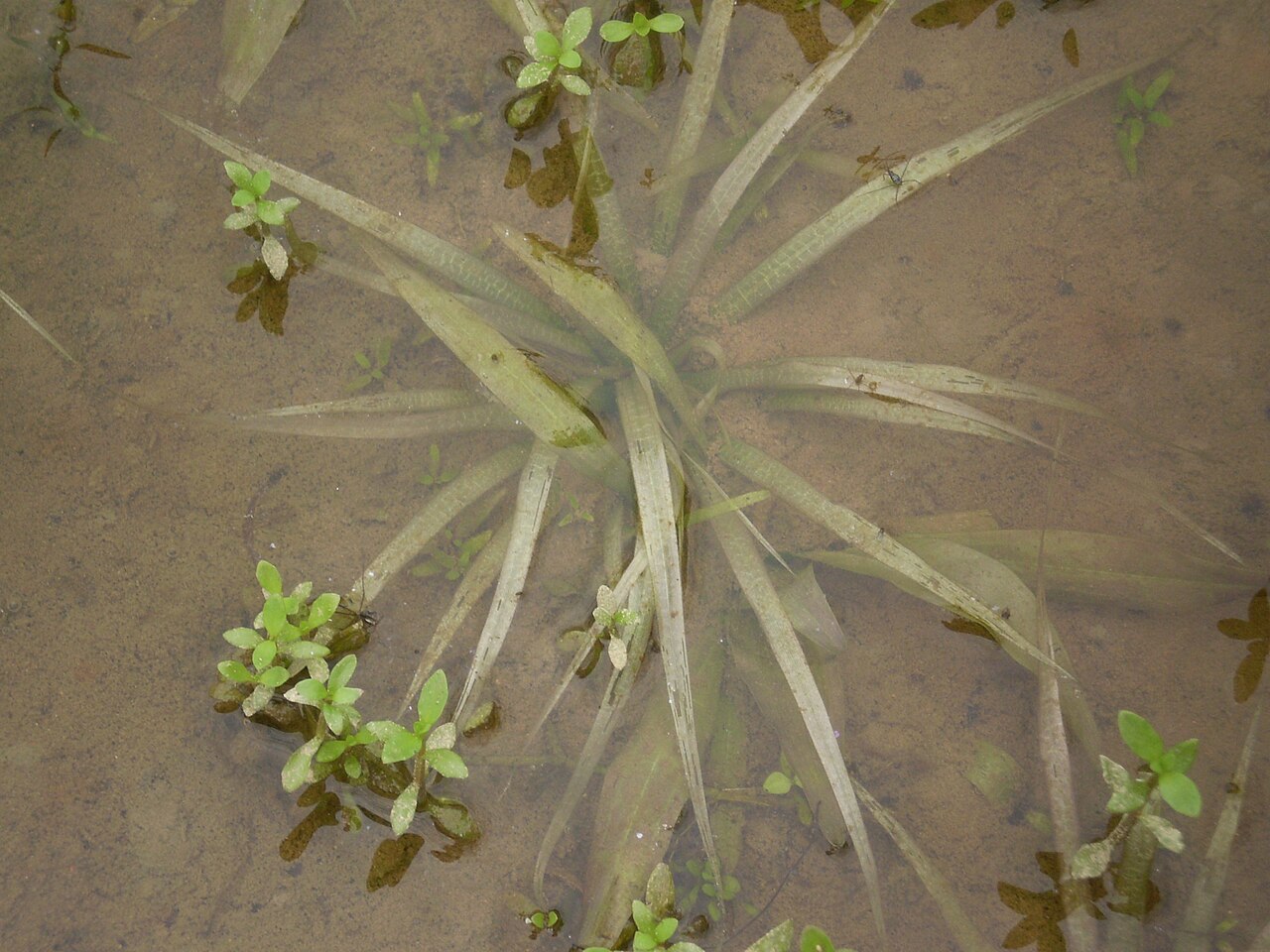
Blyxa novoguineensis is a larger relative of Blyxa japonica, forming tall rosettes of long, bright green grass-like leaves. Thanks to its size it is used as a mid- and background plant, creating lush 'fountains' of foliage. It is less prone to reddening than the Japanese species, but under good light and CO2 it grows lush and vivid. It needs nutrient-rich substrate and stable conditions. It is striking in a group planting.
Appearance
A rosette of long narrow leaves 15–30 cm long, light or bright green, curving slightly outward. Height is 20–40 cm. Unlike Blyxa japonica, the plant is taller and greener, with longer leaves. It has a well-developed root system.
Care
It needs medium to strong light, 22–28 °C, pH 5.5–7.5, and soft to medium-hard water. CO2 and nutrient-rich substrate improve growth. Under low light the rosettes stretch and thin out.
Fertilizing
It feeds through roots and leaves. Nutrient-rich substrate, iron, and micronutrients matter; CO2 speeds growth and thickens the foliage.
Breeding
It propagates by side shoots from the mother rosette, which are separated and replanted. It quickly forms a group.
Fun facts
The New Guinea blyxa is larger and greener than the Japanese species, which is why it is valued for the background. Like other blyxa it is a flowering aquatic plant, not a grass. Under bright light the foliage becomes especially lush.