Plants
Vallisneria
Vallisneria spp.
Origin: Vallisneria is found in warm and temperate waters worldwide. It grows in rivers, lakes, and canals with moderate flow, rooting in the substrate and sending long ribbon-like leaves to the surface.
Also known as: Eelgrass, Tape grass, Vallisneria spp.
Fact sheet
- Height
- 80 cm
- Temperature
- 18–28 °C
- pH
- 6.5–8.5
- Lighting
- Medium
- CO₂
- Not needed
- Growth rate
- Fast
- Placement
- Background
Overview
Vallisneria is a classic undemanding background plant, among the first in the hobby. Its long ribbon-like leaves form an 'underwater forest' that sways in the current. It grows fast, readily puts out daughter rosettes via runners, and quickly fills the background. It needs no CO2 or bright light and suits beginners well. Species differ in leaf length and width — from compact 'nana' to giant. It roots in the substrate, and the crown must not be buried too deep.
Appearance
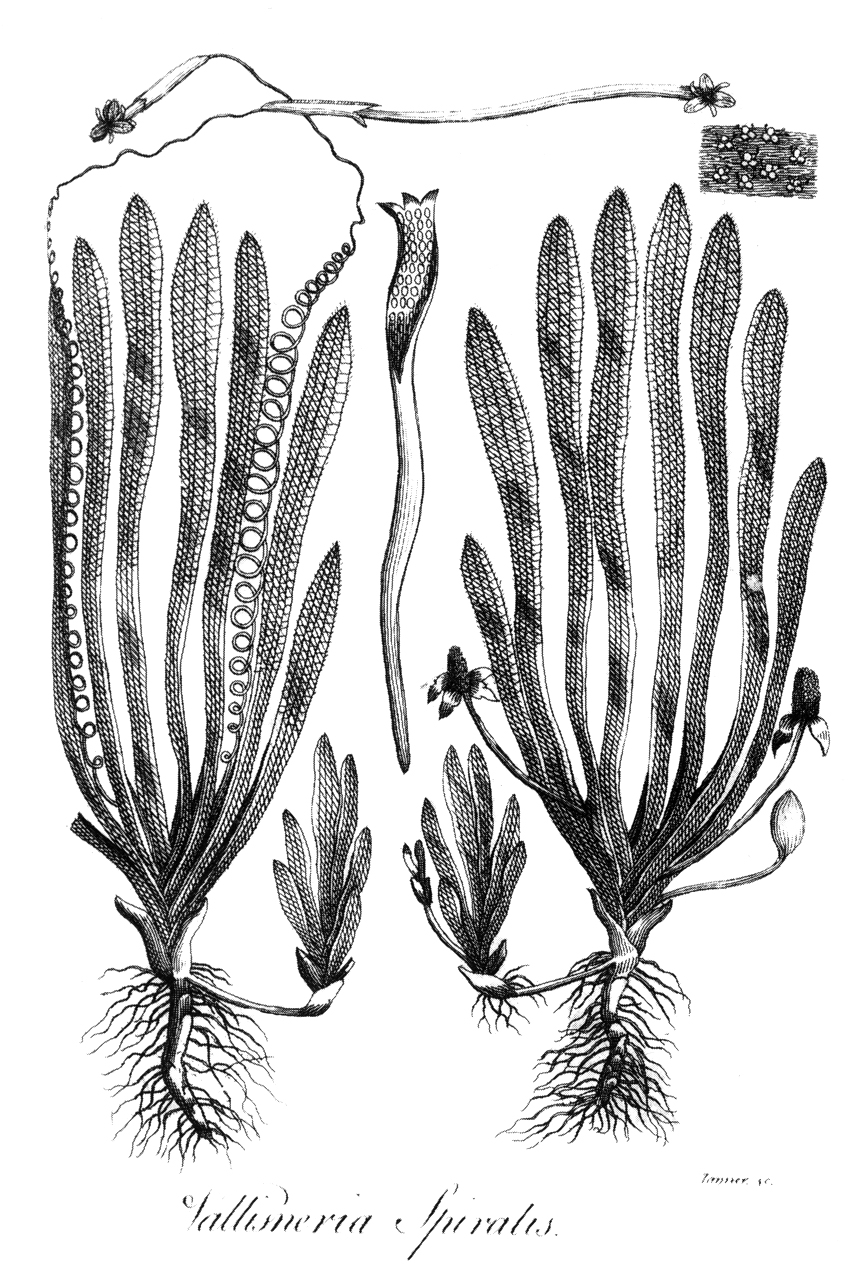
A rosette of long ribbon-like leaves rises from a short rhizome toward the surface. Leaf length ranges from 30 cm in compact species to 1 m or more in large ones; width from a few millimetres to 2 cm. Colour runs from light to dark green, reddish in some forms. It roots and produces runners bearing daughter plants.
Care
Very undemanding: low to strong light, 18–28 °C, pH 6.5–8.5, a wide hardness range (it likes somewhat hard water). CO2 is not required. It is sensitive to an excess of some fertilisers (especially high doses of liquid carbon/glutaraldehyde), which make the leaves disintegrate.
Fertilizing
Root feeding matters: it appreciates nutrient-rich substrate and root tabs. Liquid fertilisers supplement. It grows fast and tolerates poor conditions.
Breeding
It propagates very easily by runners: daughter rosettes branch from the mother to form a stand. They are separated and replanted.
Fun facts
Vallisneria flowers underwater in an unusual way: female flowers rise to the surface on a long spirally coiled stalk. The current sways its leaves beautifully, creating an underwater-meadow effect. It is one of the oldest aquarium plants in cultivation.