Plants
River Buttercup
Ranunculus inundatus
Origin: The river buttercup (Ranunculus inundatus) comes from south-eastern Australia, where it grows in shallows, seasonally flooded low ground, and along slow water margins.
Also known as: Umbrella grass, Ranunculus inundatus
Fact sheet
- Height
- 12 cm
- Temperature
- 15–26 °C
- pH
- 6–7.5
- Lighting
- High
- CO₂
- Recommended
- Growth rate
- Slow
- Placement
- Foreground, Midground
Overview
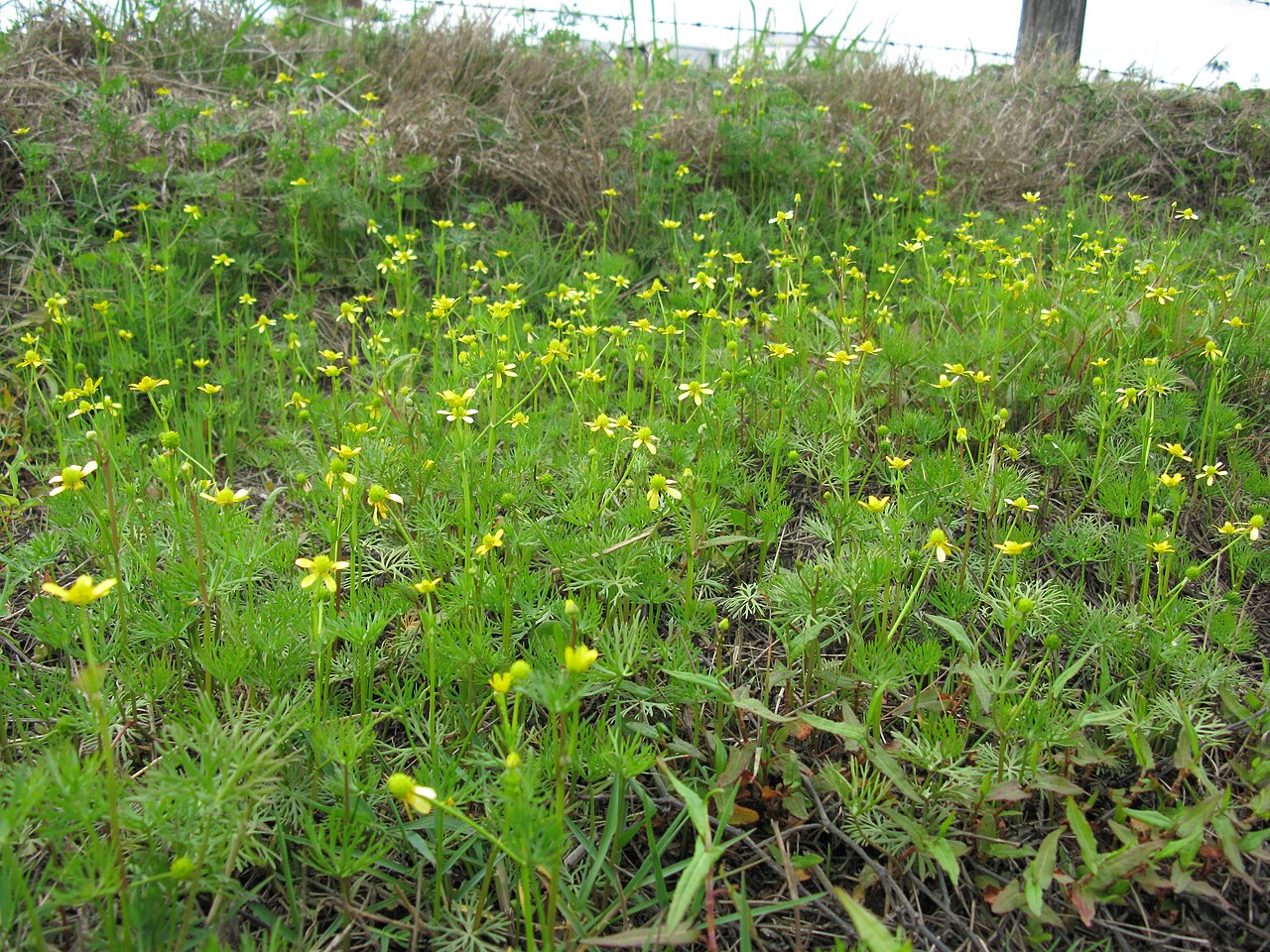
The river buttercup is an unusual carpeting plant with lacy, dissected leaves on vertical petioles that look like miniature umbrellas or snowflakes. It gives an aquarium a delicate 'lawn' a few centimetres tall and looks good in the fore- and midground. It is a plant of medium difficulty: compact growth needs good light and, preferably, CO2, or the petioles stretch. It propagates by runners, gradually forming a carpet. After planting it often adapts for a few weeks with little growth.
Appearance
Vertical petioles 5–15 cm tall rise from a runner, each bearing a deeply dissected umbrella-like leaf of several segments. Colour is fresh green. The plant forms a low lacy carpet; under weak light the petioles are longer, under bright light shorter and denser.
Care
It needs medium to strong light, 15–26 °C (it likes it cool), pH 6.0–7.5. CO2 is recommended for a compact carpet. It roots in nutrient-rich substrate. After transplanting it needs time to adapt.
Fertilizing
It feeds through roots and leaves. Nutrient-rich substrate and micronutrients matter; CO2 markedly improves carpet density. Fertiliser demand is moderate.
Breeding
It propagates by runners: daughter plants branch from the mother to form a carpet. Rooted runners can be separated and replanted.
Fun facts
The umbrella-like lacy leaves make the river buttercup one of the most recognisable carpeting plants in aquascaping. In the Australian wild it grows in seasonally flooded hollows. It likes cool water, which sets it apart from many tropical carpeters.