Plants
Water Stargrass
Heteranthera dubia
Origin: Water stargrass comes from North and Central America, where it is widespread in temperate rivers, lakes, and ponds. It tolerates cool water and roots in the substrate in the shallows.
Also known as: Grassleaf mudplantain, Heteranthera dubia
Fact sheet
- Height
- 60 cm
- Temperature
- 10–28 °C
- pH
- 6.5–8
- Lighting
- Medium
- CO₂
- Not needed
- Growth rate
- Medium
- Placement
- Background, Midground
Overview
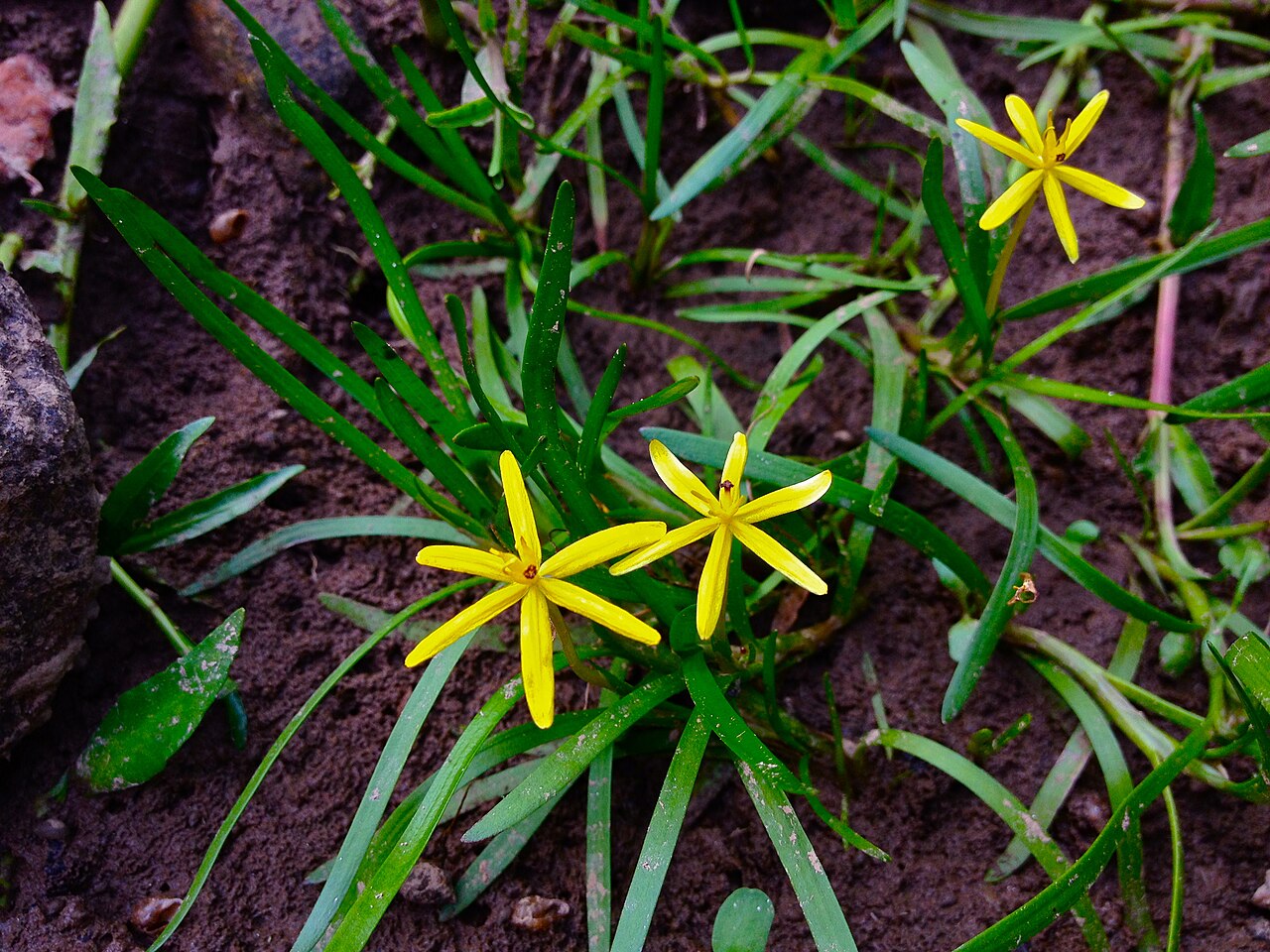
Water stargrass is a hardy stem plant with long thin stems and narrow translucent leaves that forms underwater thickets. Unlike the tropical stargrass, this species is coldwater and suits ponds and unheated aquariums. It produces small yellow flowers above water. It grows moderately fast, rooting in the substrate and trailing along the bottom and through the water column. It is undemanding and tolerant of a wide range of conditions.
Appearance
Long flexible branching stems bear alternate narrow linear leaves 3–8 cm long, light green and translucent. The plant trails and rises through the water column. Small yellow flowers open above the surface. It roots at the stem nodes.
Care
Undemanding: moderate to strong light, 10–28 °C (coldwater), pH 6.5–8.0, tolerates somewhat hard water. CO2 is not required. It tolerates flow. Bright light helps compact growth.
Fertilizing
It feeds through roots and from the water. It has few special needs; nutrient-rich substrate and basic fertilisers speed growth. It takes up excess nitrate well.
Breeding
It propagates by cuttings and by rooting at stem nodes. Fragments establish easily. It quickly forms thickets in suitable conditions.
Fun facts
Unlike the tropical stargrass, this species is coldwater and suitable for ponds. Its yellow flowers open above the water surface. In North America it is a common plant of rivers and lakes.