Plants
Giant Hygro
Hygrophila corymbosa
Origin: The giant hygro is found in Southeast Asia, where it grows along riverbanks, in marshes, and in rice fields. It has long been widely used in the hobby.
Also known as: Temple plant, Nomaphila stricta, Hygrophila corymbosa
Fact sheet
- Height
- 60 cm
- Temperature
- 22–28 °C
- pH
- 6–8
- Lighting
- Medium
- CO₂
- Not needed
- Growth rate
- Fast
- Placement
- Background
Overview
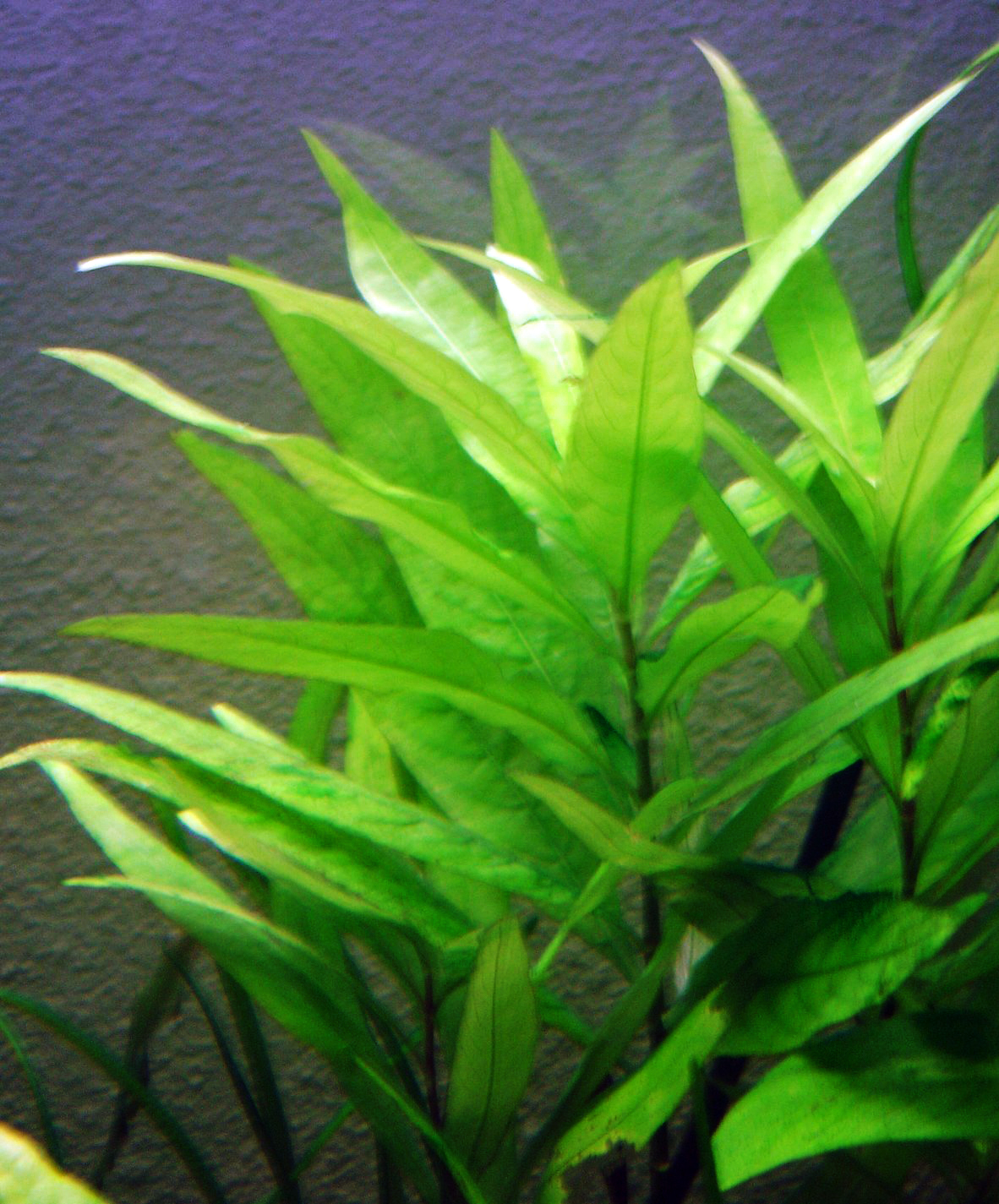
The giant hygro is a large undemanding stem plant with big oval leaves, one of the easiest background plants. Crushed, the leaves give off a faint lemon scent, which earns the plant its Russian nickname 'lemon plant'. It grows fast under any light without CO2, quickly filling the volume of a large aquarium. Many cultivars and forms exist, differing in leaf size and colour (such as 'Siamensis', 'Stricta', and red-leaved forms). An excellent choice for beginners.
Appearance
Sturdy straight stems bear opposite large oval-lanceolate leaves 6–12 cm long, light or dark green, with a reddish-brown underside in some forms. Height is 40–60 cm or more. The plant is massive, forming a voluminous green 'column'.
Care
Very undemanding: low to strong light, 22–28 °C, pH 6.0–8.0, a wide hardness range. CO2 is not required but speeds growth and enlarges the leaves. It grows fast and needs trimming and space.
Fertilizing
It actively takes nutrients through roots and leaves. It appreciates nutrient-rich substrate and macronutrients. A good consumer of excess nitrate.
Breeding
It propagates by top cuttings; the remaining stem puts out side shoots. It roots very easily.
Fun facts
The nickname 'lemon plant' comes from the faint lemon scent of crushed leaves. It was formerly placed in the separate genus Nomaphila. Its many cultivars make the giant hygro a versatile background plant.