Plants
Carolina Fanwort
Cabomba caroliniana
Origin: Carolina fanwort comes from South and North America, where it grows in slow rivers, ponds, and lakes. It is a classic aquarium plant known for over a century.
Also known as: Green cabomba, Fanwort, Cabomba caroliniana
Fact sheet
- Height
- 50 cm
- Temperature
- 18–26 °C
- pH
- 6–7.5
- Lighting
- High
- CO₂
- Recommended
- Growth rate
- Fast
- Placement
- Background
Overview
Cabomba is one of the most recognisable aquarium plants, with delicate fan-shaped pinnately divided leaves set in whorls. It forms lush 'feathers' in the background and makes excellent cover and spawning substrate for fish. Despite its classic status, cabomba is not so simple: lush growth needs bright light and preferably CO2, or the lower stem goes bare. It is sensitive to liquid carbon (glutaraldehyde), which can make it disintegrate. The best lighting brings out its lush foliage.
Appearance
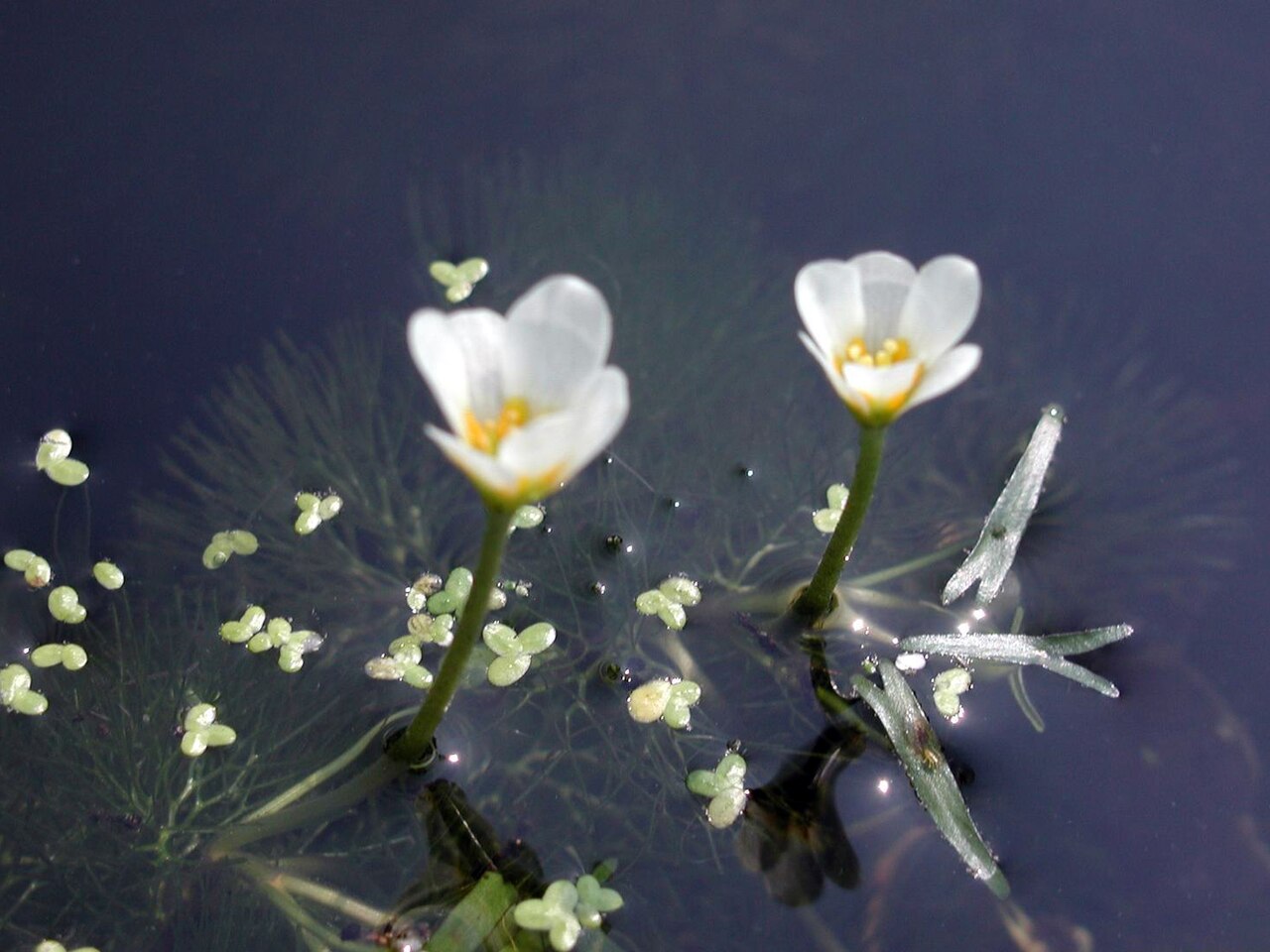
Upright stems bear opposite or whorled fan-shaped leaves, repeatedly forked into fine segments, light green. Whorl diameter is 3–6 cm. Height is up to 50 cm or more. Above water it forms small floating leaves and white flowers.
Care
It needs strong light, 18–26 °C, pH 6.0–7.5, and soft to medium-hard water. CO2 is recommended for lushness. It is sensitive to liquid carbon. It grows fast under good light; under weak light the lower stem goes bald.
Fertilizing
It feeds mainly from the water through its leaves and partly through roots. Macro- and micronutrients matter, and CO2 speeds growth. Iron supports the depth of green.
Breeding
It propagates by cuttings: tops are cut and replanted, and the stem puts out side shoots. It roots easily under good light.
Fun facts
Cabomba is a classic plant popular for over 100 years, often used as spawning substrate. In several countries it is considered invasive and banned. It tolerates liquid carbon (glutaraldehyde) poorly, unlike many other plants.